
Two Ways to Deliver Water
Nutrient film technique runs a shallow stream, typically two to three millimetres deep, along gently sloping channels. Roots sit partly in the film and partly in air, so oxygen supply comes from the exposed root mass rather than from aeration equipment.
Deep water culture suspends plants on rafts above a large static tank of oxygenated solution, with air stones or diffusers maintaining dissolved oxygen. Roots are fully submerged, and the volume of water buffers temperature and nutrient swings far more than a thin film can.

What the Yield Evidence Shows
Comparisons across controlled trials generally find the two systems producing comparable lettuce yields. Virginia Cooperative Extension trials found NFT and floating raft DWC delivering the highest spinach and parsley yields, with media-based systems trailing well behind.
Seasonal differences appear in the literature: NFT has outperformed DWC in summer conditions in at least one multi-season study, while DWC led in autumn. A northern India trial reported DWC shortening the crop cycle by fifteen days and improving quality parameters, including chlorophyll and soluble solids.
Failure Modes and Power Supply
The failure modes differ sharply, and this shapes practical risk. If circulation stops in an NFT system, roots begin drying within fifteen to thirty minutes. In DWC, the reservoir gives roots twelve to twenty-four hours of margin before oxygen falls to critical levels.
Disease behaviour also differs. A pathogen introduced into a DWC tank spreads through the entire volume and affects every plant simultaneously. In NFT, flowing solution moves pathogens along channels, which can localise an early infection but also distributes it downstream. Phytophthora and Pythium are the pathogens to watch in both.

Water and Energy Efficiency
NFT typically uses fifty to sixty percent less water than DWC because the circulating volume is small and losses are limited to transpiration and drainage. DWC holds a large body of water that must be maintained, circulated, and eventually replaced.
Energy profiles are closer than expected. NFT requires continuous pumping against a head; DWC requires aeration. Reported energy-use efficiency advantages for NFT in leafy green production reach around twenty-eight percent, but the gap narrows where pumps are oversized or aeration is minimal.
Choosing for Your Site
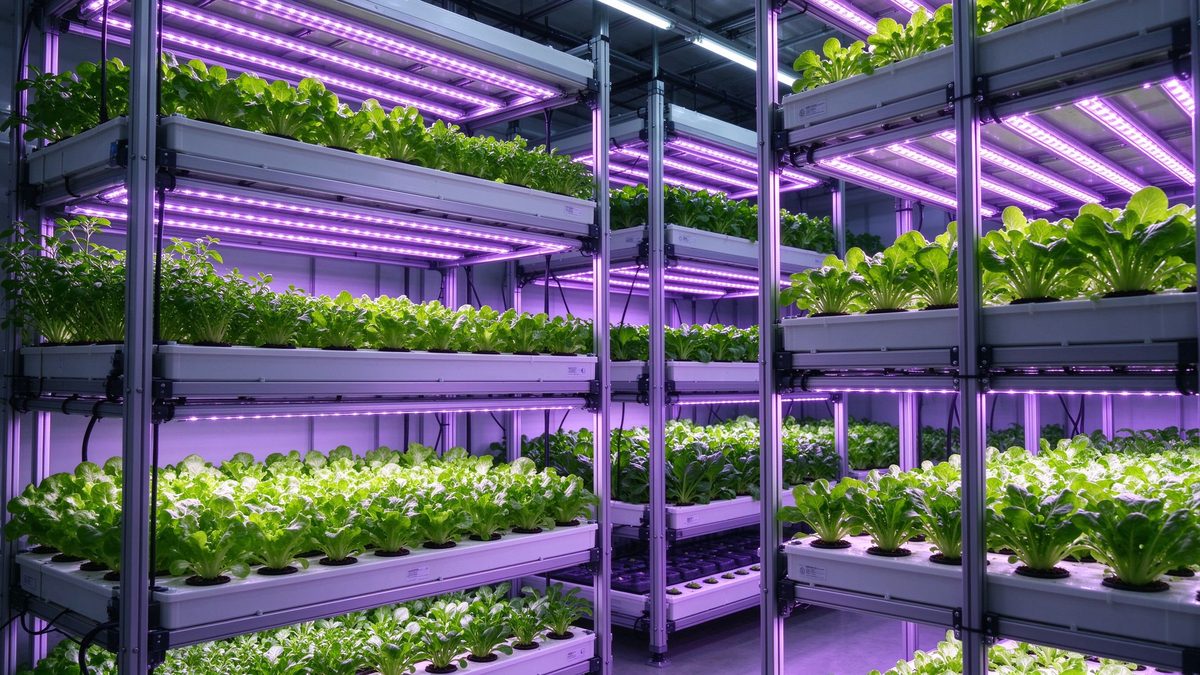
The decision usually comes down to scale, crop, and power reliability. NFT suits modular leafy green production, vertical stacking, and sites where water cost or supply is the binding constraint, provided power is stable or backed up.
DWC suits batch production, mixed crop portfolios that include fruiting crops, and sites with unreliable power, because its buffering capacity buys time. Cost of entry is lower per unit, though floor area per plant is higher, which matters where space is expensive.
Whatever the system, temperature control of the solution is the most frequently neglected variable. Root zone temperatures above roughly twenty-four degrees reduce dissolved oxygen and favour Pythium, while very cold solution slows growth. In warm climates, burying or shading tanks, and using chillers where water volumes are small, matter more than the choice between two well-designed systems.
The practical difference between the two systems appears most clearly in maintenance labour. NFT requires channel cleaning between cycles, pump maintenance, and attention to slope and flow uniformity. DWC requires tank cleaning at a larger scale, aeration equipment checks, and careful management of dissolved oxygen in warm weather. Both reward routine, but the routines differ in physical effort and skill.
Conclusion
Both systems grow good lettuce; they fail differently and cost differently. Choose against your power reliability, water cost, and crop mix rather than against a generic recommendation. Shouguang Zhongtian supplies hydroponic leafy green systems in NFT and DWC configurations with the pumping, aeration, and monitoring equipment each requires.


