
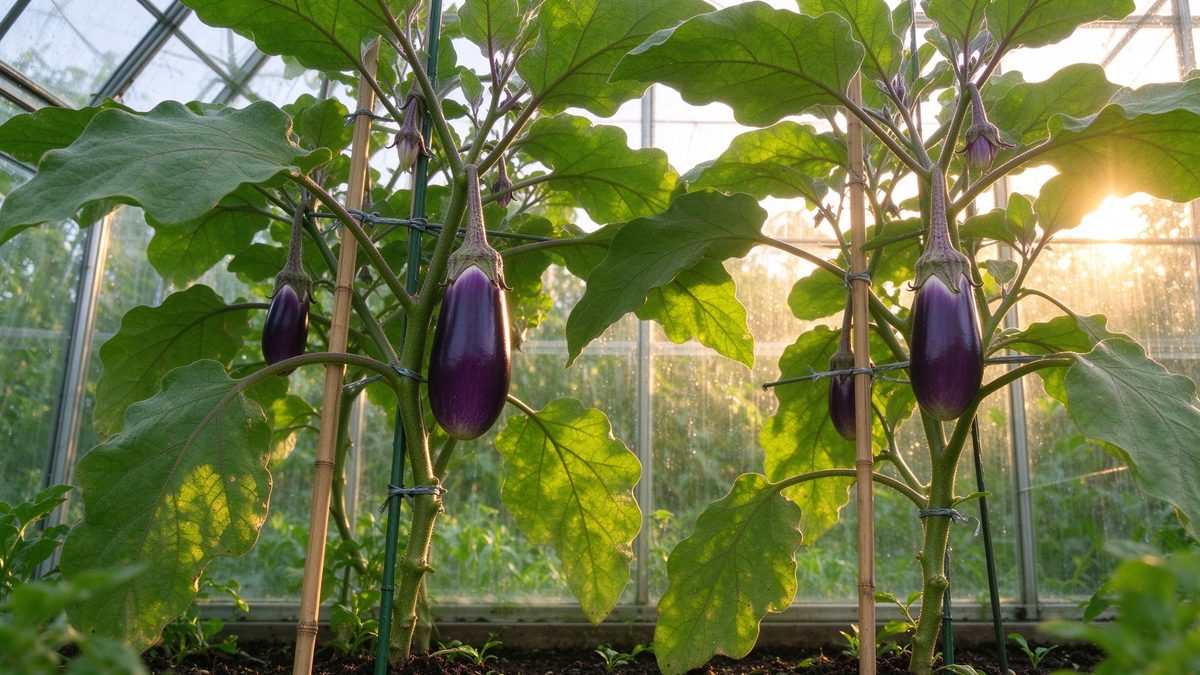
Pruning Is a Yield Decision
Every leaf is a factory and every fruit is a sink, and pruning adjusts the balance between them. Removing leaves reduces photosynthetic capacity; leaving too many reduces light penetration to lower trusses and increases humidity in the canopy, which costs quality.
Indeterminate tomatoes are normally trained on a single stem, with side shoots removed weekly. That decision fixes the plant's structure early, and the subsequent work is about managing trusses and leaves rather than about shaping the plant.

Truss Management and Fruit Load
Truss size determines fruit size. Leaving eight fruits on a truss on a young plant produces several small fruits; thinning to four or five produces the uniform, saleable size that retail specifications demand during the early season.
Truss pruning also protects the plant's overall balance. When a heavy truss coincides with low light, the plant aborts or produces uneven fruit. Deciding at flowering how many fruits to keep, rather than reacting later, is the difference between planned quality and salvage.
Deleafing Rules
The standard rule is to keep roughly three leaves above the ripening truss and remove leaves below the harvested zone. Leaves that no longer receive useful light contribute nothing but humidity and disease risk.
Timing matters relative to harvest: leaves should be removed after picking that truss, not before, so that fruit can fill on the leafs' assimilate. Removing too many leaves at once also shocks the plant and can cause sunburn on exposed fruit in bright conditions.

Timing, Rhythm and Labour
Pruning and deleafing are weekly routines on a fast crop, and skipping a week creates a backlog that is expensive to clear. Work should follow a fixed route through the greenhouse so that no row is missed and records can be kept per block.
Labour productivity improves with structure: consistent plant height, clear aisles, and trolleys that carry the removed material. These are small engineering decisions with measurable effect on how many plants a worker can handle per hour.
Hygiene and Disease Prevention
Pruning tools and hands move pathogens between plants more efficiently than any insect. Cleaning blades between rows, and between blocks when disease is present, is basic practice that is frequently skipped under time pressure.
Removed material should leave the greenhouse immediately, not sit in aisles where spores can spread. Closed bags and scheduled removal are cheap measures that reduce botrytis pressure noticeably in humid seasons.
The interaction with light is the variable growers underestimate. In low-light periods, keeping more leaf area supports fruit fill, while in high-light summer conditions the same leaf load shades lower trusses and raises humidity. Adjusting the leaf count to the season rather than to a fixed rule is what separates good crops from average ones.
Pruning records turn experience into management. Recording the date of each deleafing pass, the number of leaves removed, and the resulting fruit size for that truss builds a picture of how the crop responds on a specific site. After two seasons, decisions that were previously instinctive become evidence-based.
Suckering deserves its own rhythm. Side shoots are easiest to remove when they are short, because the wound is small and the plant recovers faster. Waiting until shoots are twenty centimetres long turns a five second job into a minute long one, and the resulting wounds are larger entries for pathogens. Weekly passes with a fixed route keep both labour cost and plant stress low.
Conclusion
Pruning is the manager's main lever on fruit size, uniformity, and airflow. Keep the routine weekly, the leaf count above the truss honest, and the hygiene strict. Shouguang Zhongtian designs tomato greenhouses with the trellis, aisle layout, and climate control that make disciplined pruning practical at scale.


