
What Certified Organic Means Under Glass
Organic certification is a process standard, not a product claim. It governs allowed inputs, soil management, pest control, and record keeping, and it applies to protected production as much as to field crops.
Protected systems raise specific questions for certifiers: whether the crop is grown in soil or substrate, whether inputs are permitted, and how nutrients are sourced. Growers should confirm the requirements of their certifier before designing a system, since some substrate and hydroponic approaches are restricted.

Soil Fertility Without Soluble Salts
Organic fertility relies on mineralisation of organic matter rather than on soluble salts. Compost, manure, and allowed organic fertilizers release nutrients slowly, which suits a long greenhouse season but complicates precise control.
The practical response is to build soil biology and monitor it. Regular soil testing for organic matter, electrical conductivity and available nutrients, plus observation of rooting and residue breakdown, tells the grower whether the system is cycling nutrients or accumulating them.
Pest and Disease Management
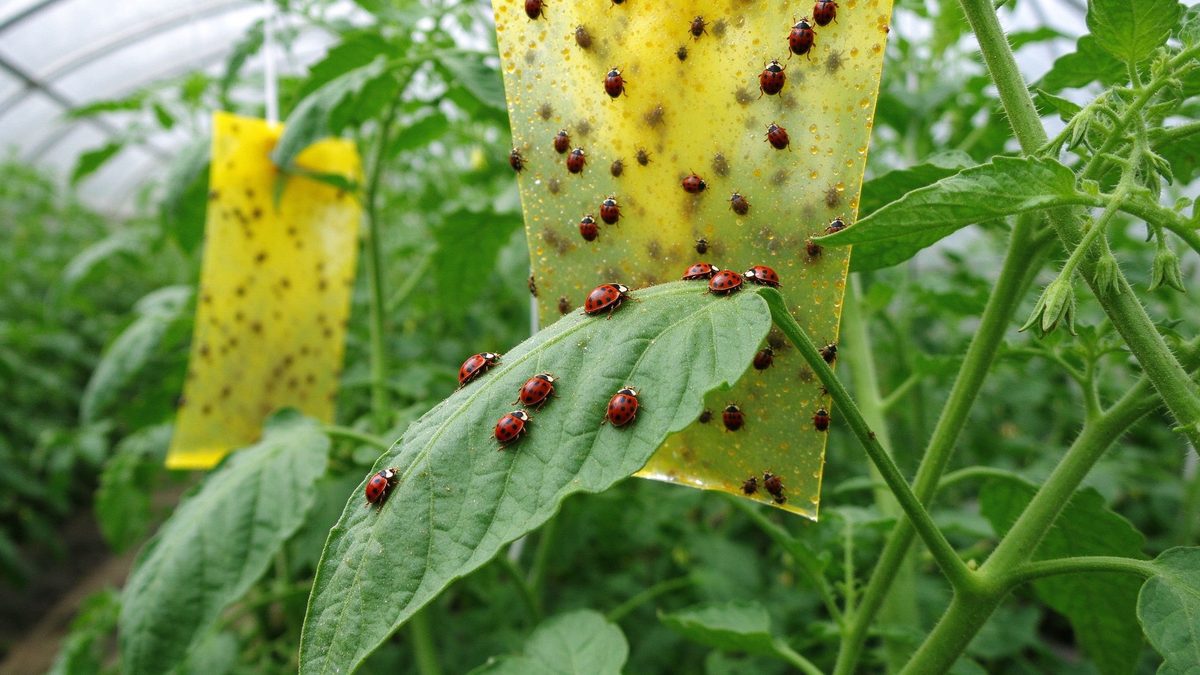
Organic pest control is biological control plus allowed materials, and it demands earlier intervention than conventional practice. Beneficial insects, trap crops, and physical exclusion do most of the work, with permitted products used sparingly.
Disease management depends heavily on climate and sanitation, because the armoury of fungicides is limited. Air movement, leaf drying, hygiene at pruning, and removal of infected material matter more than any input in an organic programme.

Nutrition Under Organic Rules
Foliar feeding with permitted materials addresses temporary shortages while soil biology catches up. Seaweed extracts, allowed micronutrient sources and compost teas can bridge gaps during fruit fill when demand outpaces release.
However, organic programmes cannot be run with the same precision as soluble fertigation, and yields usually reflect that. Comparing organic and conventional performance on the same site, over several seasons, produces a realistic expectation instead of a marketing-driven one.
Markets, Records and Premiums
The commercial case rests on premium pricing and market access, and both depend on credible certification. Records must connect each harvest to the block and inputs used, because traceability is what the certificate actually promises.
Premium levels vary considerably by market and season, and they should be measured rather than assumed. Growers who model the premium against the yield difference and certification cost make better decisions about which crops to grow organically and which to leave conventional.
Consumer communication benefits from restraint. Claims that exceed what certification actually verifies create compliance risk and invite scepticism, while accurate descriptions of practice build durable trust with buyers who are already inclined to pay a premium for verified methods.
Input sourcing is a supply chain problem as much as an agronomic one. Approved organic fertilizers, permitted plant protection products, and acceptable propagation media are often available from fewer suppliers with longer lead times, so ordering rhythms must be set earlier than in conventional practice.
Transition periods deserve planning rather than optimism. Certification usually requires a conversion period during which the land is managed organically but the crop cannot be sold as such, and cash flow during that window must be funded deliberately.
Pricing should reflect the real cost structure. Organic production in greenhouses typically carries higher labour, lower yields in the transition years and more expensive inputs, so a premium that is negotiated only against conventional wholesale prices will not cover the difference unless the operation is genuinely efficient.
Pest management in organic protected cropping depends on prevention because the permitted toolbox is narrow. Exclusion netting, clean propagation, habitat plants for beneficials and careful crop rotation occupy the role that a spray programme plays elsewhere, and they must be planned before the season rather than deployed after a problem appears.
Conclusion
Organic greenhouse production is a system discipline with slower feedback and lower precision. Confirm standards early, build soil biology, and protect the crop with climate and hygiene. Shouguang Zhongtian supplies greenhouse projects designed to support organic certification requirements.


