
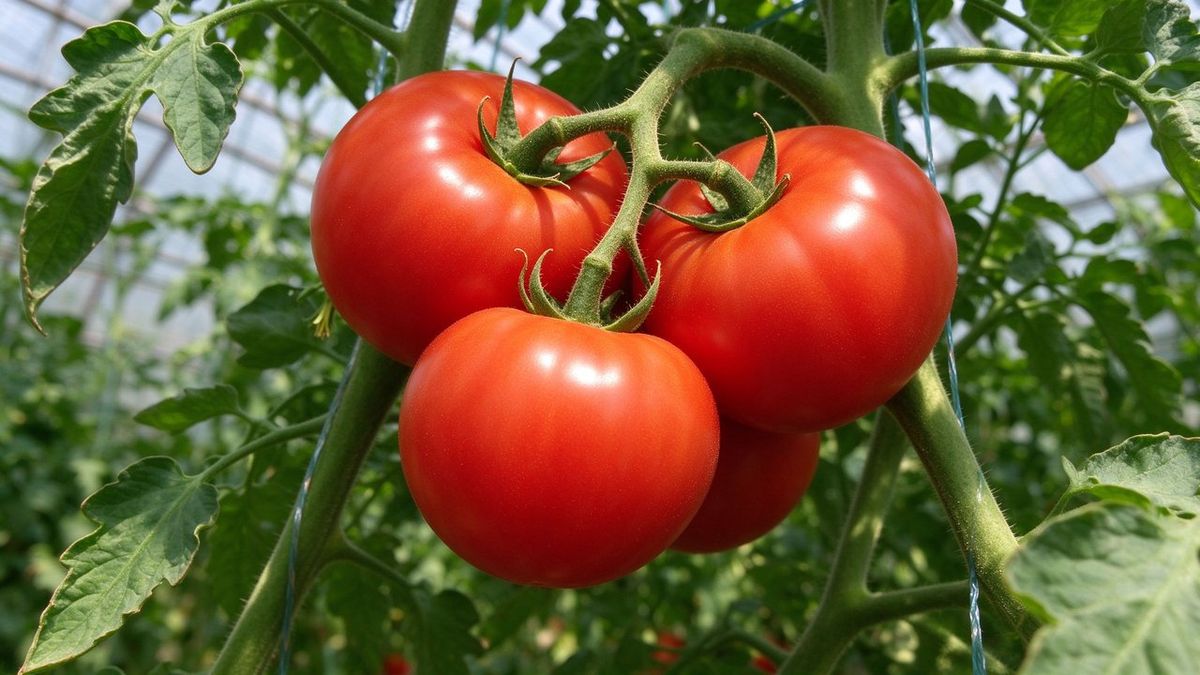
Lycopene synthesis peaks at 21 to 24 degrees Celsius and shuts down above 30 degrees Celsius. A greenhouse that runs at 28 degrees Celsius on a bright afternoon produces pale, orange-red tomatoes even when the variety is genetically deep red. Ripening is controlled by temperature first, light second, and ethylene third. Growers who map their house temperature on the ripening truss, shade only when needed, and manage day-night temperature difference hold the fruit colour and shelf life that premium markets demand.
Lycopene and Carotenoid Windows
Lycopene accumulates fastest between 21 and 24 degrees Celsius. At 30 degrees Celsius, lycopene synthesis drops by 50 percent; above 35 degrees Celsius, it stops entirely. Beta-carotene is less sensitive, so fruit turns orange instead of red. On high-light days, vent before house temperature reaches 26 degrees rather than after.
Night temperature also matters. Cool nights at 14 to 16 degrees Celsius boost colour intensity by 15 percent compared with 20 degrees Celsius nights. A 6 to 8 degrees Celsius day-night difference keeps the fruit firm and the sugars high.
Shading and Light Management
Use a diffuse shading cloth at 40 percent transmission only when PAR exceeds 900 micromol per square metre per second. Above that level, fruit surface temperature exceeds air temperature by 4 to 6 degrees Celsius even with ventilation. Paint-on shading at 30 to 40 percent is cheaper than cloth but is hard to remove on cloudy days.
LED interlighting at 100 micromol per square metre at truss level lifts ripening speed by 3 to 5 days during winter. Use red and far-red diodes; blue light at ripening stage does not help and can delay colour by two days.
Ethylene and Colour Rooms
Tomato fruit produces ethylene naturally at the breaker stage. For scheduled harvest, pick at the first sign of colour and finish in a ripening room at 18 to 20 degrees Celsius with 150 ppm ethylene for 24 hours, then vent. This brings uniform colour in 3 to 4 days.
Avoid temperatures below 12 degrees Celsius during ripening. Fruit held at 10 degrees Celsius for more than a day develops irregular colour and never reaches full red. Chilling injury at the breaker stage is irreversible.
Maturity Indices and Harvest Timing
Harvest truss tomatoes at 10 to 30 percent colour for long-distance markets, or at 60 to 80 percent for local direct sales. Brix at harvest should be 5.5 to 6.5 for round tomatoes and 8.0 to 9.5 for cherries. Use a refractometer on 5 fruit per block weekly.
Track days from anthesis. Round tomatoes take 45 to 55 days from flower to full red at 22 degrees Celsius; cherries 35 to 45 days. If a truss runs 7 days late, check stem temperature and EC; the delay signals a stressed plant.
Post-Harvest Handling
Cool harvested fruit to 12 to 14 degrees Celsius within 2 hours of picking. A forced-air cooler at 150 litres per second per crate reaches target in 30 minutes. Store at 12 to 13 degrees Celsius and 90 percent RH; this gives 14 to 18 days shelf life for truss tomatoes.
Avoid stacking crates above 5 layers; pressure bruising at the bottom layer shows up as soft spots after 5 days. Zhongtian Agricultural Technology recommends a pre-cool tunnel at the harvest end of the greenhouse so fruit never sits in the 25 degrees Celsius harvest room for more than an hour.
Ripening is a temperature problem more than a light problem. Hold the ripening truss at 21 to 24 degrees Celsius, avoid peaks above 30, use diffuse shade only on the brightest days, and cool harvested fruit within two hours. The result is the deep, even red and 14-day shelf life that justifies a premium price.


