
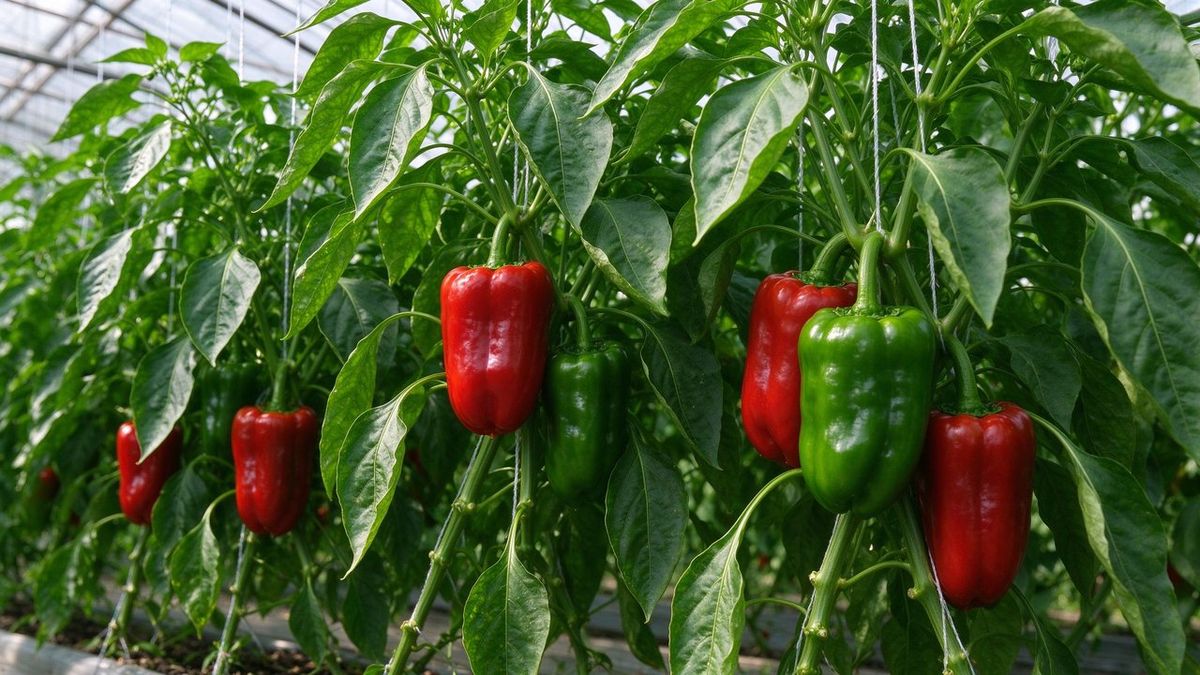
Blossom drop is the premature fall of open pepper flowers before the ovary swells. It is the most visible symptom of a plant under stress, and a single cause is rare: temperature extremes, water stress, nutrient imbalance, pest damage, or poor pollination combine to push flowers off. Diagnosing which factor dominates in a specific block is the first step to cure; spraying blindly usually makes it worse.
Temperature Extremes Are the Usual Cause
Pepper flowers drop when night temperature is below 15 degrees or above 21, and when day temperature exceeds 32 for more than 4 hours. In winter houses, cold nights are the trigger; in summer, hot days. Check the 7-day temperature log; if night lows dropped below 15 three nights in a row, temperature is the culprit.
The fix is straightforward: raise night setpoint to 18 to 20 with root-zone heating, and cool the canopy to 26 to 28 in summer. Blossom drop from temperature recovers within 7 to 10 days once the setpoint is corrected.
Water and Nutrient Stress
A dry slab below 50 percent of field capacity causes flower drop within 2 days. Water stress concentrates salts in the slab; EC above 3.5 mS per cm triggers abortion. Check slab water and drainage EC at midday; dry plus salty is the worst combination.
Nitrogen excess is the other nutritional cause. Succulent high-N plants abort flowers to balance vegetative growth. Leaf sap nitrate above 1500 mg per litre flags overfeeding. Cut nitrate by 20 percent and raise potassium to 240 mg per litre to push reproductive growth.
Pollination Failure
Pepper flowers are self-fertile but need vibration to release pollen. Still air in a closed glasshouse at night means pollen never leaves the anther, the ovary never fertilises, and the flower drops after 5 days. Release bumblebees or run horizontal air-flow fans at 0.5 m/s.
Low humidity below 50 percent dries pollen before it germinates; high humidity above 85 percent makes pollen stick in clumps. Aim RH 65 to 75 percent. A humidity swing from 40 to 90 in one day also shocks flowers.
Pest and Disease Damage
Thrips feeding on flower buds scars the ovary and causes drop. Check inside open flowers for tiny yellow thrips; more than 2 per flower triggers release of Amblyseius swirskii at 100 per square metre. Aphids on the stem also drain assimilates and cause flower drop.
Botrytis flower blight shows brown lesions on the flower petals and ovary. It spreads in high humidity. Improve air circulation, remove infected flowers, and apply Bacillus amyloliquefaciens as a preventive. Once Botrytis is inside the flower, the cure is removal.
Diagnosis Checklist and Recovery
Walk the block with a checklist: temperature log for 7 days, slab water and EC at midday, leaf sap nitrate, humidity range, thrips count per flower, bumblebee activity. Two of these will be out of range in nearly every blossom-drop episode. Fix both, not just one. Carry a pocket pH and EC meter so the diagnosis takes minutes rather than waiting for a lab result.
After correction, expect new flowers to set within 10 days. Do not overreact by heavy pruning; the plant needs its leaf area to rebuild. Zhongtian Agricultural Technology treats blossom drop as a diagnostic exercise first, and only applies product when a pest or pathogen is confirmed. The cure is almost always climate, water, or nutrition rather than spray. Record every episode on the block map; over two seasons this pattern log predicts which bays are prone to drop and deserves early climate intervention before flowers open.
Blossom drop is a stress signal, not a disease. Check temperature, water, EC, nitrogen, humidity, and thrips; fix the two out-of-range factors and the crop recovers within 10 days. Spraying without diagnosis is the most common and most expensive mistake.


