
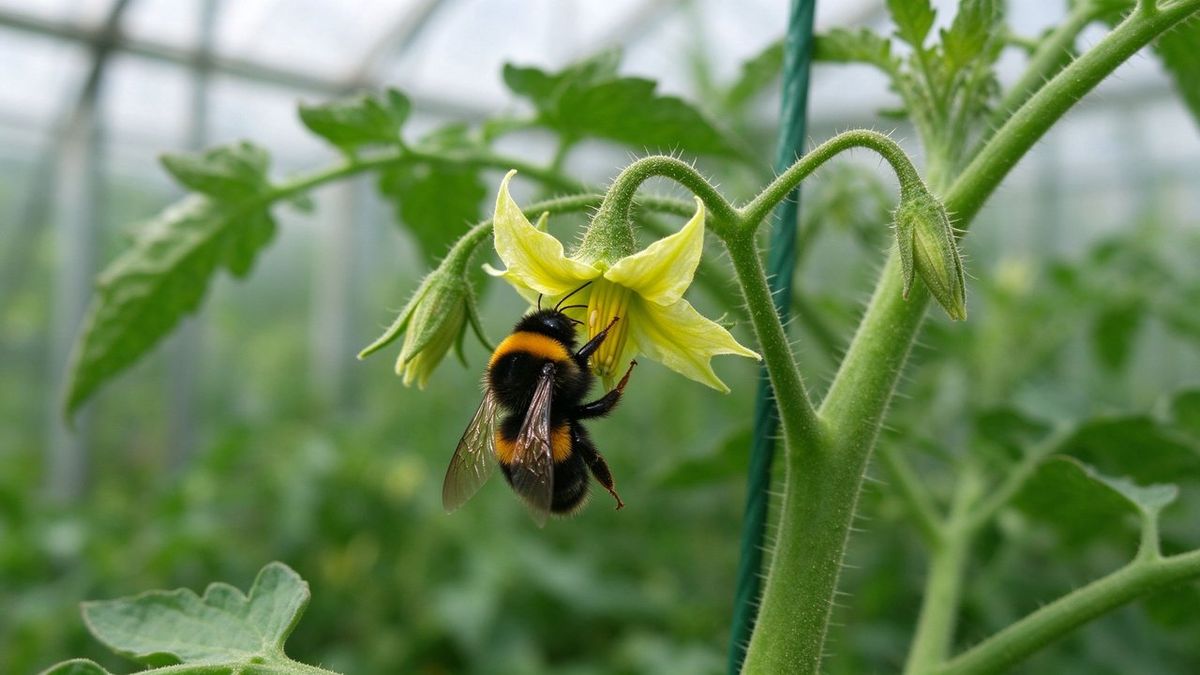
Melon pollination is the single most fragile step in greenhouse production. A female flower that is not adequately pollinated aborts, develops into a misshapen fruit, or fails to set seed and therefore never reaches full size. Because cucurbits produce separate male and female flowers on the same plant, the greenhouse must supply mobile pollinators or manual pollination labour at exactly the right anthesis window. Failure here costs 20 to 40 per cent of potential yield; success rates above 90 per cent depend on hive management and climate discipline.
Flower Biology and Anthesis Window
Melon flowers open at sunrise, typically between 06:00 and 07:00, and close by mid-afternoon. Stigma receptivity peaks in the first four hours after opening; after 11:00, pollen viability drops sharply. Male flowers outnumber female flowers by 10:1 to 15:1 on a healthy plant. Female flowers appear at nodes 7 to 10 on the lateral shoots; the first female at nodes 4 to 5 is usually small and is removed so fruit set begins at the more vigorous nodes.
Pollen is sensitive to temperature and humidity. At temperatures below 15 degrees, pollen grains do not germinate; above 35 degrees, they die within hours. Relative humidity below 50 per cent desiccates pollen in the anther. A calm morning at 22 to 25 degrees and 65 per cent RH is ideal. Pollination success is judged 10 days after anthesis: the ovary swells to tennis-ball size if pollination succeeded; it yellows and abscises if it failed.
Bumblebee Hive Management
Bombus terrestris hives are stocked at one hive per 1,500 to 2,000 m² for melon. Hives are placed at the end of each bay, 1 m above floor level, and oriented so the entrance faces the morning sun. Hive strength is assessed weekly by counting outgoing bees on a calm morning: 50 to 80 bees leaving in 5 minutes indicates a healthy hive. Sugar syrup reservoirs inside the hive are topped up weekly with the manufacturer’s standard 50 per cent sugar solution.
Bees forage most actively between 18 and 28 degrees Celsius. Below 14 degrees they stay inside; above 30 degrees they reduce visits. Hive covers are shaded when outside temperature climbs. Pesticide restrictions are strict: hives are sealed 2 hours before any spray, kept closed overnight, and reopened only after spray residues have dried. Chlorantraniliprole and acetamiprid are the safest chemistries during flowering; pyrethroids are forbidden.
Hand Pollination Protocol
Hand pollination is used when bee activity is unreliable in winter, or when expensive hybrid cultivars justify the labour. Workers harvest freshly opened male flowers at 07:00, remove petals, and gently roll the anther over the stigma of each open female flower. One male flower pollinates 2 to 3 female flowers. Teams of four workers cover 3,000 to 4,000 plants per morning, and the operation runs for 25 to 30 days until the desired number of fruit per plant is set.
Hand-pollinated fruit sets at 95 per cent compared with 65 to 75 per cent for bee-only in cool winters. Each pollinated female is tagged with a coloured plastic band tied to the peduncle; band colour codes the pollination date so harvest is scheduled by accumulated heat units. A melon requires 35 to 45 days from pollination to harvest, depending on cultivar. Tagging eliminates guesswork on which fruit is ripe and which needs more days.
Pollination Failure Diagnosis
Misshapen fruit — pointed blossom end, flattened shoulder, or curved shape — is the classic symptom of incomplete pollination. It occurs when only a portion of ovules are fertilised, so the fruit expands unevenly. The fix is not magic: check morning temperature (must be above 16), check hive activity, and increase male flower availability. A 1:4 male-to-female ratio at anthesis is the minimum; a 1:6 ratio is comfortable.
Poor fruit set over an entire bay points to climate rather than pollinator shortage. If night temperatures dropped below 12 degrees for several nights during flowering, pollen was sterile. If daytime humidity exceeded 85 per cent, pollen stuck together and could not reach the stigma. A quick pollen viability test uses a 10 per cent sucrose drop on a slide: after two hours, germinated pollen shows a pollen tube longer than the grain diameter. Below 50 per cent germination, the whole bay should be re-pollinated on the next open flower flush.
Melon pollination is a morning business, not an all-day task. Hives must be healthy, morning temperature must be above 16 degrees, and female flowers must be visited within the first four hours after opening. When those conditions hold, 90 per cent fruit set is routine; when they slip, even an expensive hive will produce misshapen, undersized fruit that cannot be sold. Treat pollination as a scheduled operation with daily observation.


