
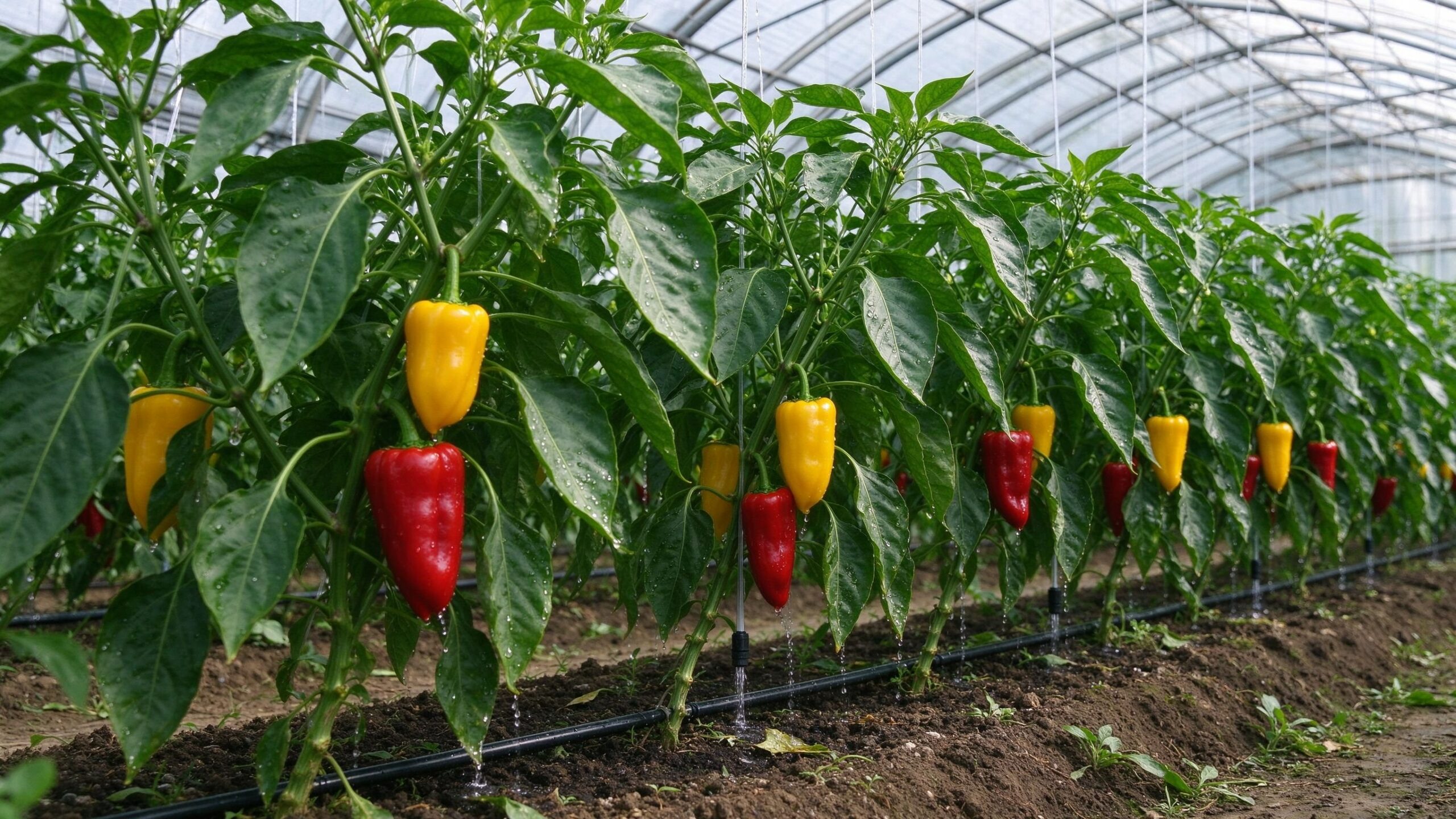
From Fixed Setpoints to Responsive Growing
The first generation of greenhouse automation treated climate as a set of fixed targets: vent at twenty-four degrees, heat at eighteen, irrigate at noon. That approach works, but it ignores the fact that the plant itself is the most complex component in the system. Crop demand changes by the hour as leaf area expands, fruit load increases, and light fluctuates.
Modern control systems respond to the plant rather than to a clock. Sensors track substrate moisture, canopy temperature, and sometimes leaf photosynthetic performance. Algorithms adjust irrigation frequency, screen position, and lighting intensity in anticipation of change rather than in reaction to it. This shift, from static to dynamic management, is the defining technical change of the current decade.

What Machine Learning Actually Contributes
Machine learning earns its place by finding patterns that are invisible to manual analysis. A model trained on several seasons of climate, irrigation, and harvest records can predict how a specific crop block will respond to a proposed change. Growers can test strategies in simulation before risking a real crop.
The most practical applications today are yield forecasting and anomaly detection. Yield forecasts improve labour scheduling and sales commitments, which are two of the largest sources of waste in commercial operations. Anomaly detection flags a blocked drip emitter or a failing fan long before a human scout would notice, converting a potential crop loss into a maintenance ticket.
Sensor Networks That Survive Reality
Data quality determines whether any of this works. A model fed by a poorly sited temperature sensor will confidently produce wrong advice. Sensors must sit at canopy level, be shielded from direct radiation, and be calibrated on a schedule. Wireless networks reduce installation cost but require attention to signal strength inside dense steel structures.
Redundancy matters more than precision in many cases. Two mediocre sensors that disagree visibly are more useful than one excellent sensor that fails silently. Routine cross-checks between sensors, and between measured and predicted values, catch drift before it influences a decision.

Where Humans Still Decide
Artificial intelligence recommends; growers decide. Every experienced grower carries information that no sensor records: how a block behaved three seasons ago, how a particular variety responds to a sudden cold night, what the buyer will accept next week. The best operations treat software as a colleague rather than an authority.
Training staff to interpret recommendations, and to override them with recorded reasoning, is what converts data into institutional knowledge. Over time those records become the most valuable asset in the business, more durable than any single piece of equipment.
The practical remedy is standardisation: one naming convention for blocks and benches, one unit system throughout, one entry point for each type of record, and a weekly review that flags anomalies. Operations that invest two hours a week in record discipline consistently outperform those that invest heavily in software but collect data casually.
Bad data is worse than no data because it produces confident errors. A mislabelled crop block, a sensor calibrated against a faulty reference, or a duplicated harvest entry can mislead a model for an entire season. Cleaning records is unglamorous work that determines whether analytics deliver any value at all.
The Cost of Poor Data Discipline
Mature operations typically run a hybrid: closed-loop control for well-understood, low-risk variables such as irrigation volume and screen position, and advisory functions for higher-stakes decisions such as crop transitions, pruning strategy, and harvest timing. Defining which variables belong in which category is a management decision that should be documented rather than improvised.
There are two distinct ways software enters a greenhouse. Advisory systems recommend actions that a grower may accept or reject. Closed-loop systems act directly, adjusting vents, irrigation, and lighting without human confirmation. Advisory systems build trust gradually; closed-loop systems deliver benefit immediately but demand rigorous failsafe design.
Closed-Loop Control Versus Advisory Systems
Conclusion
Data-driven cultivation is not a marketing phrase; it is a disciplined operating practice. Measure consistently, record honestly, and change one variable at a time. Shouguang Zhongtian integrates climate computers, sensor packages, and remote monitoring into its greenhouse projects so that growers begin collecting useful data from the first day of operation rather than years later.


