
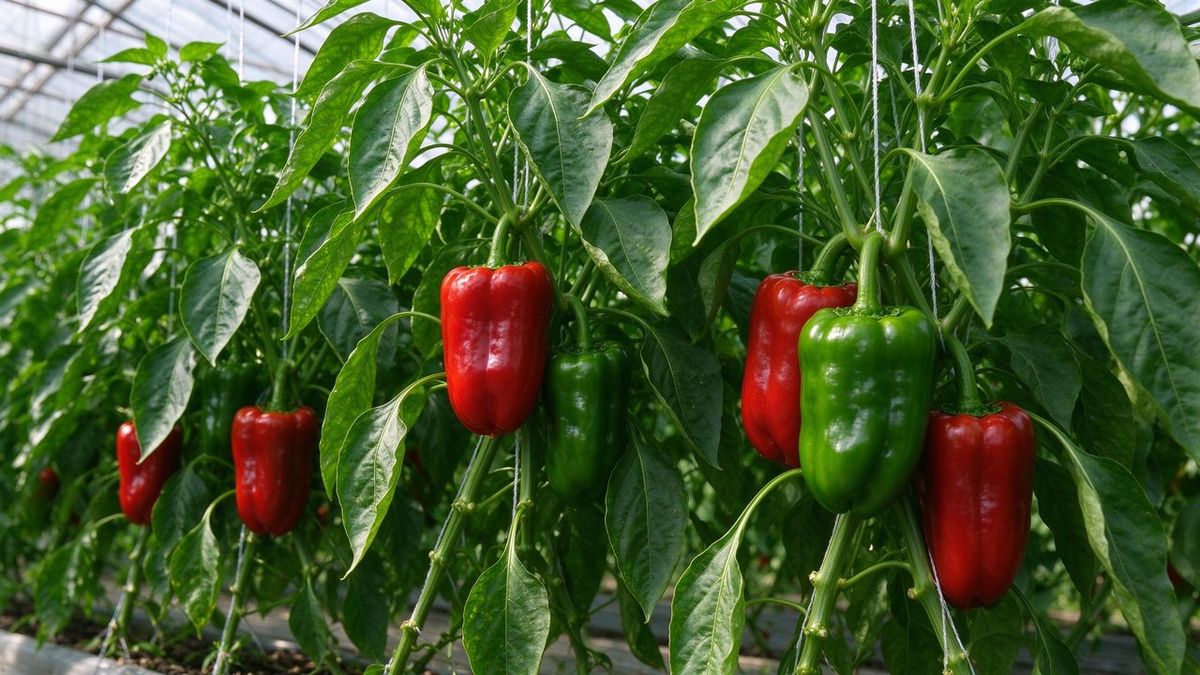
Chili and hot pepper (Capsicum annuum, C. frutescens, C. chinense) are high-value, low-volume crops that fit controlled environment agriculture well: high planting density, stacked vertical production, and premium pricing for fresh or dried fruit. Controlled climate lifts pungency, colour, and uniformity, and allows year-round production of cultivars that would not survive outside. The systems differ from bell pepper in density, light, and harvest frequency.
Choosing the Chili Type and Market
Fresh jalapeno, serrano, and cayenne sell to food service; habanero and bhut jolokia sell at premium price to sauce makers; decorative ornamental chilies sell at retail. Each type has different height, fruit size, and harvest frequency. Plan the market before the system.
Heat units: jalapeno 2500 to 8000 Scoville, cayenne 30000 to 50000, habanero 100000 to 350000. Controlled environment raises pungency by 20 to 30 percent versus open field because stress is controlled and consistent. Premium hot peppers command 15 to 25 euro per kilogram at wholesale, and food-service buyers pay a steady premium for year-round fresh supply.
Density and Vertical Production
Chili pepper is smaller than bell pepper and tolerates 4 to 6 plants per square metre in a single layer. In vertical farming, stack two to three tiers at 40 cm spacing with LED at 250 micromoles per square metre per second for 14 hours. Yield 4 to 6 kg per square metre per cycle in vertical production.
Train to two stems per plant and prune weekly. Chili is naturally bushy; remove lower leaves to open the base. Fruit hangs at the node; one plant produces 40 to 60 fruit over a 12-week cycle. Vertical systems need stronger structural support because the stacked weight of fruit adds up.
Climate and Light for Pungency
Day 24 to 28 degrees, night 18 to 20. Chili likes it 2 to 3 degrees warmer than bell pepper. Low night temperature below 15 reduces pungency; high light above 400 micromoles raises capsaicin content by 25 percent. Supplemental LED at 300 micromoles for 14 hours is standard.
Slight water stress raises pungency: allow the slab to dry to 60 percent of field capacity between irrigations during fruit development. Full irrigation produces larger but milder fruit. Balance pungency against fruit size for the target market.
Nutrition and Irrigation
Feed EC 2.4 to 2.8 mS per cm, pH 5.5 to 5.8. Chili is more salt-tolerant than bell; EC up to 3.0 is acceptable. Potassium at 220 to 260 mg per litre improves fruit wall thickness. Keep nitrate 140 to 160, calcium 200 to 220.
Irrigation 1.0 to 1.5 litres per plant per day. Use shorter pulses (150 ml) every 60 minutes. Drainage 20 to 25 percent, slightly less than bell pepper because controlled water stress is desired. Monitor leaf colour daily; deep dark green with slight purple tint indicates high pungency.
Harvest and Post-Harvest
Harvest green at 60 percent colour for fresh market, or leave to full red for premium. Fruit takes 50 to 60 days from anthesis to green, plus 15 to 20 days to red. Cut with scissors, leave a 1 cm stem. Harvest twice per week.
Store fresh chili at 7 to 9 degrees and 90 percent RH; do not chill below 5 or chill injury pocks the skin. Dried chili hangs in 35 to 40 degree air for 5 to 7 days to 10 percent moisture. Zhongtian Agricultural Technology produces fresh jalapeno and habanero under LED vertical racks for year-round food-service supply, where the premium price covers the energy cost.
Chili pepper is a high-value controlled-environment crop: 4 to 6 plants per square metre, 26 degrees day temperature, LED at 300 micromoles, and slight water stress to boost pungency. The premium price per kilogram justifies the vertical LED energy cost and yields a profitable small-footprint crop.


