
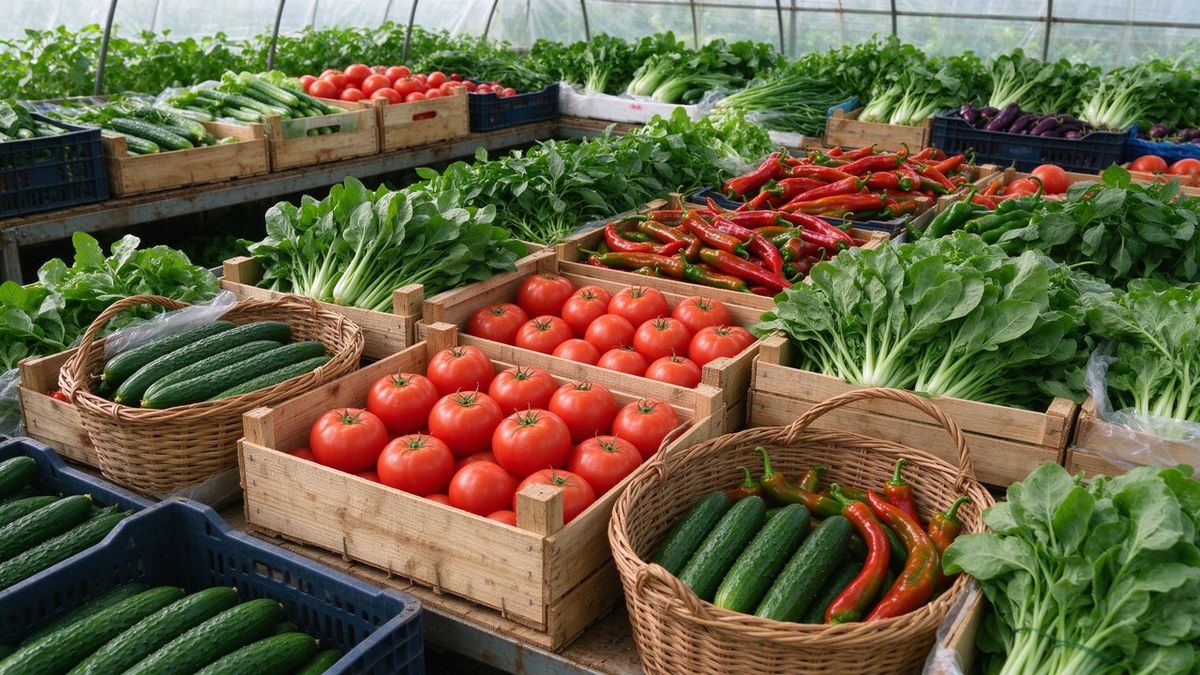
Cut-and-come-again (CaCA) harvesting is the practice of repeatedly cropping the same leafy plant by cutting it back to a defined stubble height, allowing new leaves to emerge from the basal meristem. It works for chard, kale, mustard, endive, chicory, parsley, and Asian greens, and it stretches a single planting across three to six cuts over 60 to 120 days. The method raises yield per square meter and smooths weekly labor demand, but it raises disease pressure because the cut surface is an entry wound. Success depends on stubble height, blade sanitation, drying time, and strict removal of outer senescent leaves at each pass.
Which Crops Recover Well
CaCA works best for plants with an active basal crown: Swiss chard, perpetual spinach, kale, mustards, mizuna, endive, escarole, and chicory. It does not work for head lettuce, Chinese cabbage, or pak choi, which bolt or rot after a cut. First cut at 25 to 35 days, when outer leaves reach 15 to 20 centimeters; leave a stubble of 3 to 5 centimeters above the crown so new leaves have residual photosynthetic tissue. Cutting lower than 2 centimeters shocks the plant and invites crown rot.
Crop recovery depends on temperature. At 18 to 22 degrees, a new flush of marketable leaves is ready in 14 to 21 days; at 12 to 15 degrees, allow 25 to 30 days. Track growing degree days above a 5 degree base; each cut typically requires 250 to 350 GDD. Plan 3 to 6 cuts per planting, then replant because old crowns become woody and yields decline after the sixth cut.
Cutting Height and Blade Technique
Use a sanitized curved knife or handheld electric shear. Hold the blade at 15 degrees to the row and slice cleanly through the petioles in one pass; sawing tears the crown and invites disease. For rosette crops such as endive, pick outer leaves individually by hand rather than shearing, because the central heart must remain untouched. For upright chard, shear the whole row at 4 centimeters above the crown.
Sanitize the blade between every block of 50 meters, dipping in 0.5 percent peracetic acid or 70 percent ethanol. Dirty blades transmit bacterial leaf blight and Xanthomonas across rows within a single morning. Avoid cutting wet foliage; dew or drip water on the cut surface raises soft-rot risk by a factor of three. Cut between 09:00 and 13:00 so wounds dry before nightfall.
Post-Cut Fertigation
After a cut, the plant loses 40 to 60 percent of its leaf area and its demand drops sharply. Pause irrigation for 24 hours to let wounds seal, then resume at 70 percent of the previous rate for three days before returning to full schedule. Apply a foliar feed of 0.2 percent calcium nitrate plus 0.1 percent potassium nitrate the day after cutting, which speeds regrowth by three to five days.
Nutrient solution should be held at an electrical conductivity of 1.8 to 2.2 mS/cm during regrowth, slightly higher than during the first flush, because new leaves are nutrient-hungry. Check pH weekly and keep it between 5.8 and 6.3. If regrowth is uneven, suspect a root problem rather than a fertilizer issue; pull a plant and inspect the crown for Pythium or Rhizoctonia brown lesions.
Disease and Crown Hygiene
The biggest CaCA risk is bacterial soft rot at the crown, which develops when debris and water accumulate around the stubble. Remove cut petiole pieces and fallen leaves at every pass; do not leave trimmings on the bed. Run horizontal air flow fans at 0.4 m/s for 4 to 6 hours after each cut to dry the stubble. Apply a protective copper hydroxide drench at 1.5 g/L at the base of the row the day after cutting.
Sclerotinia white mold can develop on old crowns in cool, wet weather; scout for the characteristic white fluffy growth and black sclerotia on the lower stem. Remove affected plants immediately and do not replant that block for at least six months without solarization. Downy mildew on the regrowth flush is common in autumn; vent aggressively after sunrise and rotate fungicides such as cyazofamid and mandipropamid.
Yield Economics and Labor
CaCA typically produces 6 to 10 kilograms per square meter over a full multi-cut cycle, compared with 3 to 4 kilograms from a single direct-harvest planting. The first cut yields the least, 1.0 to 1.5 kilograms per square meter; cuts two through four are heaviest at 1.5 to 2.0 kilograms each. Labor per kilogram is lower on multi-cut systems because beds are prepared once, but weekly harvest passes are non-negotiable.
Plan labor as a fixed weekly block: two harvest workers can cut and pack about 150 kilograms per day on a 200 square meter table. Track cut number as a separate KPI; buyers prefer uniform leaf size, and cut four through six often produces smaller, tougher leaves. Replant when average leaf weight drops below 8 grams. Zhongtian Agricultural Technology provides bench systems, sanitizer stations, and climate controls that keep post-cut humidity below 75 percent and dry stubble within four hours of harvesting.
Cut-and-come-again multiplies yield per square meter but turns the cut wound into the main disease gate. A fixed 3 to 5 centimeter stubble, sanitized blades, post-cut drying, and disciplined removal of debris turn a multi-cycle planting into a lower-cost, higher-output production system.


