
The Problem With Soil Fumigation
Bacterial wilt, caused by Ralstonia solanacearum, is among the most destructive soil-borne diseases of tomato. The pathogen has a wide host range and persists in soil for years, which makes crop rotation largely ineffective. Once established, losses can approach one hundred percent within a single season.
Soil fumigants including methyl bromide, chloropicrin, and mixtures with 1,3-dichloropropene have historically been the main defence. Methyl bromide has been phased out under the Montreal Protocol, and remaining fumigants provide inconsistent control of bacterial wilt while raising applicator safety and environmental concerns.

Why Grafting Works
Grafting separates the traits that matter. Rootstock cultivars carry genetic resistance to bacterial wilt but often produce small or unmarketable fruit. Scion cultivars produce the large, uniform, well-coloured tomatoes the market demands but lack resistance.
Joining the two gives a plant with resistant roots and commercial fruit. This is not a new idea, but it has become the practical default wherever bacterial wilt pressure is high and fumigation is unavailable or undesirable. The approach also transfers resistance to other soil-borne problems at the same time, including Fusarium and Verticillium wilts and root-knot nematodes.
Rootstock Resistance Is Specific
Resistance is not a single trait but a package, and it must match the pathogen population present. Fusarium oxysporum f. sp. lycopersici has multiple races; most commercial rootstocks carry resistance to races 1 and 2, while resistance to race 3 is less common but increasingly needed in some regions.
The same logic applies to nematodes. Rootstocks differ in the species and populations they suppress. Knowing the local pathogen profile, through soil testing and diagnostic laboratory work, is a prerequisite for choosing a rootstock rather than an optional refinement.

Grafting Technique and Hygiene
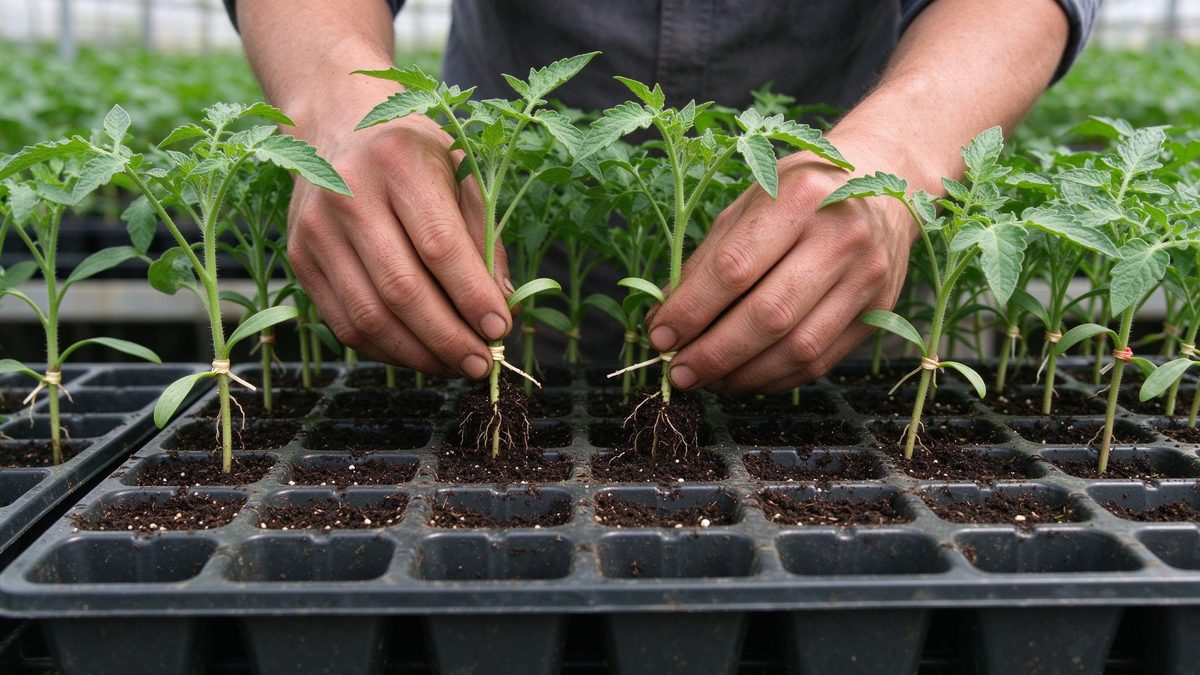
Cleft, side, and splice grafting are the three main methods used commercially. Splice grafting, also called tube grafting or Japanese top grafting, dominates in solanaceous crops because it is fast, reliable, and suits automated nurseries with silicone clips.
Hygiene determines whether grafting helps or spreads problems. Bacteria and viruses pass readily from plant to plant on hands, blades, and benches. Sterilising cutting tools between batches, working with clean gloves, and discarding symptomatic material are not optional steps. A grafting programme with poor hygiene will distribute pathogens across the entire nursery.
The secondary benefits are harder to quantify but real: eliminated fumigation cost, reduced applicator risk, and the ability to keep high-value land in production. Growers who document the comparison across two seasons usually find the case stronger than they expected.
Grafted transplants cost two to four times more than standard seedlings. The calculation is straightforward: compare the added cost per plant against the value of the yield that would otherwise be lost. In fields with heavy bacterial wilt pressure, losses approach totality, so payback is immediate.
Economics of the Transition
Laboratory diagnosis of stem tissue or soil is the reliable route. Sampling symptomatic plants early, before the population collapses, gives the laboratory usable material. Where bacterial wilt is confirmed, grafting becomes a rational investment; where it is not, the money is better spent elsewhere.
Not every wilting tomato crop is bacterial wilt. Fusarium wilt, Verticillium wilt, Pythium root rot, and nematode damage produce similar above-ground symptoms. Treating the wrong cause wastes a season and discredits the method.
Diagnosing the Problem Before Grafting
Conclusion
Where bacterial wilt limits production, grafting converts an unsolvable soil problem into a manageable plant-level solution. Match rootstock resistance to local pathogen profiles and enforce nursery hygiene. Shouguang Zhongtian supplies grafted seedling programmes and technical support for growers rebuilding tomato production on contaminated land.


