
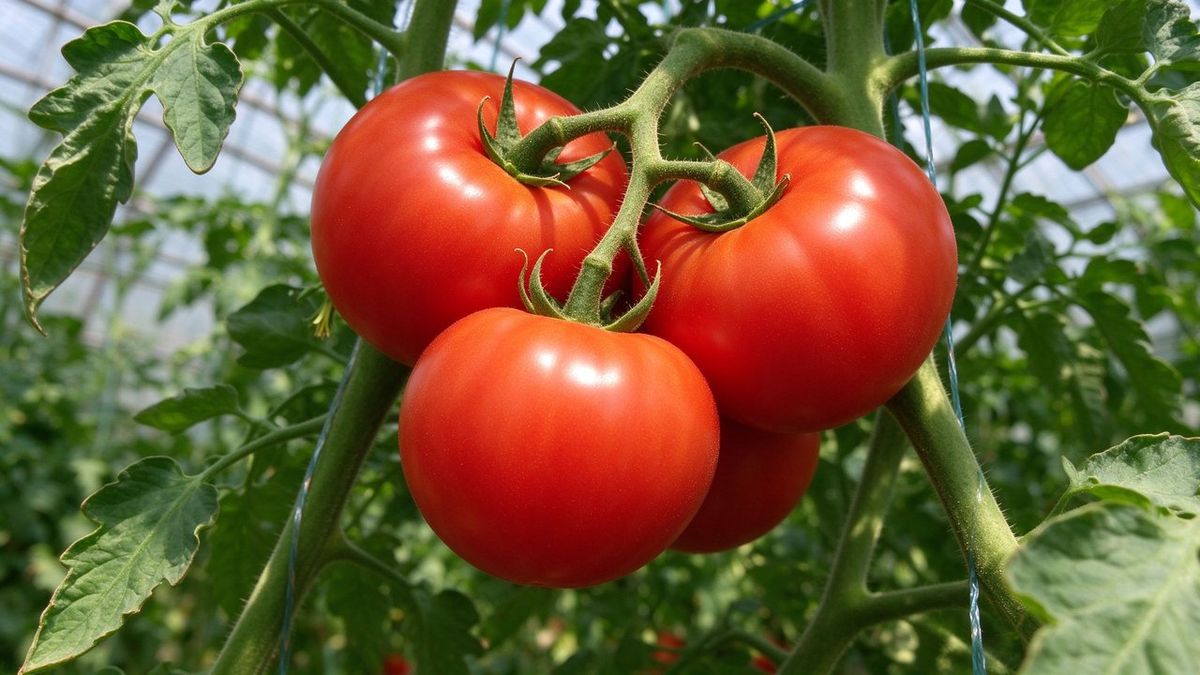
Greenhouse tomato production is the backbone of protected vegetable growing, and steady yields depend on disciplined climate management, balanced nutrition, and continuous training of the crop. This guide walks through the key decisions from transplant establishment to final harvest.
Transplant Establishment
Transplants should be moved into the greenhouse when they have five to seven true leaves and a well-developed root ball. Plant them at the same depth as in the tray, avoiding deep setting that can invite stem rot. Water in with a dilute starter fertilizer containing phosphorus to encourage rapid root expansion.
Maintain a root zone temperature of 18 to 22 degrees Celsius during the first two weeks. Night air temperature can be held near 16 degrees Celsius while days reach 24 to 26 degrees Celsius. This gentle gradient avoids the shock that delays early growth and reduces blossom drop.
Training and Pruning
Train the crop to a single stem by removing all side suckers when they reach five to seven centimeters. Use soft twine attached to an overhead trellis wire, lowering and winding the plants as they grow. Remove yellowing lower leaves weekly to improve air circulation and expose fruit to light.
Pruning should stop about six to eight leaves above the top fruit truss once the crop enters its final phase. This balances vegetative vigor with fruit load and prevents an overly dense canopy that traps humidity and disease.
Nutrition and Water
Use drip irrigation with an emitter flow of two liters per hour and supply a complete nutrient solution with an EC of 2.5 to 3.5 millisiemens per centimeter and a pH between 5.8 and 6.2. Increase potassium relative to nitrogen as fruit begins to swell.
Check drainage daily and leach lightly whenever soluble salts build up. Consistent moisture prevents the fluctuations that cause fruit cracking and blossom end rot.
Pest and Disease Control
Release Encarsia formosa and Amblyseius swirskii to manage whitefly and thrips before populations build. Use yellow sticky cards at twenty per mu to monitor. Ventilate to keep relative humidity below eighty percent and irrigate early so foliage dries by midday.
Remove infected lower leaves promptly and sanitize tools between rows to limit the spread of botrytis and leaf mold.
Greenhouse tomato rewards consistency: a stable climate, balanced feed, and weekly pruning turn a small transplant into a long harvest of uniform marketable fruit. Zhongtian Agricultural Technology supports growers with integrated climate and fertigation packages tailored to local conditions.


