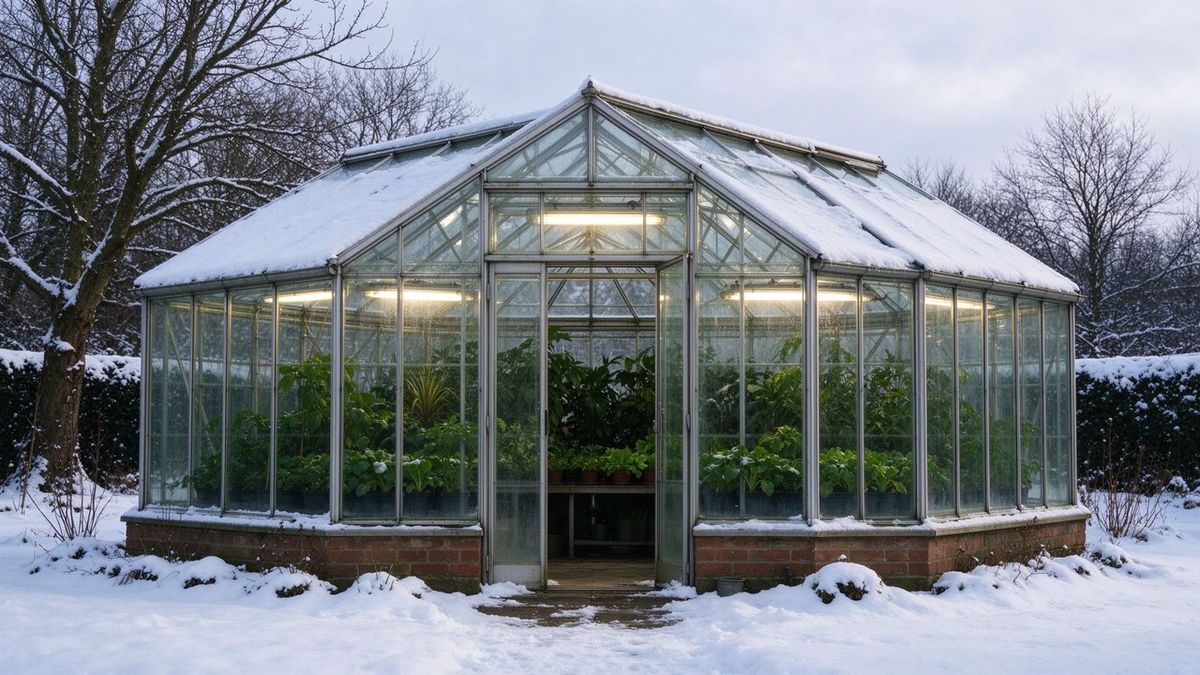
Cold climate greenhouses, where outside temperature drops to minus 20 degrees Celsius and winter light is below 10 mol per square metre per day, demand tomato varieties bred for short days and cool roots. These varieties set fruit at lower temperatures, tolerate 15 degrees Celsius nights, and hold shelf life without heating. The right variety can yield 45 to 55 kg per square metre per year in a cold greenhouse, while a wrong choice drops yield by half. Choose for cold set, disease package, and rootstock vigour.
Cold Fruit Set
Standard tomatoes set fruit poorly below 16 degrees Celsius night temperature. Cold-climate varieties set at 12 to 14 degrees Celsius night, because their pollen remains viable at cooler temperatures. Look for varieties tested in Nordic or Canadian greenhouses.
Rootstock matters as much as scion. Vigorous rootstocks such as Maxifort or Armada boost cold tolerance by lifting root-zone activity. Grafted plants cost 1.2 to 1.8 euro each, but yield 10 to 15 percent more in cold houses.
Disease Package for Cold Houses
Cold houses run high humidity, which favors Botrytis and leaf mold. Choose varieties with Cf resistance for leaf mold and a broad Botrytis tolerance. Resistant varieties show no symptoms even at 90 percent RH.
Also require resistance to TYLCV, ToMV, Fol, and Verticillium. Cold houses often run recirculating water to save heat, which increases virus and fungal pressure. A stacked resistance package is non-negotiable.
Yield and Fruit Quality
Cold-climate varieties yield 45 to 55 kg per square metre per year, 10 to 15 percent below warm-house varieties. But they hold colour and firmness better under low light, so the marketable fraction is higher. Target Brix of 5.5 to 6.5 for round tomatoes.
Fruit size is usually medium: 150 to 180 g round salad types. Large beefsteaks crack under cold humidity. Choose cocktail or truss types for the most reliable winter packout.
Root Zone and Heating
Keep root-zone temperature at 18 to 20 degrees Celsius even when air is cooler. Heating pipes beneath the slab at 20 degrees Celsius pay back in the first truss. Roots at 15 degrees Celsius take up calcium at half the rate, triggering blossom end rot.
Run a cooler day-night strategy: 20 degrees day, 14 degrees night. A small swing saves heating energy without stressing the plant. Avoid heating and venting at the same time.
Piloting and Trial
Test three cold-climate varieties on 50 square metres for one season. Record weekly: fruit set per truss, average fruit weight, Brix, and percent cracked. After 12 weeks, the variety with the highest saleable kg is the keeper.
Keep a row of the incumbent variety as a check. Without a check, winter weather differences make it impossible to judge. Zhongtian Agricultural Technology runs a cold-climate trial block each winter so growers can compare varieties side by side.
Measure root-zone temperature at two points per block weekly. A block running below 18 degrees for more than 3 days will show blossom end rot on the first truss, regardless of variety. Fix the heating before blaming the cultivar.
Cold-climate tomatoes are a different crop. Choose varieties that set at 12 to 14 degrees nights, graft on vigorous rootstock, hold root zone at 18 degrees, and pilot on 50 square metres. The 45 to 55 kg per square metre yield in a cold house beats a wrong variety by a factor of two. A weekly root-zone temperature log confirms that heating pipes are delivering 18 degrees, and a stem diameter check below 9 mm signals that the plant needs extra potassium or a lower fruit load. Record every variety trial in a block log so the next winter’s seed order is data-driven rather than guesswork. Zhongtian Agricultural Technology supports cold-climate growers with a trial block each winter.