
Root aphids (Pemphigus, Rhopalosiphum, and especially the lettuce root aphid Pemphigus bursarius) and fungus gnats (Bradysia spp.) are two of the most damaging below-ground pests in greenhouse leafy-green production. Root aphids colonize the root mat, sucking sap and secreting honeydew that fuels sooty mold; fungus gnat larvae chew root hairs and tunnels in the crown, spreading Pythium and Thashanans. Both thrive in wet, organic media and recirculating water. Control is most effective when it combines exclusion, biological control with entomopathogens and beneficial insects, and sanitation, rather than relying on a single chemistries.
Life Cycle and Damage
Fungus gnats complete a generation in 21 to 28 days at 20 degrees. Adults are 3 to 4 millimeter dark flies that run across the medium surface; larvae are translucent, 5 to 7 millimeter worms with a black head that feed on root hairs and organic matter. Heavy infestation causes wilting, yellowing, and a 20 to 40 percent yield loss, and the wounds they open are the main entry point for Pythium root rot.
Root aphids live 2 to 4 millimeters long, pale waxy colonies on the roots. Winged adults fly up between crops and re-invade clean slabs, which is why outbreaks appear in waves. Damage includes stunting, leaf curling, and a general decline that looks like nutrient deficiency until you pull a plant and see the white waxy root colonies. Honeydew on the medium surface often breeds a black sooty mold that further reduces root activity.
Exclusion and Monitoring
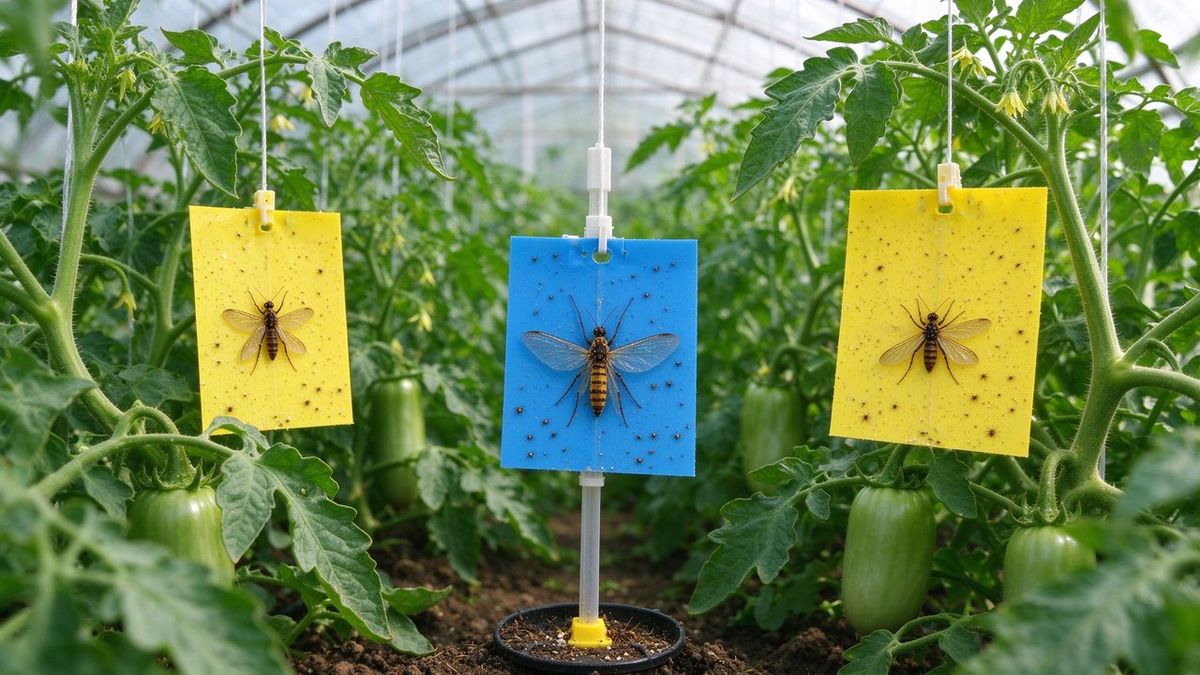
Cover all vents and doors with 40 mesh insect netting to block adult fungus gnats and winged root aphids entering from outside. Install air curtains on main doors. Use yellow sticky cards at one per 10 to 15 square meter, suspended 10 centimeters above the crop, to track adult flight. Count cards weekly; a rising count over two weeks is the early warning sign, long before plant damage is visible.
Place potato slices cut-side down on the medium surface to scout for fungus gnat larvae. After 48 hours, flip the slice and count larvae; more than 5 larvae per slice triggers a treatment. For root aphids, pull two plants per block per week and wash the roots in a white tray to look for waxy colonies. Record counts on a block map; hot spots are usually near doors, drains, and standing water.
Biological Control Program
Apply the entomopathogenic nematode Steinernema feltiae at 250 million per 100 square meter, watered into the medium at 15 to 20 degrees, every 14 days. It kills fungus gnat larvae within 48 hours and is safe for bumblebees and parasitoids. For root aphids, apply the parasitic wasp Aphelinus abdominalis at 0.5 per square meter, or the predatory midge Aphidoletes aphidimyza at 0.5 per square meter weekly during the warm season.
Use the soil mite Hypoaspis miles (now Stratiolaelaps scimitus) at 250 per square meter at transplant, which feeds on fungus gnat eggs and young larvae for 6 to 8 weeks. Combine with Bacillus thuringiensis israelensis applied at 50 mg/L through the irrigation every two weeks. Biologicals must be applied before populations explode; they cannot rescue a severe infestation. Stop all broad-spectrum chemistries at least 14 days before release.
Sanitation and Water Management
Both pests breed in wet, decomposing organic matter. Let the top 1 centimeter of medium dry between irrigations; fungus gnat eggs need constant moisture to hatch. Clean up spilled coco and potting mix within 24 hours; do not leave piles of old slabs near the production house. Disinfect floors, benches, and channels with 0.5 percent peracetic acid between every crop cycle.
Recirculating systems need filtration. Fit a 200 micrometre screen before the sump and a UV sterilizer at 40 mJ/cm2 to kill fungal spores. Do not reuse runoff without treatment; root aphids and Pythium spread through the tank. Remove dead plants immediately and bag them for off-site disposal; do not compost in place.
Rescue Chemistry and Resistance
If biologicals fail and larvae exceed the action threshold, apply a soil drench of chlorantraniliprole at 0.3 mL per liter or spinosad at 0.3 mL per liter through the drip. These have low bee toxicity when applied to the soil, but stop bumblebee hives 48 hours before application. Rotate chemistries across IRAC groups to avoid resistance; never apply the same active ingredient more than twice per season.
Do not spray adults with contact pyrethroids inside the greenhouse; they kill beneficials faster than the pest and trigger spider mite outbreaks within three weeks. Track costs per square meter: a full biological program runs about 0.8 to 1.2 RMB per square meter per month, compared with 3 to 5 RMB per rescue chemistry pass plus 5 to 15 percent yield loss. Zhongtian Agricultural Technology supplies UV sterilizers, 40 mesh vent netting, and automated drip injectors that deliver nematode and Bt treatments evenly across every bench.
Root aphids and fungus gnats are below-ground pests that are beaten by dry surface medium, clean water, and early biological control rather than by rescue sprays. A weekly scouting log, UV-treated recirculation, and a fixed Steinernema and Hypoaspis program keep populations below threshold across the whole production year.


