
Introduction
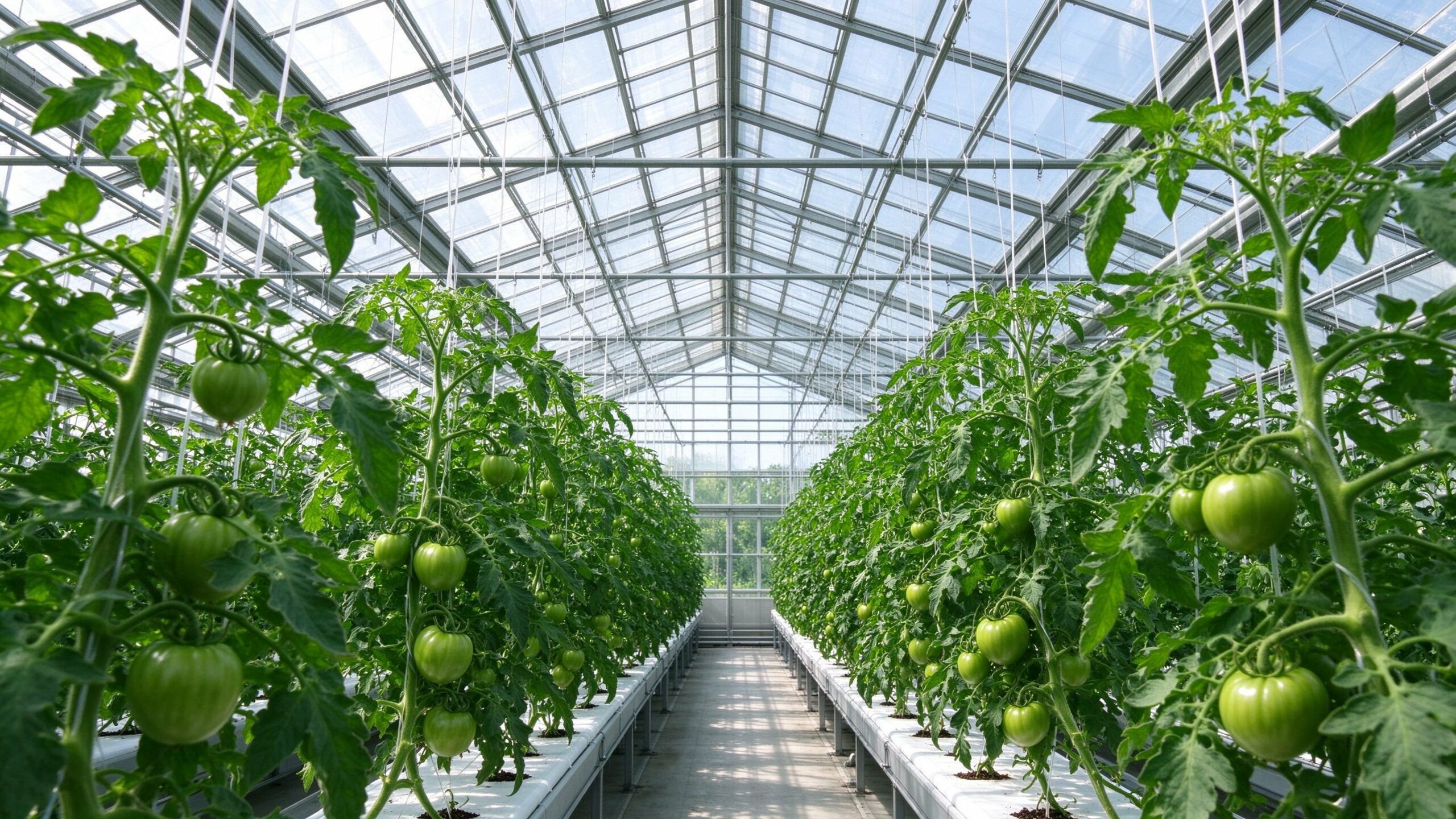
Tomatoes are the most widely grown vegetable in commercial greenhouses worldwide, representing a cornerstone of controlled environment agriculture. Under protected cultivation, growers can produce premium-quality fruit year-round, achieving yields of 40 to 60 kilograms per square meter annually, which is several times higher than open-field production. Shouguang Zhongtian supports growers with turnkey greenhouse systems engineered specifically for optimal tomato production, from structure design to climate control integration.
Successful tomato cultivation in greenhouses depends on precise environmental management, balanced crop nutrition, and disciplined pruning and training. The crop requires careful attention to temperature, humidity, light, and pollination throughout its 10 to 12 month production cycle. This guide covers the essential practices that commercial growers need to master for profitable tomato production.
Figure 1: Modern greenhouse by Shouguang Zhongtian
Climate Requirements
Tomatoes thrive in day temperatures between 20 and 26 degrees Celsius and night temperatures between 15 and 18 degrees Celsius. Relative humidity should be maintained at 65 to 80 percent to support pollination and fruit development while reducing disease pressure. Shouguang Zhongtian recommends installing automated climate computers that integrate temperature, humidity, and CO2 sensors for precise environmental control.
During winter months, supplemental heating may be required in colder climates. Energy screens and thermal screens help retain heat at night and reduce energy costs by up to 40 percent. In summer, evaporative cooling pads and shading systems prevent excessive heat buildup that can cause flower drop and poor fruit set. Maintaining optimal conditions year-round is essential for consistent yields.
Nutrition and Fertigation
Tomatoes require a balanced nutrient program with adequate calcium to prevent blossom end rot, a common disorder that reduces marketable yield. Electrical conductivity levels should range from 2.5 to 3.5 mS/cm, with a pH maintained between 5.5 and 6.5. Drip irrigation delivers water and fertilizer directly to the root zone, ensuring efficient nutrient uptake and minimizing waste.
Regular monitoring of runoff solution is essential for long-term crop health. Growers should test the drainage at least once per week to adjust nutrient ratios and prevent salt accumulation in the root zone. The nutrient solution composition should be adjusted based on the growth stage: higher nitrogen for vegetative growth and increased potassium and calcium during fruit development.
Figure 2: Professional growing system
Pruning and Training
Indeterminate tomato varieties are typically trained to a single stem using the high-wire or V-cordon system, which allows continuous growth and production. Side suckers are removed weekly to direct the plant’s energy toward fruit production rather than excessive vegetative growth. Lower leaves are pruned as the crop matures to improve air circulation and reduce disease pressure.
Pollination is commonly achieved using bumblebee hives, which are highly effective at vibrating flowers to release pollen. Mechanical vibrators are used as an alternative. Consistent pollination ensures uniform fruit set and reduces misshapen or catfaced fruit that must be culled at harvest. Proper pruning also improves light penetration into the canopy.
Whether you are building your first greenhouse or expanding an existing operation, choose suppliers who understand both engineering and horticulture. The right partner provides not just equipment, but long-term support that helps your business grow.
Monitor your crops and environment continuously. Small adjustments in temperature, humidity, irrigation, and nutrition compound into large differences in yield and quality over a growing season. Keep detailed records to learn from each crop cycle.
Successful greenhouse production depends on three pillars: a well-designed structure, precise environmental control, and disciplined crop management. Investing in quality equipment from the beginning prevents costly problems later. Start with a clear business plan and a realistic budget before construction begins.
Key Takeaways for Growers
Conclusion
Commercial tomato production in greenhouses demands attention to every detail of the growing environment. With the right greenhouse structure, climate control system, and disciplined management practices, growers can achieve exceptional yields and fruit quality. Shouguang Zhongtian provides comprehensive solutions from greenhouse design and construction to ongoing agronomic support, helping growers maximize return on their investment in protected tomato production.


