
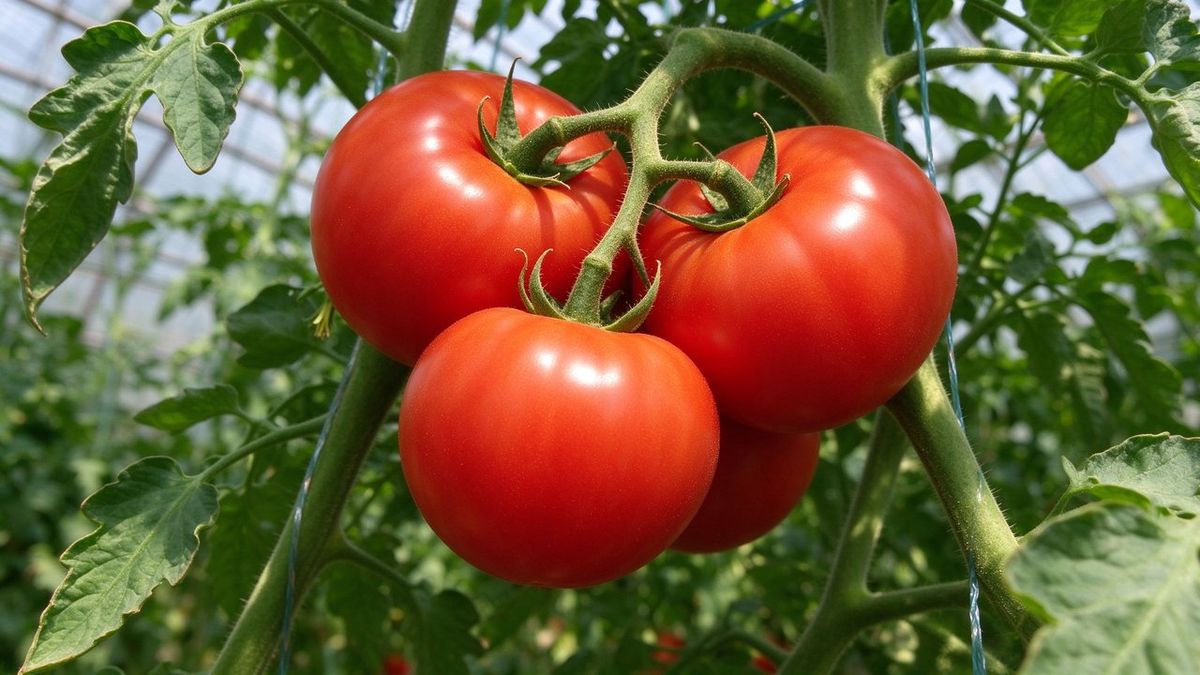
Tomato truss management is the art of matching fruit load to photosynthetic capacity. A single truss that sets 16 fruit on a weakly lit week will produce 60 g tomatoes instead of 180 g beefsteaks, will delay colouring by 5 to 7 days, and will pull assimilates from the next truss. Fruit thinning, truss pruning, and green harvesting are recurring operations, not one-off jobs. Done on a fixed calendar, they lift marketable yield by 10 to 20 percent and even out the weekly harvest flow across a 12-month crop.
Fruit Number Targets by Fruit Size
Beefsteak varieties target 4 to 6 fruit per truss; round salad types 7 to 9; cocktail and medium cherry 10 to 14; small cherry 16 to 22. Thin at the pea-sized stage, 7 to 10 days after anthesis, when fruit is 10 to 15 mm in diameter. Waiting longer wastes assimilates and leaves larger wounds on the truss.
Remove the smallest, most misshapen fruit first. The distal fruit on a truss always develops slowest; it is the first candidate for removal. Leave symmetrically spaced fruit so that they do not touch when mature. Touching fruit creates pressure points that become mould entry points during wet spells.
Truss Pruning to Reduce Disease
Prune the side laterals that emerge at the base of the truss just as you would prune stem suckers. These truss laterals grow 10 to 15 cm long within a week and shade the fruit. Snap them out by hand when 5 cm long.
Lower trusses touching the floor are the first to infect with Botrytis. Use a truss hook or clip to lift trusses 20 cm above the slab. Plastic truss clips cost 0.02 euro each but reduce floor-contact rot by an estimated 80 percent on the lowest two trusses.
Green Harvesting and One-Truss-Ahead Strategy
On high-wire crops, harvest one truss ahead of full colour to even out weekly supply. Cut the truss when 5 to 10 percent of fruit is at the breaker stage and finish ripening in a 18 to 20 degrees Celsius room. This protects the plant from over-ripening on the vine in bright weeks and lets harvest crews work on a fixed Monday and Thursday schedule.
Ripening rooms must hold 90 to 95 percent relative humidity and 150 ppm ethylene if fast colour is required. Without ethylene, trusses taken at breaker take 6 to 8 days to full red at 20 degrees Celsius; with controlled ethylene, 3 to 4 days. Temperature above 22 degrees Celsius destroys lycopene and leaves fruit yellow-orange.
Loading and Source-Sink Balance
Count the active leaf area above the truss. A beefsteak truss needs 12 to 14 fully expanded leaves above it to fill 5 fruit to 180 g. If the leaf count is lower, thin one extra fruit per truss. A simple weekly rule: after leaning, if the top of the plant has fewer than 12 leaves, reduce fruit load by one.
Electrical conductivity adjusts source-sink tension. Raise root-zone EC by 0.5 mS per cm above the standard 3.5 to 4.0 when fruit is swelling fast; this concentrates sugars and slows excess vegetative growth. Lower EC by 0.3 mS after a dark week to avoid stressing the plant.
Scheduling and Labour
Thin on a fixed two-day cycle so that every truss is visited at the correct pea-size stage. A 1000-square-metre high-wire crop needs about 4 labour-hours per week for thinning and truss clipping. Track the time spent per truss and re-train crews if the average rises above 90 seconds per truss.
Use a simple colour tag on the first truss set each week. Crews then thin only the trusses in the target window and skip the rest. This reduces walk-through time by 30 percent and prevents over-thinning of trusses that have not yet reached pea size.
Truss management is where yield meets quality. Target fruit numbers by variety, thin at pea size, lift trusses off the floor, and adjust EC with the light level. The payoff is fruit that reaches its target weight every week, with less grey mould and a harvest schedule that crews can plan around.


