
The Limits of Static Lighting
Supplemental lighting was once simple: switch the lamps on for a fixed photoperiod and accept whatever intensity the fixture delivered. Research has since shown that static schedules waste energy. Plants do not photosynthesise at a constant rate through the day, and a fixed intensity over-delivers at some hours and under-delivers at others.
Experiments on lettuce and basil have compared constant light against schedules that vary intensity or timing while keeping the total daily light integral identical. Dynamic intensity produced measurable gains in dry weight and light use efficiency, while poorly designed dynamic schedules performed worse than constant light. The difference lies in whether the variation matches plant physiology.

Short Cycling and Photosynthetic Induction
Rapid on-off cycling sounds attractive because it cuts electricity use, but photosynthesis responds slowly after a dark interval. Very short cycles, in the range of twenty minutes on and ten minutes off, reduced growth because the canopy spent too much of each cycle re-inducting photosynthesis. Shorter intervals of ten minutes on and five off showed no penalty.
The practical conclusion is that cycling must respect induction time. Growers experimenting with intermittent lighting should measure crop response directly rather than assume that less light means proportionally less growth. A small controlled trial in one bay is the cheapest experiment available.
Spectrum as a Management Tool
Blue photons cost more to generate than red photons, so reducing blue content is an economic lever as well as a physiological one. Trials on baby leaf lettuce have found that trimming blue light by a quarter to a third, while keeping total photon flux constant, increased fresh yield because plants retained more water.
Spectrum can also steer architecture. More blue produces more compact plants suitable for transport; more red accelerates extension growth and can improve light penetration in tall crops. Far-red at the end of the photoperiod can trigger specific morphological responses. These tools are most valuable in propagation and in crops where shape determines price.

Dimming, Tariffs, and Control Logic
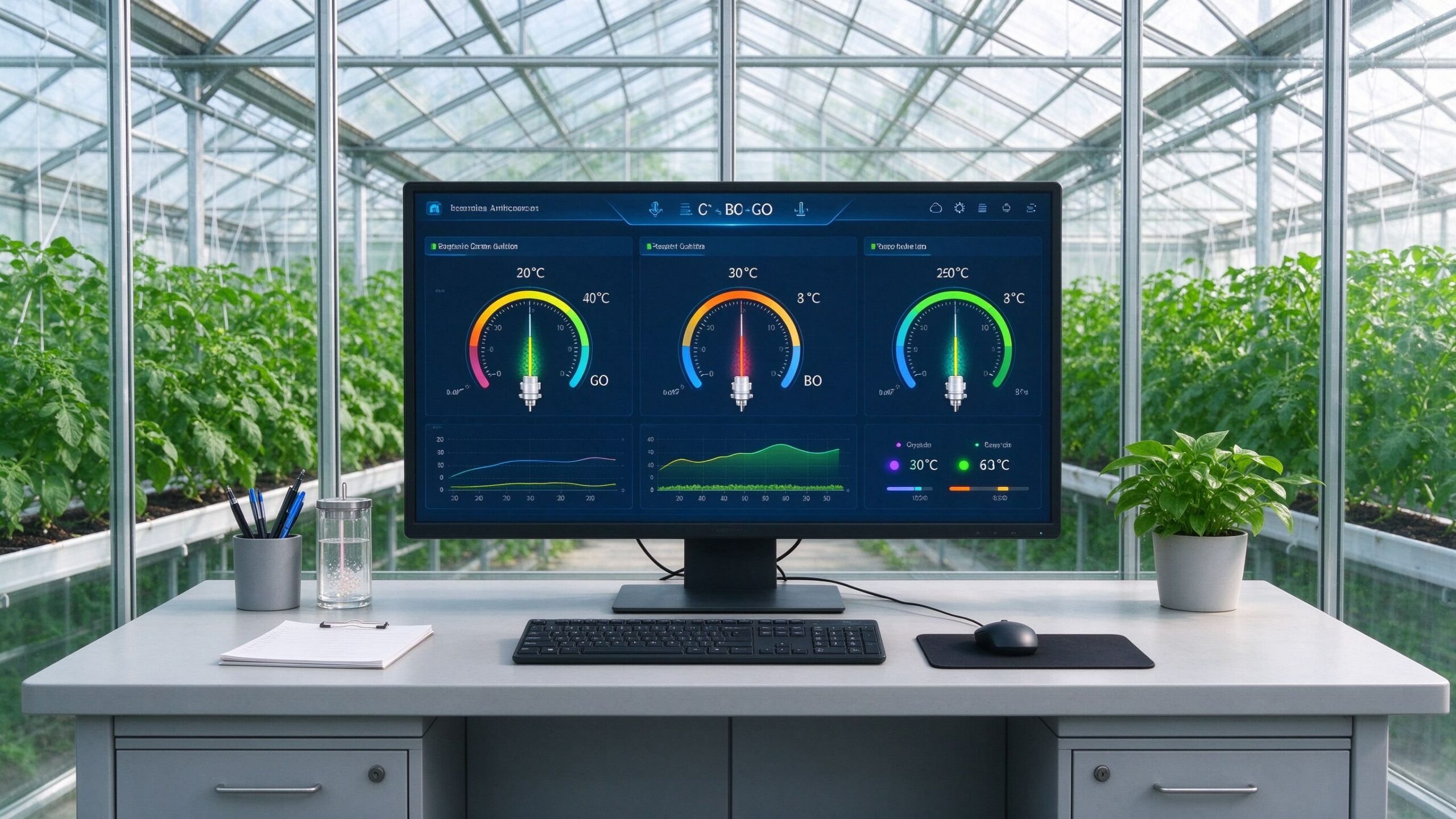
Electricity price varies through the day, and lighting is the most flexible load in most greenhouses. Controls that shift supplemental lighting into off-peak windows, or that dim fixtures when natural radiation is strong, have demonstrated substantial cost savings without yield loss.
The control layer must be reliable. A dimming system that fails at full output during a peak tariff event erases a season of savings in an afternoon. Alarm logic, manual override, and clear documentation of failure modes belong in every lighting specification.
The remedy is usually modest: adjust minimum pipe temperature, revise ventilation thresholds, or run dehumidification slightly earlier in the evening. These adjustments should be planned during the retrofit, not discovered after the first fungal outbreak. Lighting and climate control are one system, not two.
LED fixtures convert a higher proportion of electricity into light than high-pressure sodium lamps, which reduces radiant heat but also reduces the drying effect that older installations relied on. Greenhouses converted from HPS to LED frequently experience higher humidity and greater condensation risk.
Managing Heat and Humidity Side Effects
Uniformity across the canopy matters as much as total output. A bright centre and dim edges produce variable growth and inconsistent harvest dates. Light distribution maps produced during design, rather than after installation, prevent the costly retrofits that follow uneven crops.
Efficiency should be compared in micromoles per joule, not in watts per fixture. Two lamps drawing the same power can differ by thirty percent in delivered photons, and that difference compounds across a season of operation. Photon efficacy above three micromoles per joule is now achievable in commercial fixtures.
Fixture Selection and Efficiency Metrics
Conclusion
Dynamic lighting rewards growers who measure. Define the daily light integral target for the crop, then let intensity, spectrum, and timing vary around that target in ways the plant tolerates. Shouguang Zhongtian designs greenhouse lighting packages with dimmable LED fixtures and controls that integrate cleanly with the climate computer, so lighting decisions follow crop demand rather than a fixed timetable.


