
Bacterial wilt, caused by Erwinia tracheiphila and spread largely by striped and spotted cucumber beetles, is a soil- and vector-borne disease that wilts individual runners overnight and kills whole plants within a week. In greenhouse culture it is less common than in the open field, but it appears when beetles enter through vents, when infected transplants arrive, or when tools are shared with field cucurbits. There is no cure; prevention is the only strategy that works.
Recognising Bacterial Wilt
The first symptom is a single runner that wilts on a warm morning and fails to recover by evening, even though the slab is wet. Within 48 hours the whole plant wilts. Cut the stem at the base and squeeze; milky, sticky bacterial ooze strands between two cut surfaces when pulled apart. This string test distinguishes wilt from root rot, which shows brown discoloured roots but no ooze.
Pythium and Fusarium root rots also cause wilting, but they develop slowly over 2 to 3 weeks and the lower leaves yellow first. Bacterial wilt hits fast and green. Any plant that wilts suddenly in a wet slab is bacterial until proven otherwise.
Blocking the Beetle Vector
Cucumber beetles acquire the bacteria while feeding on infected plants and transmit it in their frass. Install 50 mesh insect screens on every roof and side vent; this keeps 95 percent of beetles out. Inspect screens monthly for tears and repair immediately. Insect screen reduces airflow, so raise fan duty by 20 percent to compensate.
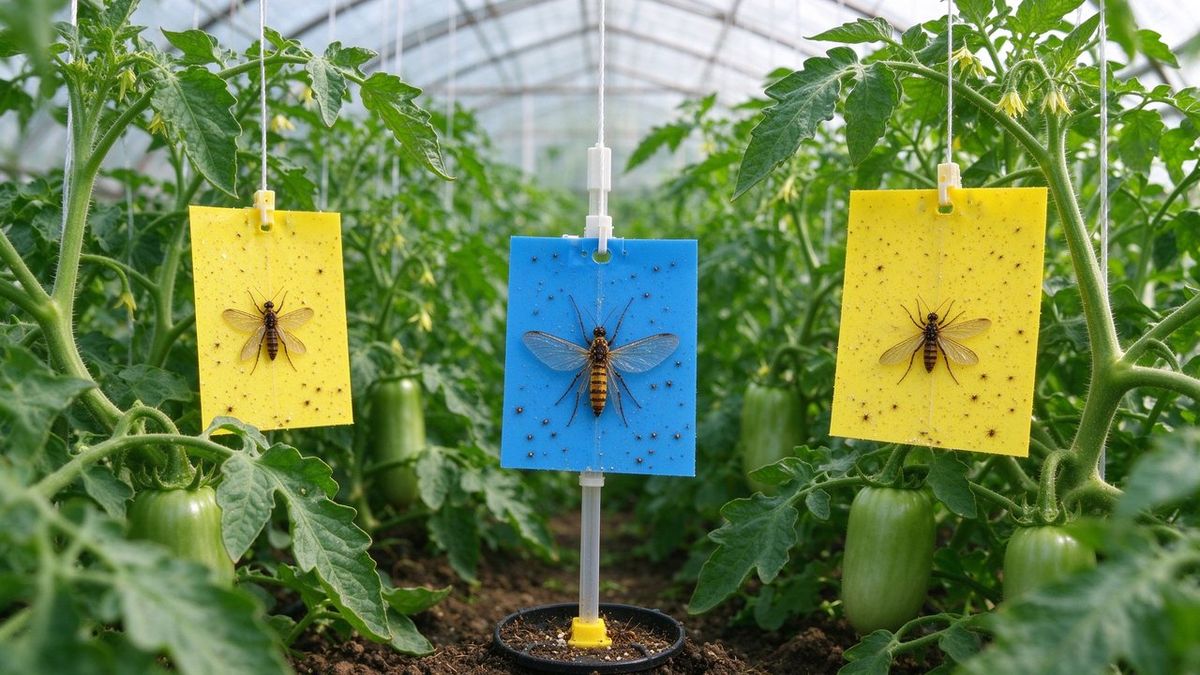
Deploy yellow sticky cards at 1 card per 200 m2, suspended 30 cm above the canopy. Threshold: more than 5 beetles per card per week triggers an intervention. A single beetle on a weed outside the vent is enough; mow all cucurbit weeds within 100 m of the house.
Clean Transplant and Tool Discipline
Start from certified disease-free transplants. Inspect every tray at the nursery; reject any with yellowing or wilted seedlings. Do not bring field-grown cucumber plants into the glasshouse for any reason, and do not reuse pruning knives from field trips without a 30-minute soak in 10 percent bleach.
Pruning and harvest tools move the bacteria on hands and gloves. Disinfect secateurs and harvest knives between bays in 70 percent alcohol, and change gloves when moving from a suspect block to a healthy one. Workers should not touch a wilted plant and then continue harvesting; the bacteria enters through any small wound.
Roguing and Disposal
As soon as wilt is confirmed, pull the entire plant and its slab, bag them in thick plastic, and remove them from the property the same day. Do not compost on site; incinerate or send to licensed waste. Treat the surrounding 3 slabs with a 1 percent bleach drench on the surface and leave them unplanted for 4 weeks.
Record the rogue event on the block map. If two roguings occur in the same bay within one month, treat the whole bay as suspect: remove all plants at the next scheduled crop break, steam the floor, and replace all slabs. Bacterial wilt survives in crop debris for up to 2 years.
Avoiding Stress that Favors the Bacteria
Wound entry is the main route. Do not over-prune, do not lower stems below a 60 cm bend radius, and avoid damaging roots during slab installation. A healthy plant with intact stem has a high resistance; a stressed plant with cold roots or high salt builds the weak wounds bacteria love.
Keep slab EC below 3.5 mS per cm; salt-stressed plants show more small wounds at the dripper line. Maintain root zone temperature above 18 degrees so root growth is continuous and wounds seal quickly. Zhongtian Agricultural Technology treats bacterial wilt as a vector-exclusion problem first and a crop-hygiene problem second; chemical sprays have no effect once the bacteria is inside the plant.
Bacterial wilt cannot be cured, so it must be excluded. Screen every vent, monitor beetle pressure on sticky cards, start from certified transplants, and rogue any suspect plant the same day. The cost of one infected slab is the whole bay if hygiene fails.


