
Root rot in greenhouse peppers is usually a complex of Pythium aphanidermatum, Phytophthora capsici, and Fusarium solani, favored by warm, waterlogged root zones above 22 degrees Celsius. Once symptoms appear — wilting in the afternoon despite wet soil, chocolate-brown roots that slough off the cortex, and stunted new growth — the pathogen has already colonized 30 percent of the root system. Management is built on drainage, irrigation discipline, and a biological soil program rather than on curative chemistry. This article walks through the diagnosis, thresholds, and treatment protocol used at Zhongtian Agricultural Technology to keep root-rot incidence below 2 percent.
Diagnosis and Field Symptoms
Early root rot appears as transient wilting on the hottest part of the day, with recovery overnight — a sign that root function is compromised but not yet destroyed. Within five to seven days, lower leaves turn chlorotic and drop, and the stem base shows a water-soaked, dark green to brown lesion. Dig up the root ball: healthy roots are pale tan with white tips; diseased roots are brown, mushy, and the outer cortex sloughs away when gently rubbed, leaving the bare central cylinder.
Laboratory diagnosis distinguishes Pythium from Phytophthora by plating on selective medium: Pythium produces coenocytic mycelium with sporangia, Phytophthora produces lemon-shaped oospores. The distinction matters because Pythium is favored by cool wet soils at 15 to 20 degrees Celsius, while Phytophthora explodes at 25 to 30 degrees Celsius. Send a sample to a diagnostic lab if more than 5 percent of plants show wilting; the cost is small compared with losing a block.
Drainage and Substrate Aeration
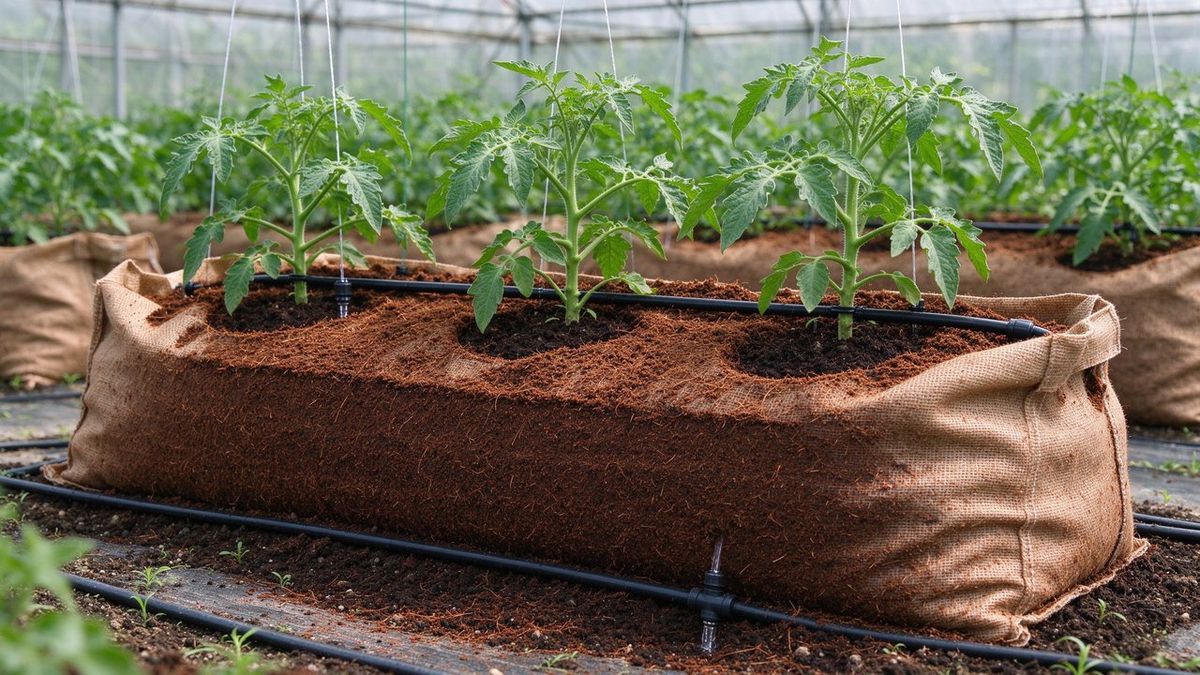
Root rot thrives when soil pore space below 30 centimeters is saturated for more than 6 hours after irrigation. In soil-bedded greenhouses, install perforated drainage lines at 0.8 meter depth, 1.5 meters apart, leading to a sump pump. Raise beds 20 centimeters above the path to keep crowns above perched water tables. In substrate culture, ensure at least 15 percent air-filled porosity at container capacity; coco coir should have 25 to 30 percent air-filled porosity, and drainage holes must never be blocked by standing water on the floor.
Irrigation scheduling is the single biggest lever. Use tensiometers or soil-moisture sensors at 15 centimeters depth, and irrigate only when matric potential drops to -15 to -20 kilopascals. In summer, split irrigation into smaller pulses rather than one heavy dose; target a 20 to 25 percent run-off that drains away within 30 minutes. Never water in the evening, because a wet warm root zone overnight is the ideal infection court.
Root-Zone Temperature and Oxygen
Root temperature above 24 degrees Celsius suppresses root respiration and favors Pythium. In summer, shade the substrate, use white-painted gutter rails, and run nutrient solution through a chiller to keep root-zone temperature at 20 to 22 degrees Celsius. In substrate culture, dissolved oxygen in the nutrient solution should stay above 6 milligrams per liter; below 4 mg per liter, root mortality rises sharply even without a pathogen.
Sub-irrigation and ebb-and-flow systems recycle water and spread root pathogens rapidly. If recirculating, filter drainage through a 200-micron screen and disinfect with UV-C at 40 millijoules per square centimeter plus 1 to 2 milligrams per liter of peracetic acid. Test the recycled water weekly for Pythium by baiting with cucumber seedlings; discard any batch that shows lesions on the bait roots within 5 days.
Biological and Chemical Control
Preventive biological control is applied at transplant: drench with Trichoderma harzianum at 1 gram per liter of irrigation water, 100 milliliters per plant, and repeat at 30-day intervals. Add Bacillus subtilis QST 713 at 2 kilograms per hectare as a rotation; the two organisms complement each other and do not antagonize. For Pythium specifically, the oomycete Pythium oligandrum applied at 5 grams per square meter colonizes the rhizosphere and outcompetes pathogenic Pythium.
Curative chemistry is limited: mefenoxam at 1 milliliter per liter as a drench works against Pythium and Phytophthora but must be rotated with fosetyl-aluminum at 2 grams per liter to avoid resistance. Apply immediately when symptoms are first seen, and skip the next irrigation so the fungicide sits in the root zone. Do not apply within 14 days of a biocontrol drench, because the chemical will kill the beneficials.
Crop Rotation and Sanitation
In soil-bedded greenhouses, rotate peppers out of the block for three years, or solarize the soil in summer with clear polyethylene at 35 to 40 degrees Celsius for six weeks. Soil fumigation with metam sodium is a last resort; apply at 400 liters per hectare, seal for two weeks, then aerate for two more weeks before transplanting. Never reuse the same coco bags or rockwool slabs across crops, because Pythium survives on root fragments.
Disinfect tools, strings, and shoes between blocks with 1 percent hydrogen peroxide. Any symptomatic plant is bagged and removed immediately, and the surrounding soil is drenched with 2 percent bleach solution. At Zhongtian Agricultural Technology, weekly root inspections on 20 plants per block catch root rot in the wilting-before-chlorosis stage, when treatment is still 80 percent effective.
Root rot in greenhouse peppers is prevented by aeration, drainage, and root-zone temperature control, not by curative chemistry. Keep the root zone at 20 to 22 degrees Celsius, oxygen above 6 milligrams per liter, and never let the crown sit in perched water. Preventive Trichoderma drenches at transplant, UV-treated recycled water, and weekly root inspections keep incidence below 2 percent — and by the time wilting is visible, the biological program has usually already contained it.


