
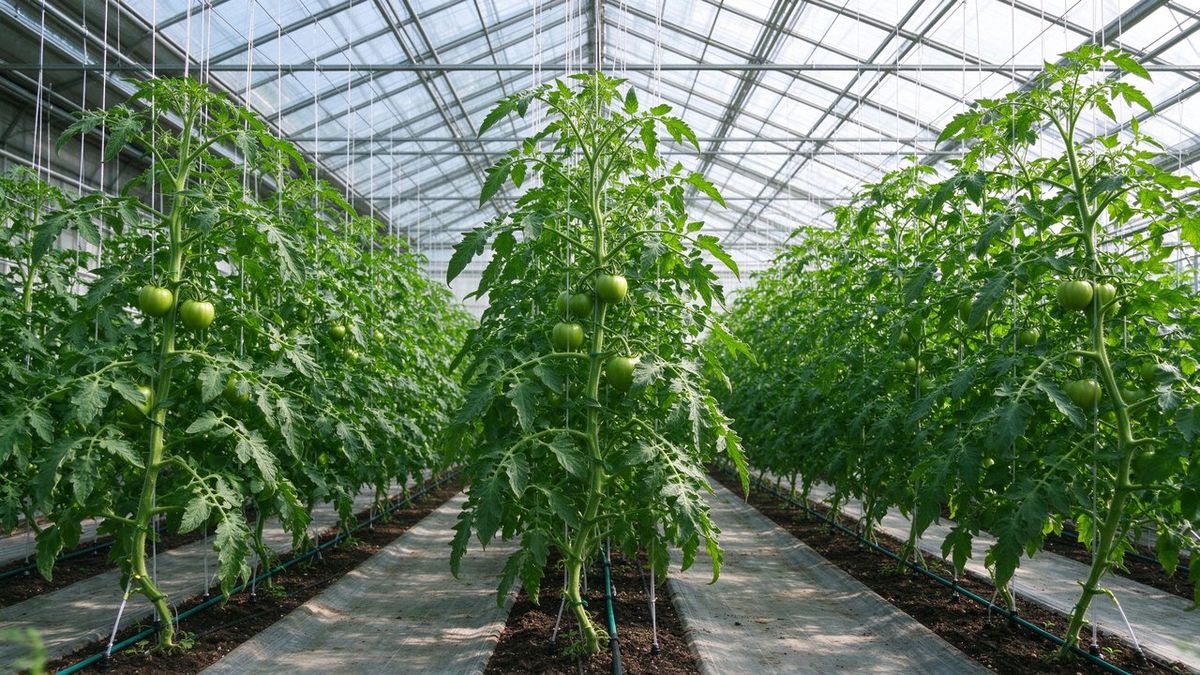
Intercropping inside the greenhouse raises land-use efficiency and builds a more balanced pest ecosystem, but only when the companion crops share climate and nutrition requirements without competing for light. In commercial protected culture, peppers are most often intercropped with lettuce, basil, or alyssum on the floor between rows, not as a full second crop. This article covers the compatible combinations, the spacing and density trade-offs, and the pest-control synergies that growers at Zhongtian Agricultural Technology use to add 15 to 25 percent extra revenue per square meter without reducing pepper yield.
Why Intercrop, and What to Avoid
Peppers have a tall, upright habit and leave a low-light zone on the floor between rows, where understory crops can exploit 20 to 30 percent of available light. Intercropping adds revenue per square meter, provides nectar and pollen for biocontrol insects, and creates a physical barrier that slows the spread of aphids and whiteflies. The key constraint is that the companion crop must not require more light, water, or heat than the pepper canopy leaves over.
Do not intercrop peppers with tomatoes, cucumbers, or beans. Tomatoes share bacterial spot and nematode pressure; cucumbers need higher humidity and temperature; beans fix nitrogen and over-fertilize the pepper. Avoid root crops that require tillage, and avoid any tall crop that would shade the pepper row. The best companions are short, shade-tolerant, and fast-maturing.
Lettuce as a Floor Crop
Leaf lettuce and butterhead lettuce grow well in the 30 percent light that reaches the floor between pepper rows. Transplant lettuce seedlings at 12 plants per square meter on the same bed as peppers, 0.3 meters from the pepper row, two weeks after the pepper transplants. Harvest outer leaves on a cut-and-come-again basis every 14 days, or pull whole heads at 45 days. Lettuce tolerates 18 to 24 degrees Celsius, which matches the pepper climate.
Nutritionally, lettuce needs higher nitrogen and lower potassium than peppers. Split the irrigation: lettuce rows receive a small extra dose of calcium nitrate at 0.5 grams per liter at each irrigation, while pepper roots get the standard recipe. Lettuce matures before the pepper canopy closes, so the second lettuce planting after first pepper harvest uses the extra light as lower leaves are stripped. Expect 2.5 to 3.5 kg of lettuce per square meter over the pepper cycle.
Basil and Flowering Companions
Basil is planted at 6 plants per square meter between pepper rows at the start of the cycle. It tolerates 25 to 30 degrees Celsius, repels thrips partially through its essential oils, and provides nectar for Orius and Encarsia wasps. Harvest basil tops at 15 centimeters every three weeks; continuous harvest keeps the plant productive through the pepper cycle. Basil aphid pressure is low, but watch for downy mildew in high humidity.
Sweet alyssum is the preferred flowering companion, sown as a seed line at 0.5 grams per square meter along the bed edge. It blooms within 6 weeks and provides pollen for Orius laevigatus, doubling thrips control. Alyssum is replaced every 8 weeks because it goes woody. Marigolds planted at 4 plants per square meter suppress root-knot nematodes through alpha-terthienyl root exudates and are a valuable rotation companion in soil-bedded houses.
Nutrition and Irrigation Trade-offs
Intercrops draw on the same drip lines, so nutrient recipes are compromises. Target an EC of 2.2 to 2.4 mS per centimeter, between the pepper optimum of 2.6 and the lettuce optimum of 1.8. A pH of 5.8 to 6.2 works for both. Side-dress lettuce with extra calcium nitrate after each cut to keep leaf growth steady; peppers tolerate the extra nitrogen for the first 12 weeks.
Irrigation pulses are shared, but the understory crop uses less water than peppers because it is shaded. If the floor stays wet more than 6 hours after irrigation, cut the pulse by 20 percent. Watch for root competition at the emitter: pepper roots extend 0.4 meters from the stem, so lettuce planted 0.3 meters away shares the wetting pattern. Do not mulch the bed fully, because the understory crop needs access to the same moisture.
Pest Synergy and Harvest Logistics
The primary benefit of intercropping is the建立 of a balanced arthropod ecosystem. Alyssum and basil support Orius, Encarsia, and hoverflies that also control pepper aphids and whiteflies; in trials at Zhongtian Agricultural Technology, intercropped blocks required 30 percent fewer insecticide sprays than monoculture blocks. Sticky-card counts drop by half within 6 weeks of alyssum establishment.
Harvest logistics require separate teams: pepper pickers walk the row tops, lettuce cutters work the floor. Schedule lettuce harvest on a different day than pepper harvest to avoid cross-contamination of tools. At end of cycle, the understory crop residue is removed and composted off-site, because it can harbor thrips pupae. Net revenue per square meter rises 15 to 25 percent at the same fixed cost of heating, trellis, and labor.
Intercropping peppers with lettuce, basil, or alyssum is a low-risk way to add 15 to 25 percent revenue per square meter without compromising pepper yield. The key is matching the climate and nutrition of the companion, keeping the understory below 15 centimeters from the pepper row, and treating the flowering companions as a biocontrol support system. When run with disciplined irrigation splitting, the pest ecosystem balances itself and chemical inputs drop by nearly a third.


