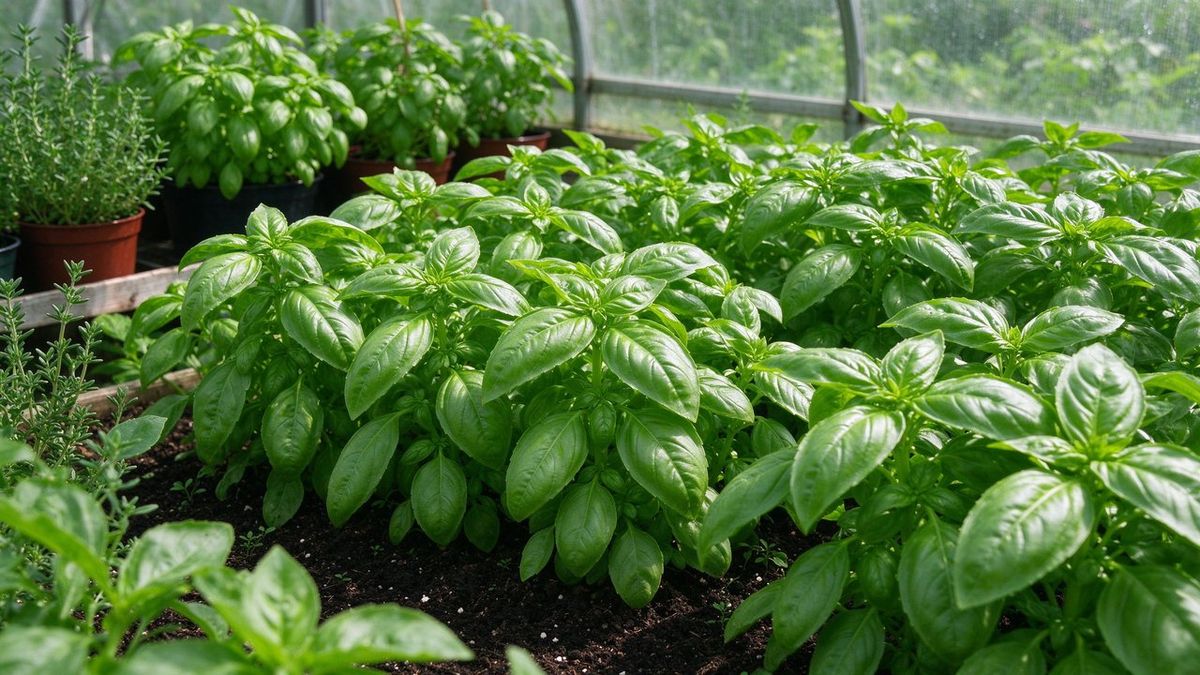
Cilantro (Coriandrum sativum) and parsley (Petroselinum crispum) are culinary herbs grown for their aromatic leaves, and both bolt quickly under warm, long-day conditions. Protected culture lets the grower hold the cool temperatures required for 40 to 60 day leafy crops, avoiding the 20 day bolting that ruins field cilantro in summer. Both are grown as dense broadcast plantings on benches or in 10 to 15 centimeter pots, yielding 2.0 to 3.5 kilograms per square meter per cycle. The main risks are bolting under heat, damping-off from wet seedbeds, and leaf miners.
Varieties and Sowing
Slow-bolting cilantro hybrids such as ‘Santo’ and ‘Caribe’ extend the leafy window by 10 to 15 days compared with open-pollinated types. Flat-leaf (Italian) parsley is the market standard; curly-leaf parsley is sold as a garnish. Sow cilantro at 4 to 5 grams per square meter broadcast, parsley at 3 to 4 grams. Germinate at 18 to 20 degrees for 7 to 10 days; parsley is slower and often takes 14 to 18 days.
Thin cilantro to 500 to 600 plants per square meter at the two-leaf stage; parsley can stay denser at 700 to 800 plants because the leaves are smaller. For pot sales, sow 8 to 10 seeds per 10 centimeter pot in coco or peat. Plan weekly sowings on a 45 day cycle so a 100 square meter bench delivers 100 to 150 kilograms of cut herbs each week.
Climate and Bolting Control
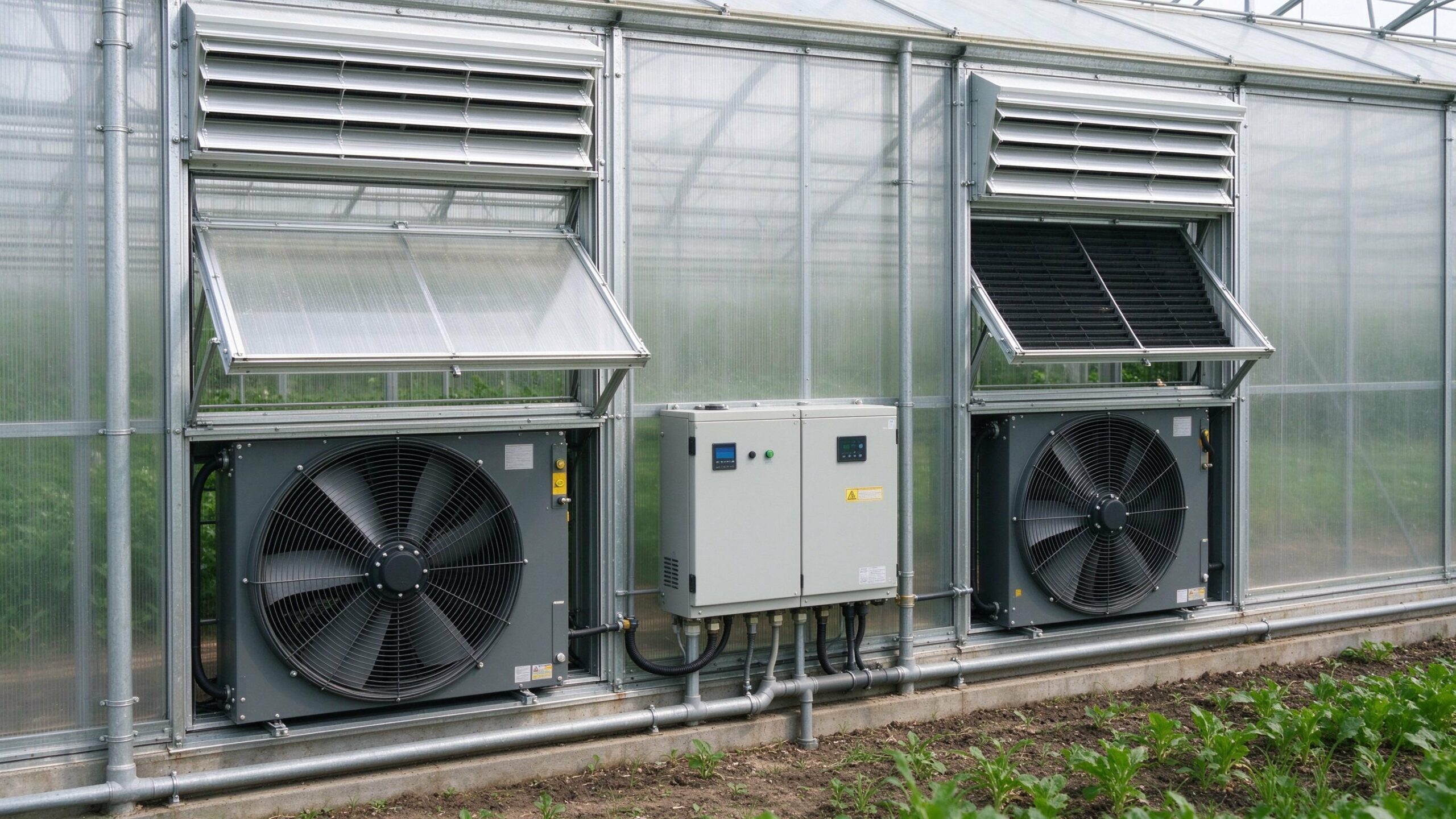
Cilantro grows best at 15 to 20 degrees Celsius by day and 10 to 12 degrees at night. Above 24 degrees, it bolts in 20 to 25 days and leaves lose aroma. Vent when canopy reaches 20 degrees; use 40 to 50 percent shade cloth in summer and combine with wet-pad cooling. In winter, keep minimum above 8 degrees; parsley tolerates 5 degrees without damage but growth slows.
Photoperiod strongly drives bolting. Keep days under 14 hours; in summer, blackout curtains from 19:00 to 05:00 delay bolting by 7 to 10 days. Relative humidity should stay between 60 and 70 percent. Run horizontal fans at 0.3 m/s; stagnant humid air triggers damping-off on the dense seedling bed. Do not mist cilantro, because wet foliage quickly browns.
Fertigation
Cilantro and parsley are light feeders. Feed at an electrical conductivity of 1.4 to 1.8 mS/cm, pH 6.0 to 6.5. Higher EC reduces aroma and makes leaves tough. Drip tape every 15 centimeters delivers 1.5 liters per hour per emitter; irrigate 2 to 3 times per day, 150 to 200 mL per square meter per event. Stop irrigation 8 hours before harvest so foliage is dry.
Nitrate nitrogen should dominate; avoid ammonium above 10 percent. Apply magnesium at 40 mg/L to prevent interveinal chlorosis on older parsley leaves. On bench culture, replace the top 2 centimeters of growing medium every 4 cycles to avoid salt buildup. Track leachate weekly; if EC climbs above 2.5 mS/cm, flush with plain water.
Pest and Disease
Leaf miner flies tunnel parsley and cilantro leaves, leaving white serpentine trails. Cover beds with 40 mesh netting at sowing; place yellow sticky cards at one per 15 square meter and release Diglyphus isaea at 0.3 per square meter weekly. Aphids cluster on the young cilantro shoots; release Aphidius colemani at 0.5 per square meter. Avoid pyrethroids within 14 days of harvest.
Damping-off (Pythium, Rhizoctonia) kills dense seedling beds when the medium stays wet. Prevent by allowing the top 1 centimeter to dry between irrigations and by running fans for 4 hours after watering. Apply Trichoderma at 10^6 CFU per liter through the drip at sowing. Septoria leaf spot on parsley appears as small brown spots; remove lower leaves and apply copper hydroxide at 1.5 g/L.
Harvest and Post-Harvest
Cut cilantro at 15 to 20 centimeters tall, 35 to 45 days after sowing, with a sanitized knife just above the growing point. Parsley is cut at 15 to 25 centimeters, 50 to 60 days after sowing, and will regrow for 2 to 3 subsequent cuts at 30 day intervals. Immediately plunge cut stems into iced water at 2 degrees for 10 minutes, then bunch into 50 gram bundles. Shelf life is 10 to 14 days at 1 to 3 degrees.
Yield is 2.0 to 3.5 kilograms per square meter per cycle. Aroma quality drops sharply if the crop is stressed; track average leaf length and reject any batch with >5 percent flowering stalks. Track energy per kilogram; herbs under LEDs usually run 80 to 120 kWh per kilogram. Zhongtian Agricultural Technology supplies blackout curtains, shade cloth motors, and drip fertigation rigs that hold the 15 to 20 degree band and the 1.6 mS/cm feed automatically.
Cilantro and parsley are high-value aroma crops that fail from heat and long days, not from nutrition. A tight 15 to 20 degree band, summer blackout, dilute 1.6 mS/cm feed, and immediate cooling after cutting turn a 45 day sowing into a steady premium herb line.