Aphids (Aphis gossypii) and greenhouse whitefly (Trialeurodes vaporariorum) are the two most persistent insect pests of greenhouse cucumber. They suck phloem, excrete honeydew that grows sooty mould, and transmit viruses that stunt plants. Chemical sprays are the last resort; biological control on a clean prophylactic programme is the standard and keeps populations below 1 aphid per leaf all season.
Monitoring and Economic Thresholds
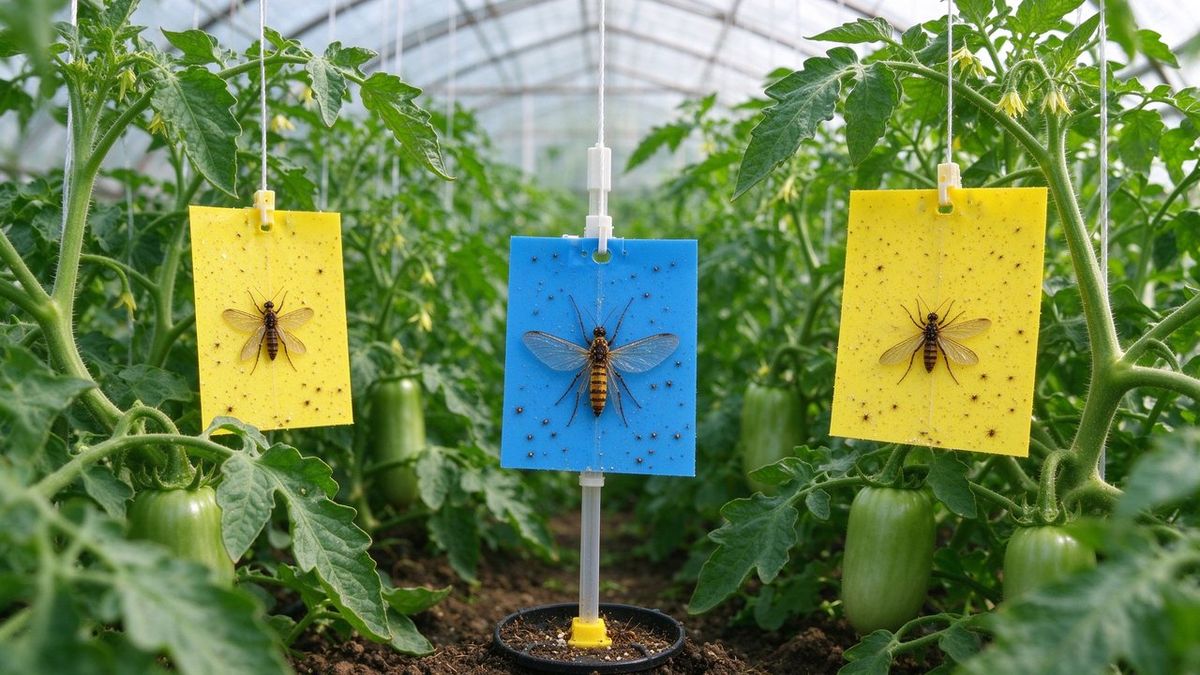
Hang yellow sticky cards at 1 per 200 m2, 30 cm above the canopy, and count weekly. Action threshold: more than 5 whiteflies per card per week, or more than 2 aphids per 10 leaves, triggers a biocontrol release or spot spray. Below threshold, continue releases as planned.
Walk the crop weekly and inspect the underside of 20 middle leaves per bay. Look for aphid colonies on the young shoot tips and whitefly crawlers on lower leaves. Honeydew on upper leaves is a late warning; by then the colony has been active for 2 weeks.
Whitefly Biocontrol Programme
Release the parasitic wasp Encarsia formosa at 3 per square metre per week starting 2 weeks after planting. Encarsia lays eggs inside whitefly nymphs and turns them black. Release the predatory mite Amblyseius swirskii at 100 per square metre at planting, then 50 per square metre every 4 weeks, to attack early crawlers.
Add the predatory bug Macrolophus pygmaeus at 1 per square metre at week 4 and again at week 8 for long-season control. Macrolophus establishes and self-replicates, so one release covers the rest of the crop. Avoid broad-spectrum sprays; they kill the biocontrol agents faster than the pest.
Aphid Biocontrol Programme
Release the parasitic wasp Aphidius colemani at 0.5 per square metre weekly from week 3. Aphidius mummifies aphids within 7 days; watch for the brown mummies on colony leaves. For larger aphid colonies, release the predatory midge Aphidoletes aphidimyza at 0.5 per square meter weekly.
Spot outbreaks can be sprayed with the fungal pathogen Beauveria bassiana at 2 ml per litre, applied in the evening when humidity is above 80 percent. Beauveria infects aphids and whitefly without harming the beneficials. Do not mix Beauveria with chemical fungicides; the fungicide kills the fungus.
Exclusion and Cultural Controls
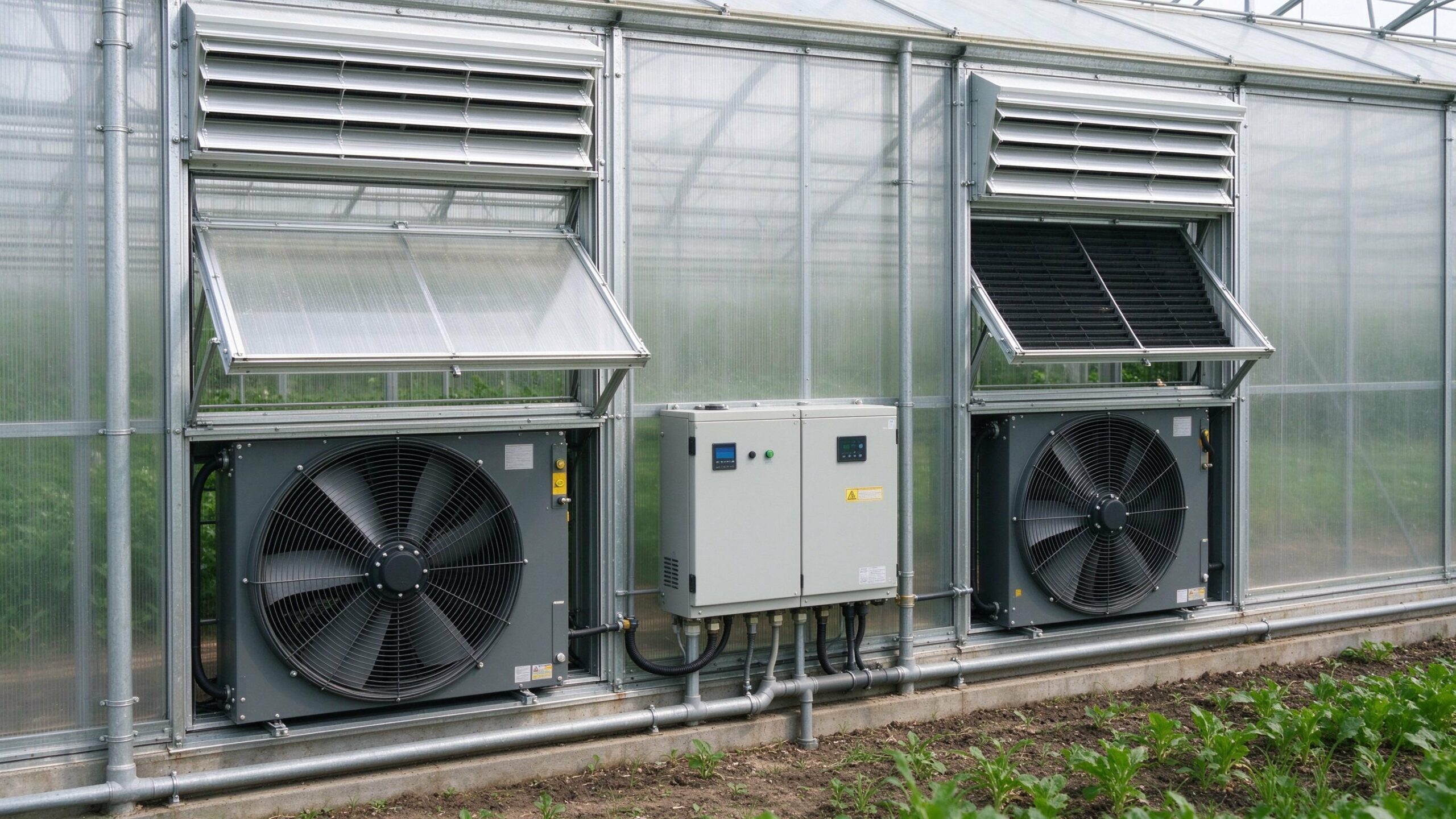
Install 50 mesh screens on all vents to stop whitefly and aphid immigration. Remove all weeds within 5 m of the house; weeds are the reservoir host for both pests. Inspect transplants at planting; never introduce an infested tray.
Avoid excessive nitrogen. Succulent high-N plants produce phloem that is 30 percent richer in free amino acids and supports aphid reproduction 2 to 3 times faster. Keep leaf sap nitrate below 1200 mg per litre at midday. This single nutritional control reduces aphid populations without any spray. Remove crop debris weekly because senescing leaves build honeydew that attracts colonising whitefly from outside the screen. Clean aisles also stop thrips pupae from cycling back up into the canopy.
Rescue Sprays and Resistance Management
If biocontrol fails and aphids exceed 10 per leaf, spray insecticidal soap at 2 percent or potassium salts at 1 percent; both kill on contact without leaving residue. Follow up 3 days later because eggs survive. Rotate insecticide groups: never use the same IRAC group twice in a row.
Stop bumblebee hives before any spray and keep them out for 48 hours. Do not spray when beneficial insects are actively foraging; release a fresh batch of Encarsia one week after the spray. Zhongtian Agricultural Technology runs biocontrol prophylactically from week 2, treats outbreaks with soap or Beauveria, and treats chemical insecticides as the absolute last option.
Aphid and whitefly control is a prophylactic biocontrol programme, not a spray schedule. Exclude with screens, monitor on sticky cards, release Encarsia and Aphidius from week 2, and keep nitrogen moderate. Rescue sprays exist, but every spray sets the biocontrol programme back a week.