Recirculating nutrient systems cut fertiliser and water use by 30 to 40 percent versus drain-to-waste, but they concentrate salts, imbalance ratios, and amplify root pathogens unless managed tightly. Cucumber in recirculation needs continuous EC and pH monitoring, scheduled bleed-off, and weekly solution analysis to keep the feed inside a narrow band. The reward is a predictable, lower-cost crop; the penalty is an overnight crash if a sensor drifts.
Why Recirculation Imbalances the Feed
Cucumber roots take up water faster than they take up nitrate, so the recirculating tank drifts upward in EC by 0.3 to 0.5 mS per cm per day even with correct dosing. The plant also prefers nitrate over ammonium, so ammonium concentration rises in the return if not diluted. Within 7 days, a closed tank develops an imbalanced recipe that a fresh drain-to-waste system never sees.
The other shift is micronutrient precipitation. Phosphorus reacts with calcium at pH above 6.2 and forms calcium phosphate that plugs drippers and ties up P. Iron precipitates at pH above 6.5. Keep pH at 5.5 to 5.8 and inject acid or base automatically to hold the band.
Monitoring EC, pH, and Solution Volume
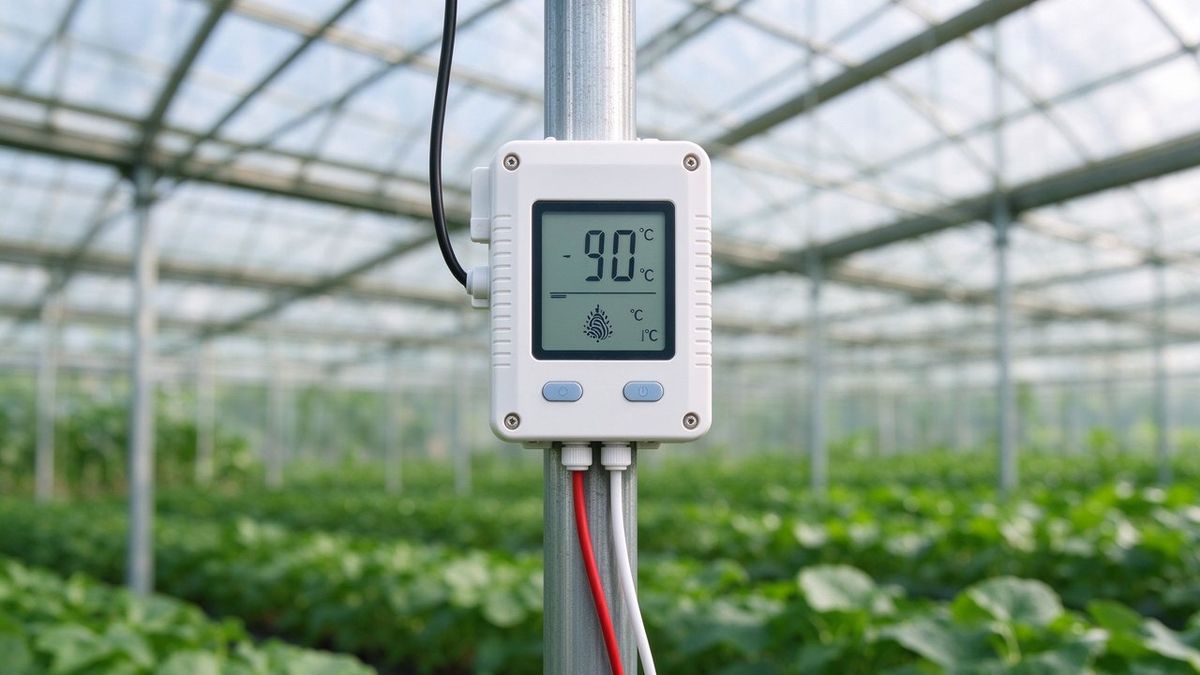
Install one inline EC and pH sensor after the mixing tank and a second sensor in the return line. Log every 5 minutes. The difference between feed EC and return EC should be 0.2 to 0.4 mS per cm; a gap above 0.6 means the slab is concentrating salts and needs more leaching.
Daily solution volume in the tank should drop by 1.5 to 2.0 litres per plant. If the drop is less than 1.0, the system is overwatering; if more than 2.5, under-watering. Top the tank with fresh water plus concentrated stock at the end of each day to keep volume constant. Calibrate sensors weekly with standard buffer solution.
Weekly Nutrient Analysis and Recipe Adjustment
Send a 250 ml return-solution sample to a lab weekly. Target ranges for cucumber: nitrate 150 to 180 mg per litre, potassium 180 to 220, calcium 180 to 220, magnesium 40 to 60, sulphate 60 to 90. Micronutrients: Fe 15 to 25 micromoles, Mn 2 to 5, Zn 2 to 5, Cu 0.5 to 1, B 30 to 50, Mo 0.5 to 1.
Adjust stock tank concentration rather than pH. If potassium reads 25 mg above target, reduce the K stock injector by 10 percent for the next 3 days, then recheck. Do not make more than one nutrient change per week; multiple changes at once make it impossible to attribute the plant response.
Bleed-Off and Salt Management
Even with perfect dosing, sodium and chloride build up in a closed system because the plant excludes them. Allow a 5 to 10 percent bleed-off every week: drain that share of the tank to waste and top up with fresh water. Sodium above 40 mg per litre or chloride above 70 triggers an immediate 15 percent bleed.
Chlorine in the source water also builds up. If source water chlorine exceeds 100 ppm, install an activated-carbon filter before the mixing tank. A simple chlorine test strip per week catches this before root damage.
Pathogen Disinfection of the Return Line
Recirculation amplifies Pythium, Fusarium, and Phytophthora. Every return line must pass through a disinfection step: ultraviolet at 40 mJ per cm2, slow sand filtration, or hydrogen peroxide at 15 ppm. UV is the standard for cucumber because it does not leave residual chemical.
Shock-treat the whole system once per month with 3 percent hydrogen peroxide for 4 hours, then flush. Zhongtian Agricultural Technology runs UV plus a weekly peroxide shock, and treats any block with root disease as a separate closed loop so a pathogen event does not infect the entire 1 ha of recirculating pipes.
Recirculation rewards disciplined monitoring. Hold EC within 0.2 mS target, keep pH at 5.5 to 5.8, bleed off 5 to 10 percent weekly for salts, and disinfect the return line. The 30 percent fertiliser saving is real, but only for growers who check the return solution every week.