
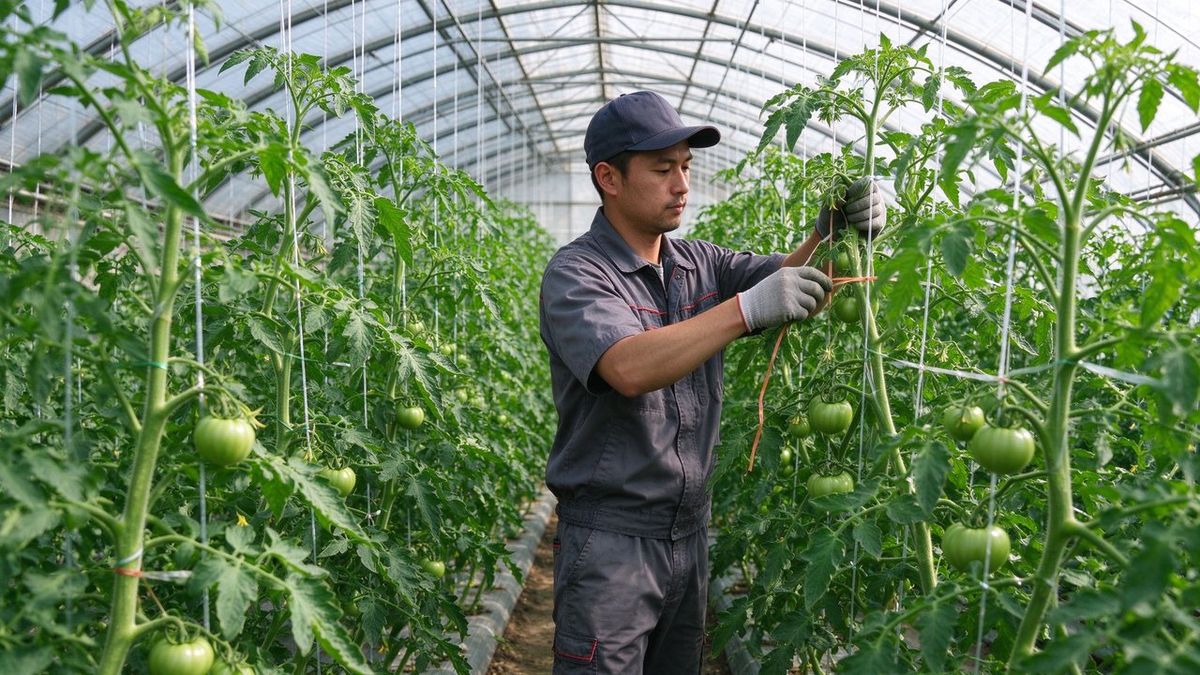
Eggplant is a vigorous, indeterminate shrub that, left unpruned, produces 20 to 30 weak stems and a tangle of small, soft fruit. Under protected cultivation, disciplined pruning converts that vigor into 6 to 8 marketable fruit per plant per cycle on a strong, upright stem. This article covers the single-stem and V-training systems, the weekly stripping rhythm, and the lowering technique used at Zhongtian Agricultural Technology to keep the canopy productive over an eight-month cycle.
Why Single-Stem Training Dominates Greenhouse Eggplant
Single-stem training produces earlier, more uniform fruit because all assimilates go to one vertical cordon. Density is 1.8 to 2.0 plants per square meter on a 1.2-meter row spacing. The V-system, with two stems per plant, drops density to 1.4 plants per square meter but is preferred in high-wire systems where lane width is limited. Single-stem plants reach 2 meters on the trellis string in 12 weeks; V-systems take 16 weeks.
Pinch all laterals at the first leaf above the flower. This retained leaf feeds the adjacent fruit; removing it entirely drops fruit weight by 15 percent. Remove the first flower and its adjacent suckers so the plant builds vegetative mass before fruiting. From the second flower onward, retain one fruit per leaf axil; thin any extra fruit to one per axil when they are 3 centimeters long.
Leaf Stripping Rhythm
Lower-leaf removal begins after the first fruit reaches 15 centimeters length. Strip two leaves per plant per week, targeting leaves below the lowest harvested fruit. Never remove more than 15 percent of total leaf area in one pass, because that causes flower abscission on the next two open clusters. Stop stripping once the canopy reaches 30 leaves per plant; beyond that, lower leaves are still contributing to root maintenance.
Tools are pruners dipped in 70 percent ethanol between blocks of 50 plants. Prune in the morning so wounds dry by afternoon. Remove pruned leaves from the greenhouse within 24 hours, because they harbor Botrytis and lace bug eggs. Do not strip leaves on the same day as a heavy irrigation, because wet wounds invite infection.
Lowering and Wrapping
Once the growing point reaches the overhead wire at 2 meters, the plant is lowered: unwind the stem from the string, lower it 30 centimeters, and re-tie at a lower point. The lowered stem lies along a horizontal guide wire 30 centimeters above the substrate. This process repeats every 4 to 6 weeks, extending productive life to 8 to 9 months.
Rewrap the vertical stem on the string every 10 days as the stem thickens to 15 millimeters. Never tie the string tightly, because girdling causes stem swelling above the tie and eventual collapse. Use soft plastic clips rather than twine, because twine digs into the stem. Inspect ties weekly for rubbing or constriction.
Suckering and Fruit Thinning
Suckers emerging below the first fork are removed while they are under 8 centimeters long. Suckers above a retained fruit are pinched back to one leaf, not removed. If a sucker has already set a fruit, retain it until that fruit is harvested, then cut back to the basal leaf.
Fruit thinning is critical: each axil should retain only one fruit. Remove misshapen, scarred, or insect-damaged fruit when they are 3 to 5 centimeters long. Overloading the plant with more than 12 fruit at once causes small, woody fruit and slows new fruit set. Target a steady 3 to 5 fruit per plant per week at peak load.
End-of-Cycle Renewal
After 8 to 9 months, fruit weight drops below 300 grams and the lower stem becomes woody. At this point, the plant is cut back to two stumps 30 centimeters above the substrate. Warm the house to 24 degrees Celsius for 48 hours and reduce irrigation by half until new shoots emerge in 14 to 18 days.
Retain two strong new shoots per stump and retrain them on fresh strings. This ratoon crop yields 60 to 70 percent of the first cycle and extends production another 4 to 5 months. At Zhongtian Agricultural Technology, ratoon crops are used only in year-round houses; for spring-only cycles, the block is cleared and replanted.
Eggplant canopy management is a weekly rhythm: two lower leaves stripped, laterals pinched to one leaf, ties rewrapped, fruit thinned to one per axil. Single-stem training at 1.8 to 2.0 plants per square meter, lowered every 4 to 6 weeks, delivers 6 to 8 kg per square meter over eight months. The discipline of never removing more than 15 percent leaf area in one pass and keeping tools disinfected is what separates steady, Class A harvest from disease-ridden decline.


