
Hydroponic eggplant is a high-density, high-yield production system that delivers 8 to 10 kg per square meter over a ten-month cycle. Unlike soil culture, hydroponic eggplant demands precise control of root-zone temperature, EC, and oxygen; the crop is unforgiving of dosing-pump drift. The two commercial systems are coco-coir bag drip recirculation and the Dutch bato bucket with perlite. This article covers the recipe, irrigation rhythm, and canopy architecture used at Zhongtian Agricultural Technology to run year-round hydroponic eggplant at Class A quality.
Substrate and System Choice
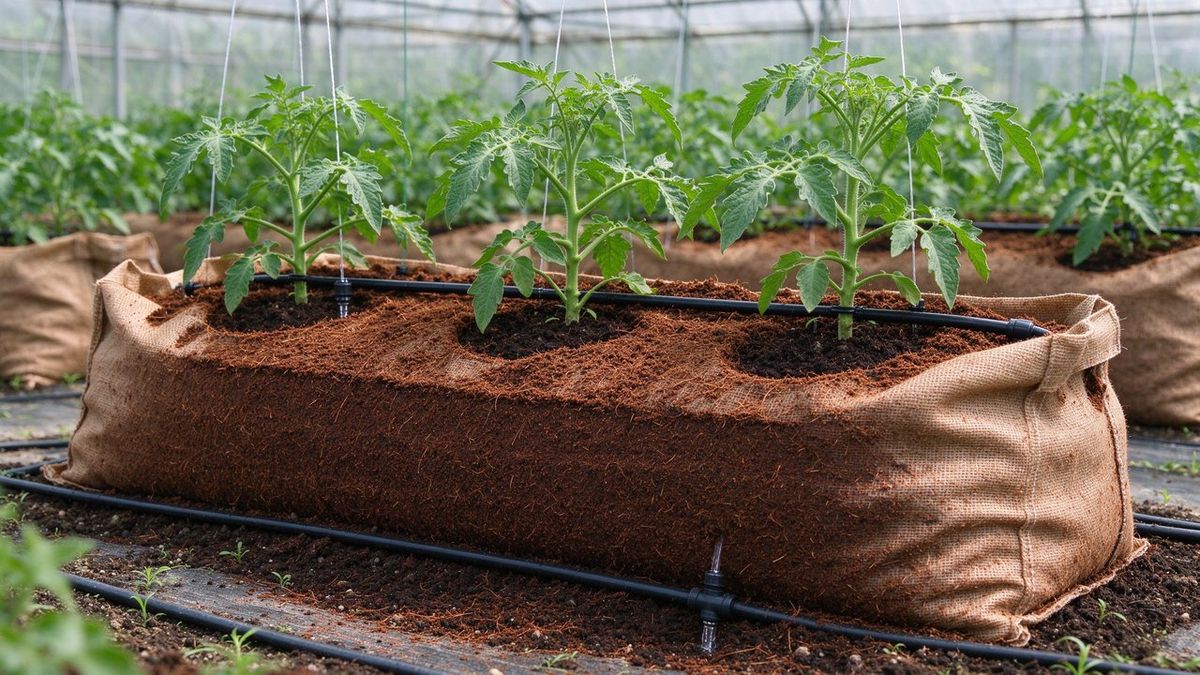
Coco-coir bags at 15 liters dry weight, laid two plants per bag at 2.5 bags per square meter, are the default. The substrate is buffered pre-plant with a 1:1 calcium nitrate and potassium nitrate solution at 1.5 grams per liter for 24 hours, then leached with clear water. Dutch bato buckets with 8 liters of perlite are used where substrate cost is high; they require more frequent irrigation pulses because perlite dries quickly.
Rockwool slabs at 100 by 20 by 10 centimeters are preferred for northern winter production because they hold root-zone temperature stable at 20 degrees Celsius. Whichever substrate, ensure air-filled porosity at container capacity is at least 25 percent. Emitters are 2 liters per hour pressure-compensating, one per plant, with a 30-centimeter dripper line running along the bag.
Nutrient Recipe
The base recipe for eggplant targets EC 2.6 to 3.0 mS per centimeter and pH 5.5 to 5.8. Macronutrients in millimoles per liter: 13 nitrate-N, 1.0 ammonium-N, 1.3 phosphorus, 7.0 potassium, 4.5 calcium, 2.2 magnesium. Eggplant is a heavy potassium feeder; during peak fruit load, raise potassium to 8.0 millimoles per liter. Micronutrients: 25 iron, 6 manganese, 0.8 zinc, 0.5 copper, 0.5 boron, 0.05 molybdenum, in micromoles per liter.
Start at EC 2.0 for the first four weeks after transplant, then ramp by 0.2 mS per week to 2.8. During winter low light, drop EC to 2.4 because assimilation is limited. During summer high load, raise EC to 3.0 but never exceed 3.2, because salt buildup causes marginal leaf burn. Check run-off EC and pH daily at 08:00; adjust dosing pump in 0.1 mS steps.
Irrigation Scheduling
Irrigation starts two hours after sunrise and stops two hours before sunset. Each pulse delivers 300 to 350 milliliters per emitter, triggered by cumulative radiation of 2.0 megajoules per square meter. Run-off should stabilize at 25 to 30 percent of applied volume by midday. On cloudy days with daily radiation below 4 megajoules per square meter, cut the pulse by 40 percent and stop by 14:00.
Recirculated drainage water is filtered through a 200-micron screen, disinfected with UV-C at 40 millijoules per square centimeter, and blended 1:1 with fresh stock. Test recycled water weekly for Pythium by cucumber seedling baiting; discard any batch that shows lesions within 5 days. Pre-heat nutrient solution to 20 degrees Celsius in winter to avoid root cold shock.
Canopy and Training
Train to a single stem on a vertical string at 2 meters height, at 1.8 to 2.0 plants per square meter. Pinch all laterals at the first leaf above the flower. Retain one fruit per leaf axil; remove the rest to avoid overloading. Strip two lower leaves per week once the first fruit reaches 15 centimeters length. Rewrap the stem on the string every 10 days.
Pollinate with bumblebee hives at one hive per 2,000 square meters, introduced at 10 percent open flowers. In summer above 30 degrees Celsius, supplement with mechanical vibration at 90 hertz on flower trusses every other morning. Fruit is harvested 22 to 25 days after pollination when the skin is glossy and the fruit gives slightly to thumb pressure.
Crop Protection and End of Cycle
Hydroponic eggplant is prone to Pythium if dissolved oxygen drops below 4 mg per liter. Drench with Trichoderma harzianum at 1 gram per liter at transplant and repeat every 30 days. Western flower thrips and whitefly are controlled with Amblyseius swirskii at 100 per square meter and Encarsia formosa at 1 per square meter weekly. Lace bug pressure is managed by Orius sauteri releases.
At end of the ten-month cycle, empty the nutrient circuit, flush with 20 ppm hydrogen peroxide, then circulate 2 percent nitric acid for 24 hours to remove scale. Discard coco bags, steam-treat gutters at 80 degrees Celsius for 30 minutes, and leave the house empty for 7 days. Weekly tissue tests check NPK and micronutrients; correct recipe drift before symptoms appear.
Hydroponic eggplant delivers 8 to 10 kg per square meter over ten months when the root zone is held at 20 to 22 degrees Celsius, EC is ramped from 2.0 to 2.8, and run-off is recycled after UV disinfection. Single-stem training, bumblebee or mechanical pollination, and a recurring Trichoderma program keep the crop productive and disease-free. The system is unforgiving of dosing drift, which is why daily run-off checks and weekly tissue tests are non-negotiable.


