
Tomato yellow leaf curl virus, transmitted by the whitefly Bemisia tabaci, is the most damaging virus of protected tomato crops worldwide. Infected plants set no fruit above the third truss, leaves cup upward and turn yellow at the margins, and yield collapses by 50 to 90 percent within six weeks once infection reaches 20 percent of the row. There is no curative chemistry; control rests on exclusion, vector suppression, and rogueing. A greenhouse that combines a clean start, 50-mesh insect screens, and an aggressive whitefly biocontrol programme can hold TYLCV below 1 percent even in districts where it is endemic.
Exclusion from the Day of Transplanting
Start with certified transplants tested for TYLCV, tomato mosaic virus, and potato spindle tuber viroid. Virus-indexed plugs cost 10 to 15 percent more but eliminate the single largest entry point. Inspect every tray on delivery: leaf curl, yellow margins, and a 30 percent stunted plant are enough to reject the whole shipment.
Install 50-mesh insect screens on every vent and door. A 40-mesh screen blocks large whiteflies but lets B. tabaci through; 50 mesh gives 95 percent exclusion. Screens reduce vent area by 30 percent, so increase vent opening time by 20 percent and run fans to compensate. Door air locks with an inner and outer door that cannot open together are standard on modern facilities.
Whitefly Monitoring
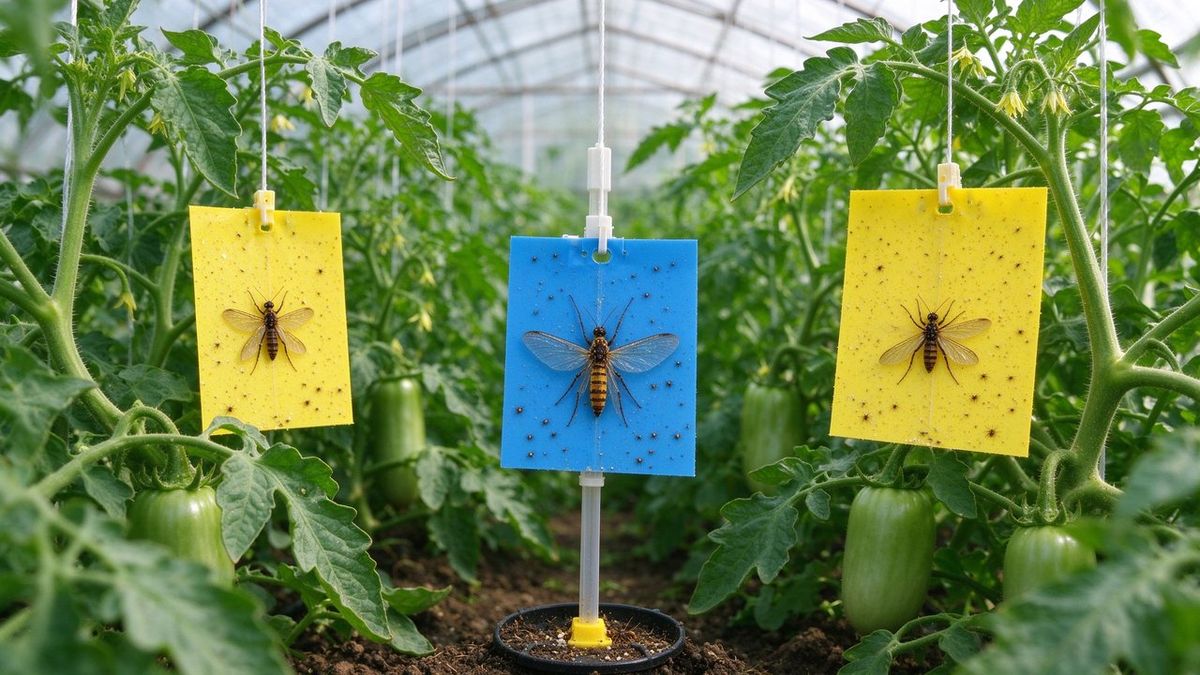
Place yellow sticky cards at 1 card per 200 square metres, just above the crop canopy. Check weekly and count adult whiteflies per card. The action threshold for TYLCV-susceptible varieties is 2 adults per card per week; above that, release biocontrols within 48 hours.
Sample 100 leaves per week from the middle of the canopy. Look for the tiny oval nymphs on leaf undersides. A single nymph per 10 leaves signals a population building up; three per leaf means adults are emerging and virus transmission is already underway.
Biological Control Programme
Release Encarsia formosa at 0.5 per square metre per week from planting, rising to 1 per square metre once whiteflies appear. Eretmocerus eremicus is preferred in warm houses above 24 degrees Celsius because it parasitises nymphs faster. Hang cards at 1 per 10 square metres in the upper canopy.
Supplement with Amblyseius swirskii at 50 per square metre per week on banker plants. The predatory mite feeds on whitefly eggs and prevents population build-up between parasitoid releases. Avoid broad-spectrum pyrethroids for at least four weeks around releases, because they wipe out the biocontrols.
Chemical and Hygiene Backstop
When whitefly counts exceed the threshold despite biocontrol, apply insecticidal soap or Beauveria bassiana at 1 litre per 100 litres of water, targeting the leaf underside. Repeat every 5 days for three applications. Rotate between IRAC groups to avoid resistance, which is widespread in B. tabaci.
Rogue infected plants within 24 hours of finding a new case. Bag the plant inside the greenhouse before removal to avoid shaking whiteflies onto neighbours. Disinfect tools and hands with 70 percent alcohol between rows. TYLCV is not mechanically transmitted on pruning shears, but the whiteflies carried on clothing are.
Resistance and Rotation
Choose varieties carrying the Ty-1, Ty-2, or Ty-3 resistance gene where available. Resistance does not prevent infection but delays symptom development by 4 to 6 weeks, allowing harvest of the first 4 to 6 trusses. Combine resistance with vector control; relying on the gene alone leads to resistance breakdown.
Break the virus cycle with a 4-week empty period between crops. Steam or solarise the slab area, wash the floor, and leave vents closed at 60 degrees Celsius for 48 hours if the boiler allows. Zhongtian Agricultural Technology recommends a zero-whitefly week before replanting as the single most profitable week in the crop calendar.
TYLCV is a prevention problem, not a cure problem. Certified transplants, 50-mesh screens, weekly sticky-card counts, and a structured Encarsia and Eretmocerus release programme keep the virus below 1 percent. When a case appears, rogue within a day and reset the vector pressure; the cost of one missed rogueing week is a full truss of yield.


