
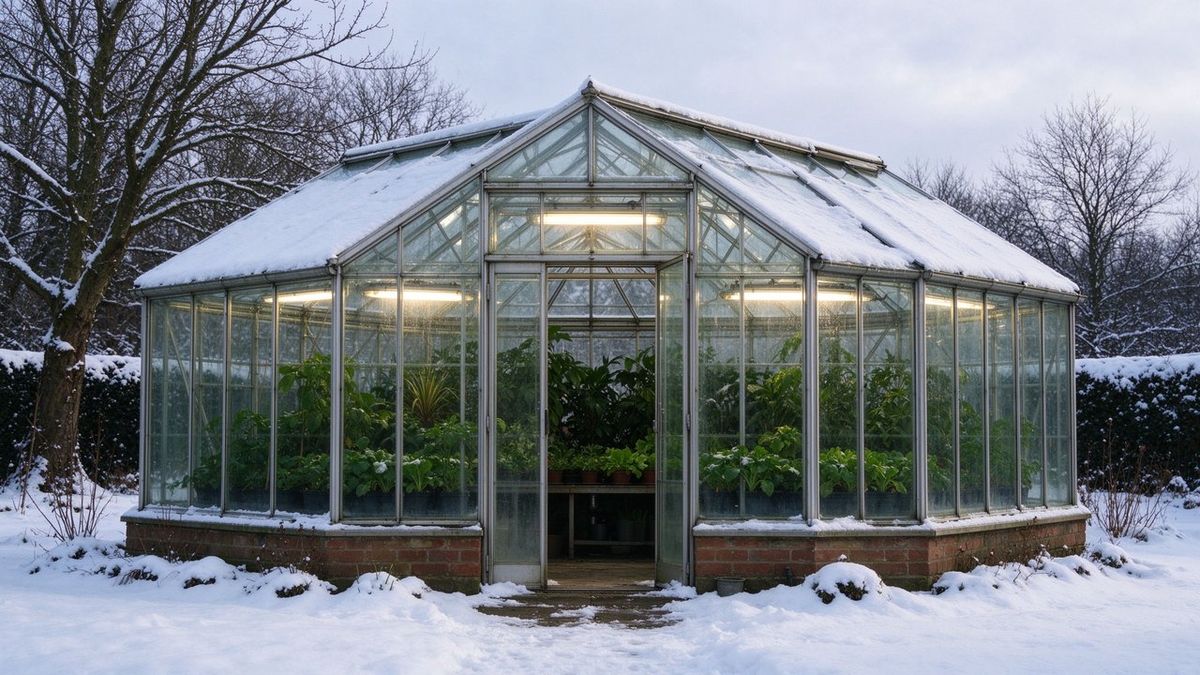
Spinach is a cool-season leafy vegetable that bolts and turns bitter as soon as day temperatures climb above 24 degrees Celsius, which is why most greenhouse production is scheduled for autumn, winter, and early spring. Modern hybrid spinach varieties are bred for slow-bolting resistance and downy mildew tolerance, but the grower still has to manage light, temperature, and nitrogen carefully because spinach has shallow roots and a high demand for soluble nitrate. A commercial winter spinach crop in a Chinese solar greenhouse can yield 3.0 to 4.5 kilograms per square meter over a 35 to 45 day cycle, provided the structure holds a minimum of 8 degrees Celsius at night even during the coldest weeks.
Variety Choice and Sowing Window
Choose varieties adapted to your season: semi-savoy types such as ‘Monnopa’ and ‘Space’ perform best for winter production, while smooth-leaf hybrids suit early spring and autumn cuts. All commercial types carry resistance to the major downy mildew races, but confirm the PR coding on the seed packet against local race populations before planting a whole block. Sow at 35 to 45 seeds per meter in 15 centimeter rows, or use a 12 row precision drill on 12 centimeter centers.
Spinach germinates poorly above 25 degrees Celsius, so delay autumn sowing until shade-air temperature falls below 22 degrees Celsius; in winter, pre-heat the bed to 10 degrees Celsius before sowing to get emergence in seven to ten days instead of 18. For a continuous weekly harvest, sow a fresh 200 square meter block every seven days. Sequence the blocks so the last sowing goes in six weeks before the expected spring bolt date, which in most northern China zones falls in late March.
Bed Preparation and Fertility
Spinach wants a loose, high-organic-matter soil with a pH of 6.2 to 7.0 and an electrical conductivity no higher than 2.5 mS/cm. Incorporate 2 to 3 kilograms of well-decomposed compost per square meter before planting, plus 30 kilograms per 1000 square meters of a balanced 10-10-20 starter fertilizer. Spinach is sensitive to soluble salt burn, so split nitrogen applications: 20 kg N/ha at sowing and a side-dress of 10 kg N/ha at the four true-leaf stage.
The shallow root system means moisture must be steady; allow the top two centimeters to dry between irrigations but never let the plant show water stress. Drip tape on 15 centimeter spacing, delivering 1.5 to 2.0 liters per hour per emitter, is ideal. Irrigate early in the morning so leaves dry by mid-afternoon; evening irrigation raises canopy humidity above 85 percent and triggers downy mildew within four to six days.
Temperature and Light Management
Spinach grows fastest between 15 and 20 degrees Celsius; above 24 degrees Celsius it bolts in ten to fourteen days, and below 5 degrees Celsius growth nearly stops. In a solar greenhouse, vent to hold daytime air at 18 to 22 degrees, and keep night minimum at 8 to 10 degrees by closing the quilt at dusk. On cloudy winter days the greenhouse can drift to 5 degrees, which is tolerable, but repeated nights below 2 degrees cause leaf chlorosis and crown rot.
Supplemental light pays off in December and January. At 100 to 150 micromoles per square meter per second of photosynthetically active radiation delivered by inter-canopy LED bars, dry-matter accumulation rises by 25 to 35 percent and harvest advances by four to six days. Run the lamps for 8 to 10 hours per day, aligned to the natural daylight window, and keep the daily light integral at or above 12 mol per square meter.
Downy Mildew and Insect Control
Downy mildew, caused by Peronospora effusa, appears as yellow angular lesions on upper leaves with violet sporulation on the underside during 10 to 14 hours of leaf wetness. Reduce it by orienting rows parallel to prevailing air flow, running fans at 0.4 m/s, and avoiding overhead irrigation. Apply mancozeb or cyazofamid at the first sign of lesion; rotate chemistries to avoid race breakdown. Resistant varieties cut losses but do not replace climate discipline.
Aphids, especially Myzus persicae, colonize the youngest leaves and transmit viruses. Release Aphidius colemani at 0.5 to 1.0 aphid mummy per square meter per week when scouting catches more than two aphids per leaf. Leafminers show as serpentine trails; place yellow sticky cards at one per 15 square meter and release Diglyphus isaea at 0.3 per square meter weekly. Avoid broad-spectrum pyrethroids, which destroy the parasitoid population within two weeks.
Harvest, Grading, and Yield
Harvest by cutting the plant at the soil line when plants reach 25 to 30 centimeters tall, typically 35 to 45 days after sowing. Cut in the cool morning hours, immediately cool the boxes to 2 degrees Celsius, and pack into perforated film to hold 95 percent relative humidity. Shelf life under proper cooling is 10 to 14 days; at room temperature the leaves wilt and yellow within 48 hours.
Well-managed winter spinach yields 3.0 to 4.5 kilograms per square meter in a single cut, or 1.5 to 2.0 kilograms per square meter if grown as a cut-and-come-again baby-leaf crop over three successive cuts. Track average daily temperature and degree-days, because each cultivar has a fixed thermal requirement of around 550 to 650 growing degree days above a 4.5 degree base. Zhongtian Agricultural Technology provides climate stations and vent actuators that hold the 18 to 22 degree daytime band automatically, which is the single most reliable lever against bolting.
Spinach rewards growers who respect its narrow temperature band and its shallow, nitrate-hungry root system. With resistant hybrids, disciplined drip irrigation, automatic ventilation, and rapid post-harvest cooling, a cool-season greenhouse can deliver 14 weekly cuts of market-quality spinach through the most demanding months of the year.


