
BROWSE THE JOURNAL
winband
-
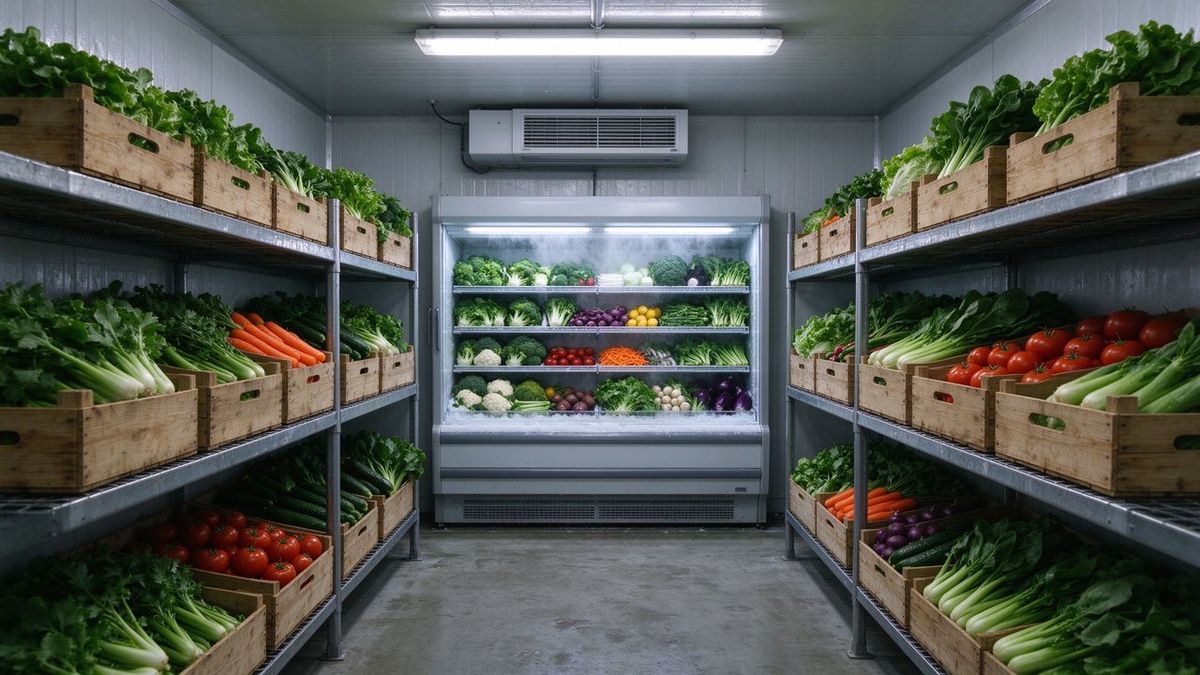
Cold Storage and Chilling for Greenhouse Strawberry Crowns
Frigo strawberry plants are field-grown for one season, lifted at dormancy, trimmed, and held in cold storage for up to nine months before planting. The entire protected-culture calendar depends on a chain that never deviates from minus 0.5 to plus 0.5 degrees Celsius. A warm spike of three hours at 5 degrees Celsius breaks dormancy…
-
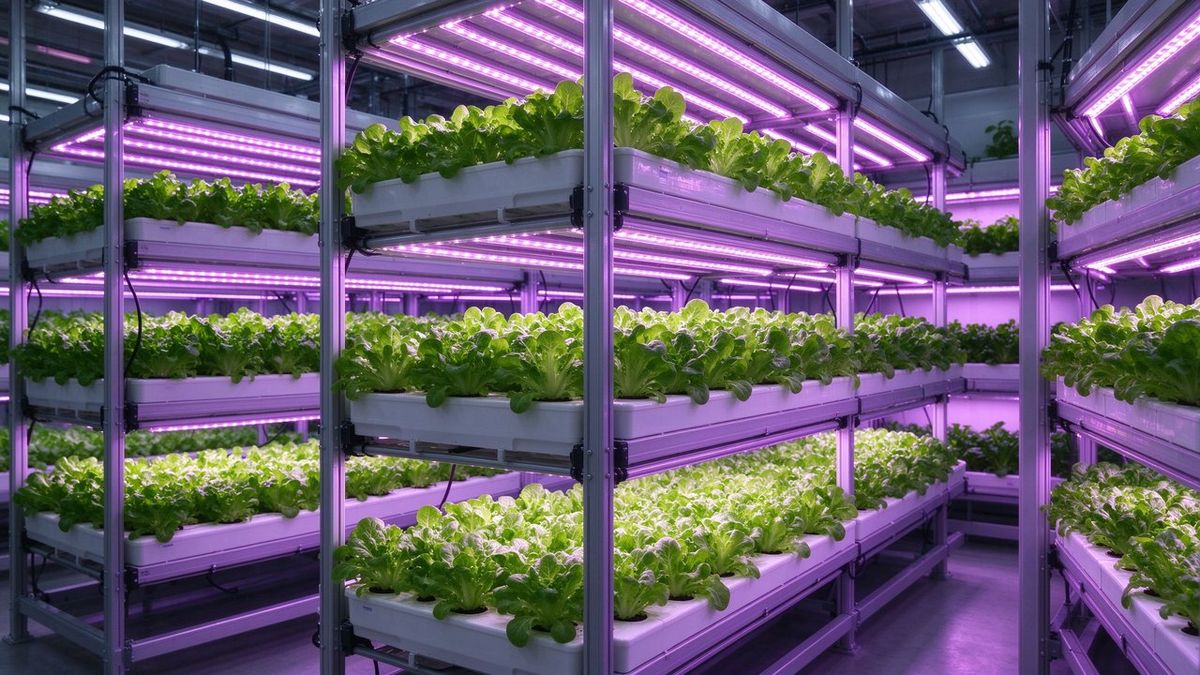
Light-Emitting Diodes for Strawberry Supplemental Lighting
Greenhouse strawberry in high-latitude or winter production zones needs 12 to 16 moles of photosynthetically active radiation per square metre per day. On short cloudy days the glasshouse delivers only 6 to 8 mol, and fruit set, runner suppression, and harvest speed suffer. LED top-lighting has replaced high-pressure sodium because it delivers a tunable spectrum,…
-
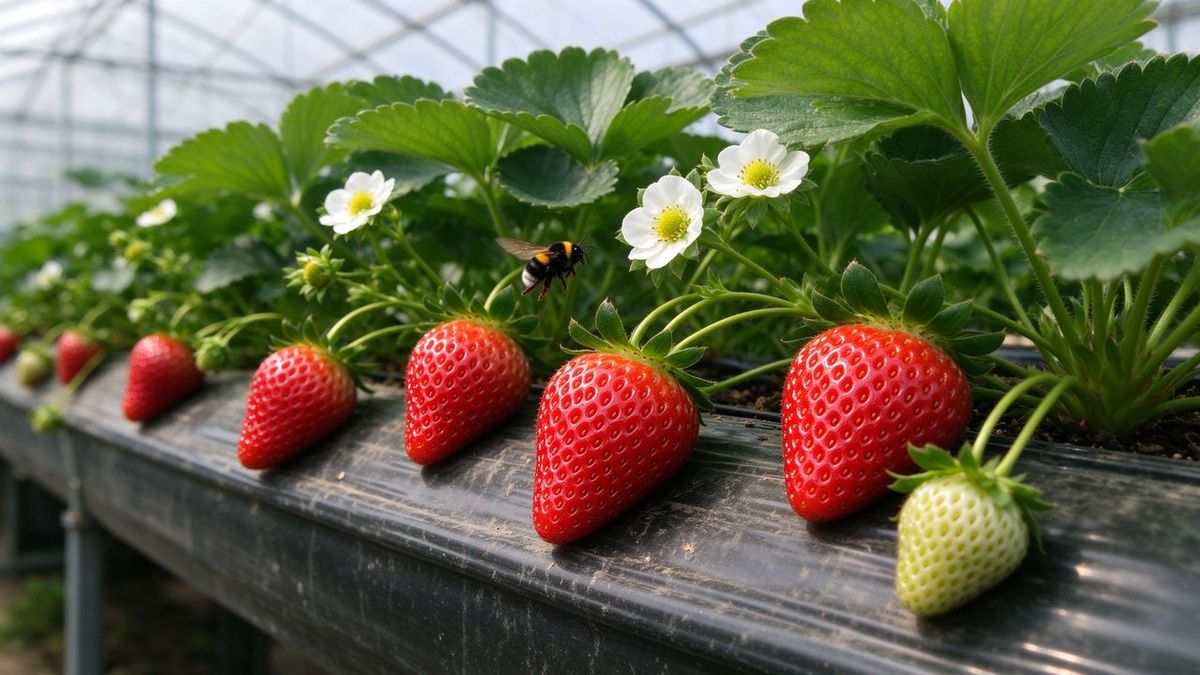
Preventing Strawberry Fruit Rot and Botrytis
Botrytis cinerea, the grey mould, destroys more greenhouse strawberry fruit than every other pest combined. Infection starts on dead petals trapped against green fruit and explodes into soft brown rot within 48 hours when relative humidity exceeds 90 per cent. A 5 per cent loss at harvest translates into 8 to 12 per cent at…
-
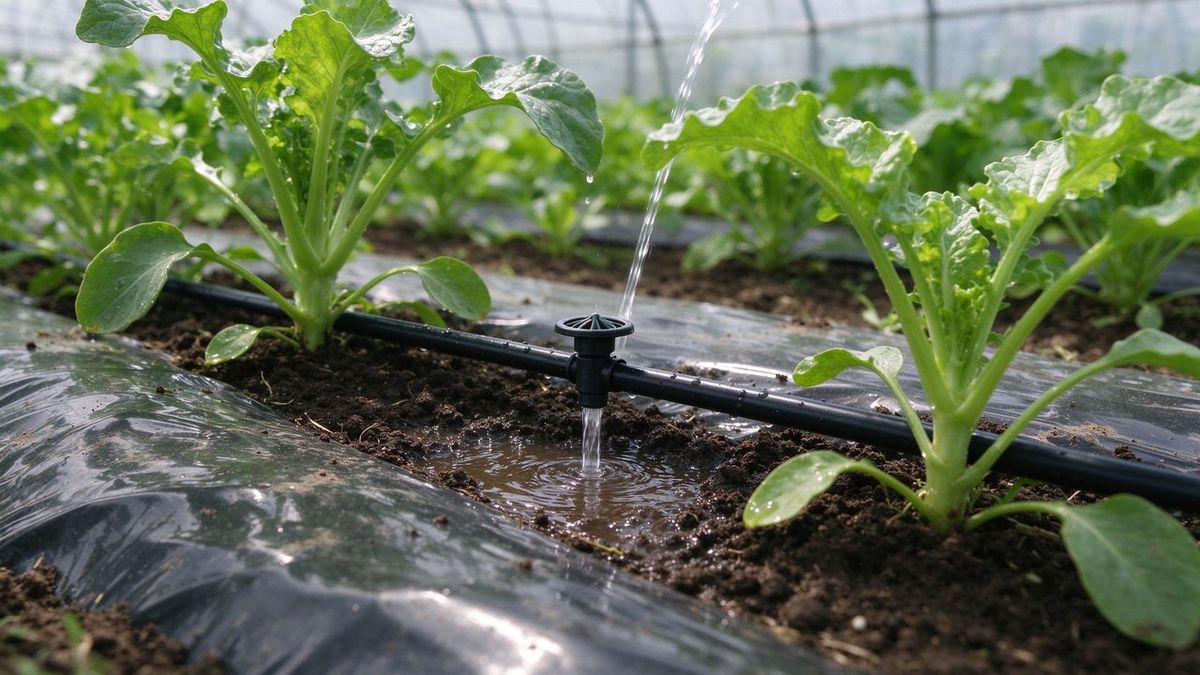
Strawberry Fertigation Schedules for Greenhouse Crops
Fertigation in greenhouse strawberry is the single largest lever on fruit size, shelf life, and disease pressure. Too little nitrogen produces small pale fruit; too much produces soft, watery berries that rot in the punnet. A modern schedule splits the crop into four feeding phases, each with its own EC, nitrate-to-potassium ratio, and calcium allocation.…
-
Strawberry Root Weevil Control in Greenhouse Beds
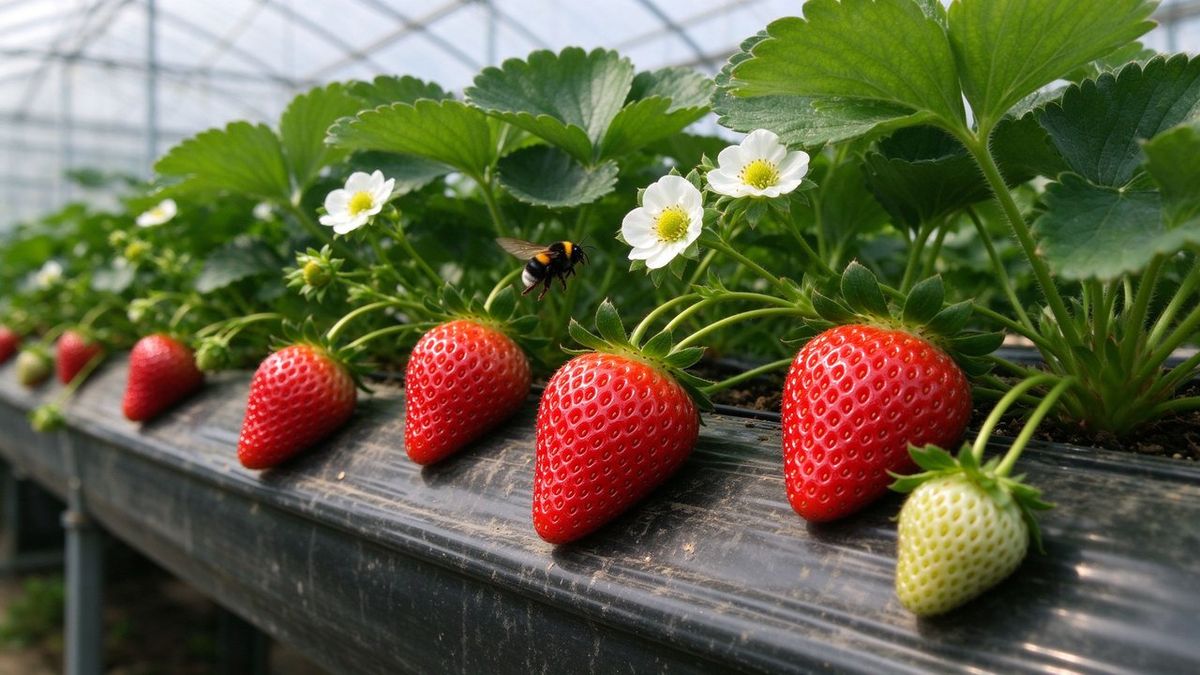
The black vine weevil Otiorhynchus sulcatus and the strawberry root weevil Otiorhynchus ovatus are silent killers in substrate-grown strawberry. Adults notch leaf margins at night, but the real economic loss is inflicted by legless C-shaped larvae feeding on fine roots and crowns from August through April. A density of three larvae per litre of coco…
-
Everbearing Strawberry Systems for Protected Culture
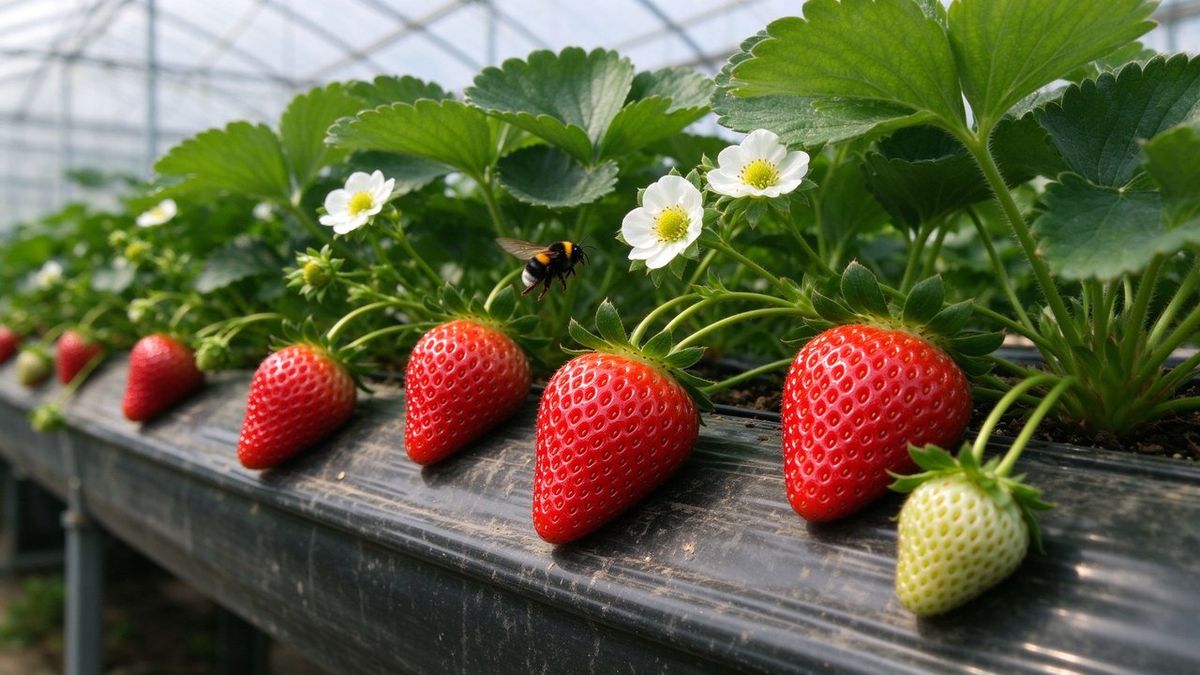
Everbearing (day-neutral) strawberry cultivars such as ‘Albion’, ‘San Andreas’, and ‘Camino Real’ have rewritten protected-culture economics by allowing harvest waves from late spring through autumn instead of a single compressed June window. Under cover, these cultivars respond to accumulated heat rather than photoperiod, so temperature management drives yield far more than day length. A well-run…
-
Strawberry Runner Management and Daughter Plant Production
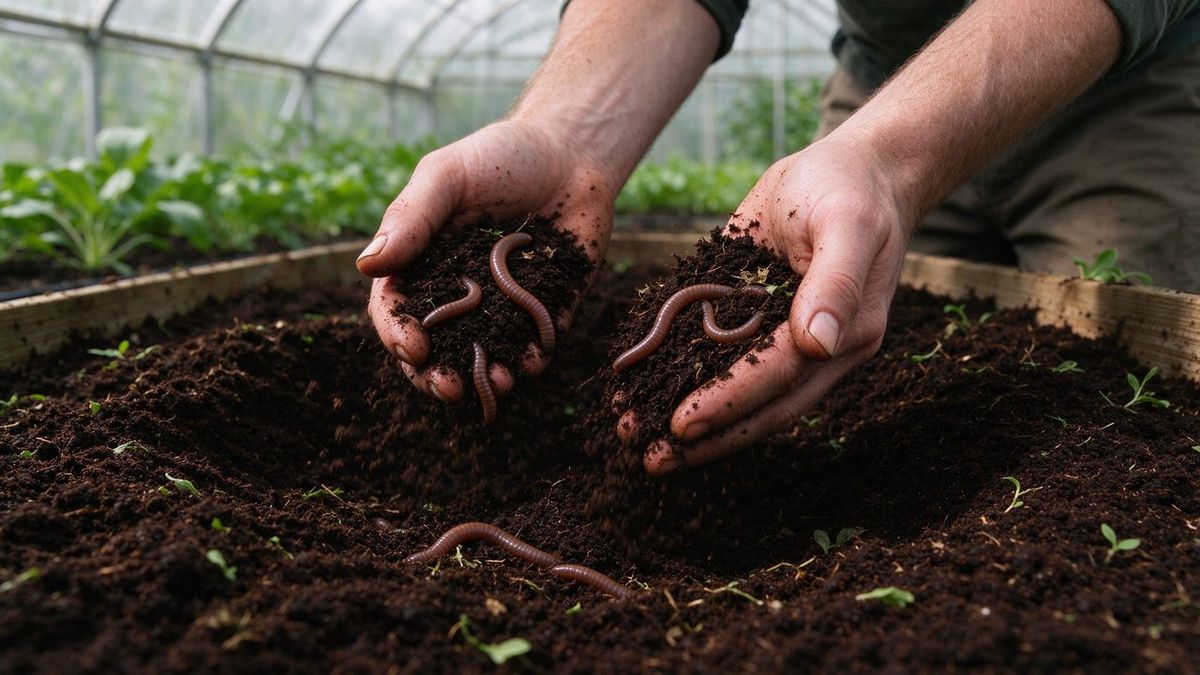
Strawberry runners are long, slender stems that grow from the mother plant and root at nodes to form daughter plants. Managed correctly, a single mother plant produces 15 to 30 daughter plants per season, which are the cheapest source of planting material for a greenhouse operation. Poor runner management, however, drains the mother plant, spreads…
-

Gray Mold and Powdery Mildew in Strawberry Greenhouses
Gray mold (Botrytis cinerea) and powdery mildew (Podosphaera aphanis) are the two most damaging diseases of greenhouse strawberry, together causing 15 to 30 percent fruit loss in a poorly managed season. Gray mold rots ripe fruit and browns flowers under cool, wet conditions; powdery mildew covers leaf undersides and fruit calyxes with white growth and…
-
Strawberry Pollination Using Bumblebee Colonies
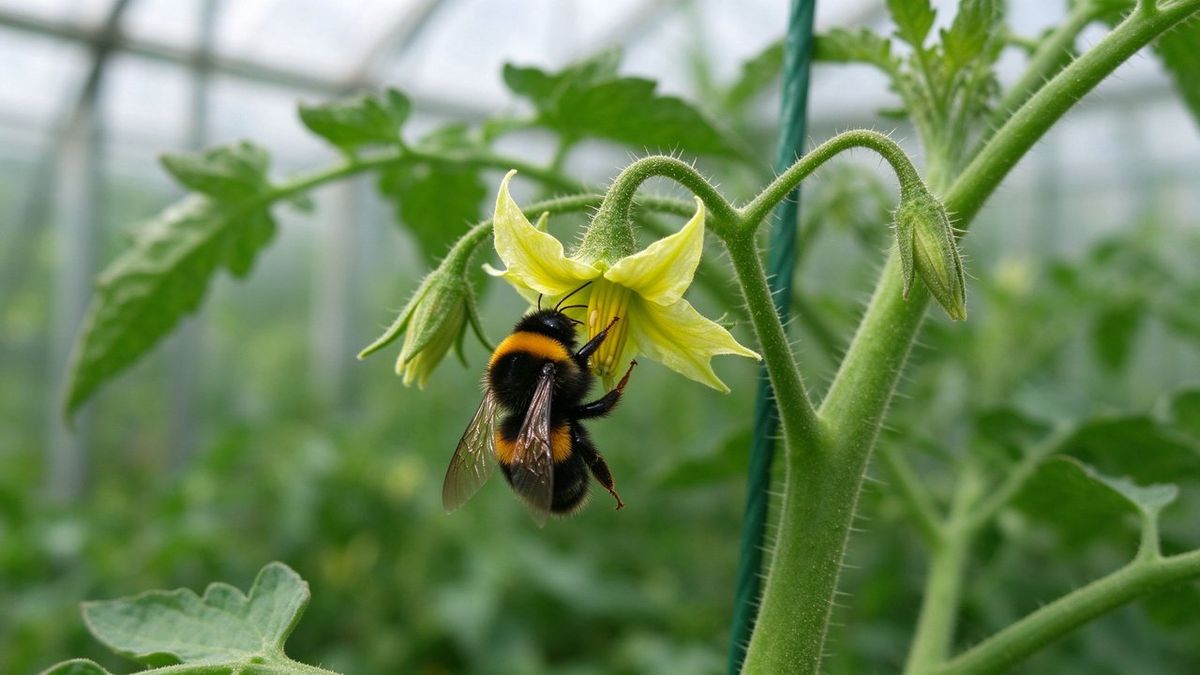
Bumblebee colonies (Bombus terrestris) are the standard pollination tool in greenhouse strawberry because they forage at 12 to 18 degrees Celsius, work in cloudy and humid conditions, and sonicate flower trusses far more effectively than honeybees. A single colony of 60 to 80 worker bumblebees can pollinate 500 to 1000 square meters of strawberry, improving…
-
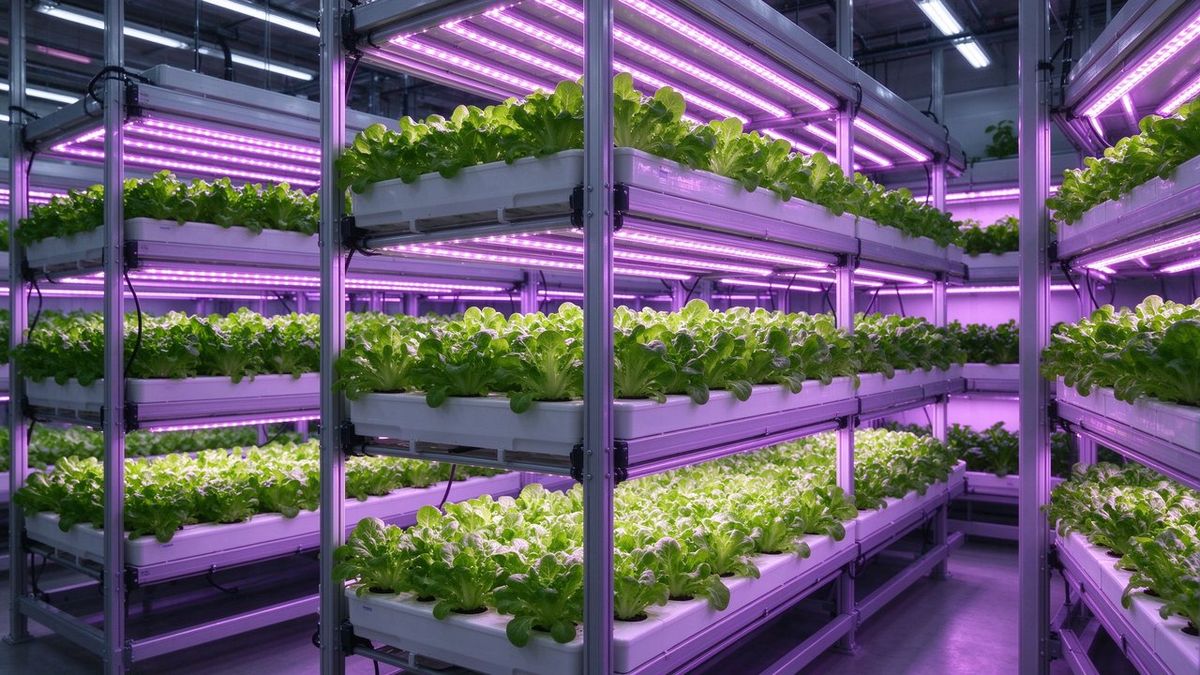
Hydroponic Strawberry in Vertical Gutters
Vertical gutter hydroponics grows strawberry plants in long, narrow channels stacked in tiers or hanging A-frames, multiplying the usable growing area by 2 to 4 times compared with horizontal bag culture. Each gutter holds a thin layer of coco coir or rockwool, irrigated by drip or by a shallow recirculating nutrient film. The system saves…