
BROWSE THE JOURNAL
winband
-
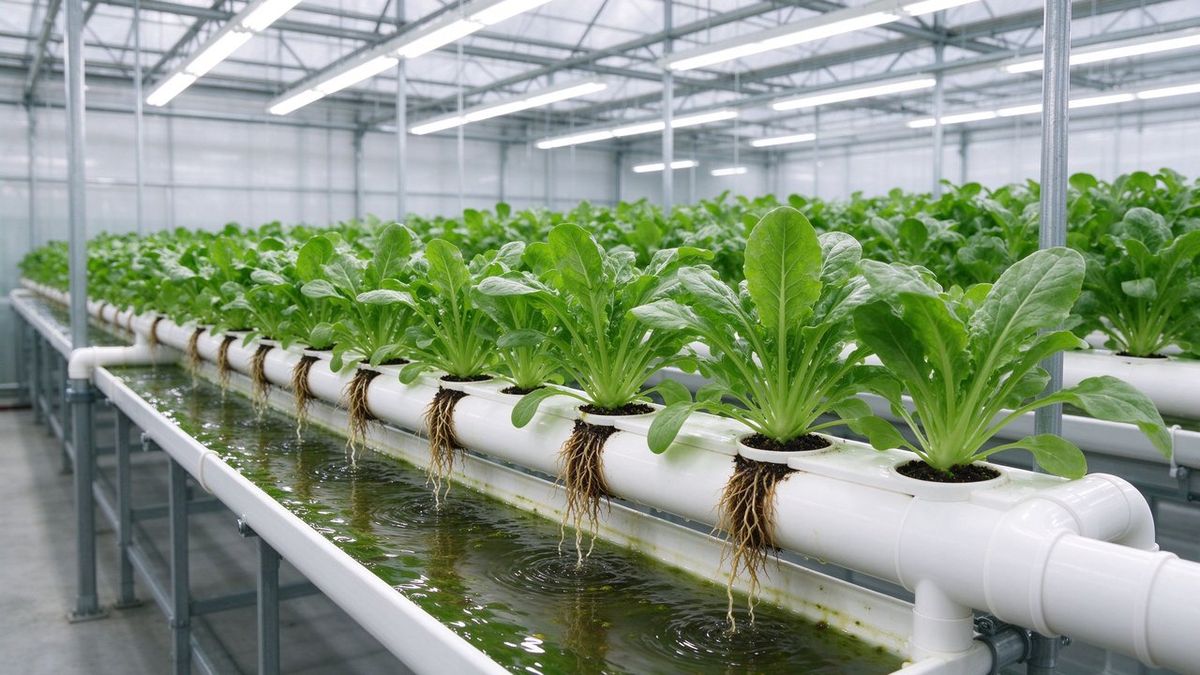
Hydroponic Cucumber: Drip versus Nutrient Film Technique
Choosing between drip-irrigated slabs and nutrient-film channels is one of the first architecture decisions a new cucumber greenhouse makes, and it changes everything downstream: water use, root oxygen, labour, and capital cost. Drip on rockwool or coco slabs is the industry default for long cucumbers; NFT is rare for large-fruit cucurbits but occasionally used for…
-
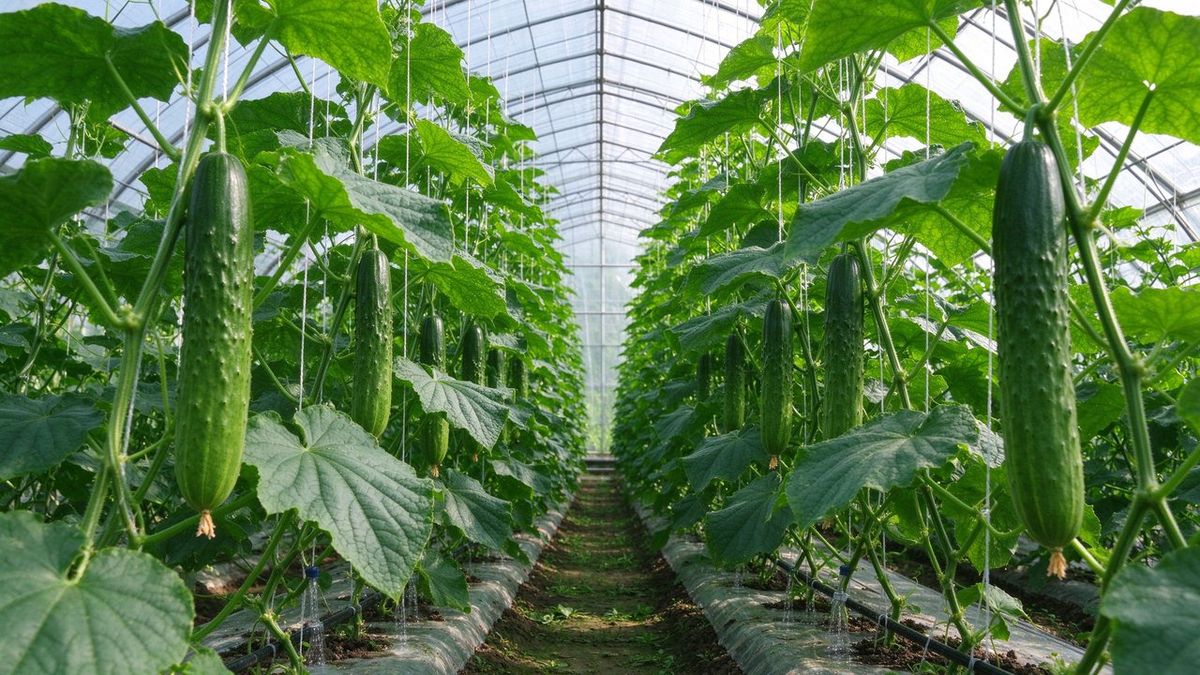
Managing Cucumber Downy Mildew in Protected Culture
Pseudoperonospora cubensis, the cause of cucumber downy mildew, is a wind-borne oomycete that destroys a fully planted cucumber house in 14 days under cool, wet conditions. Unlike powdery mildew it needs free water: spores germinate in 2 hours on a film of water at 15 to 22 degrees Celsius. The yellow angular lesions on the…
-
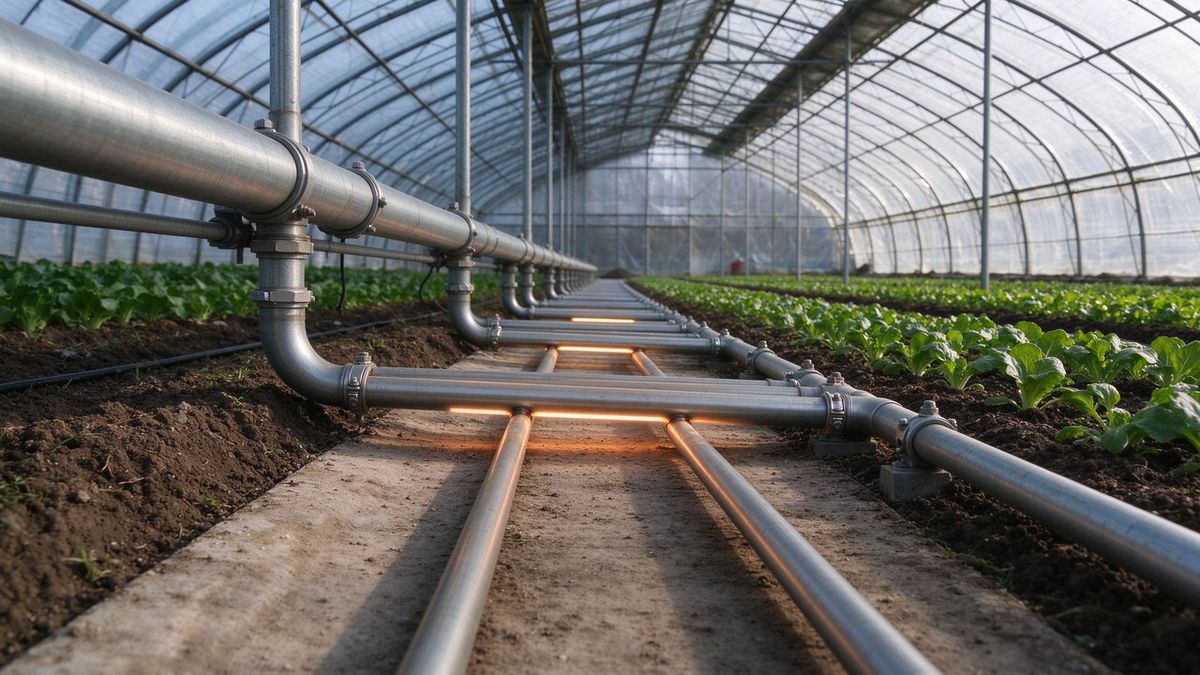
Cucumber Root Zone Temperature Management
Cucumber roots stop growing below 14 degrees Celsius and start cooking above 32, yet most growers monitor only the air. Root zone temperature on rockwool or coco slabs drives water uptake, nutrient mobility, and fruit expansion directly: a slab held at 20 to 23 degrees Celsius produces 20 percent more fruit per plant than one…
-
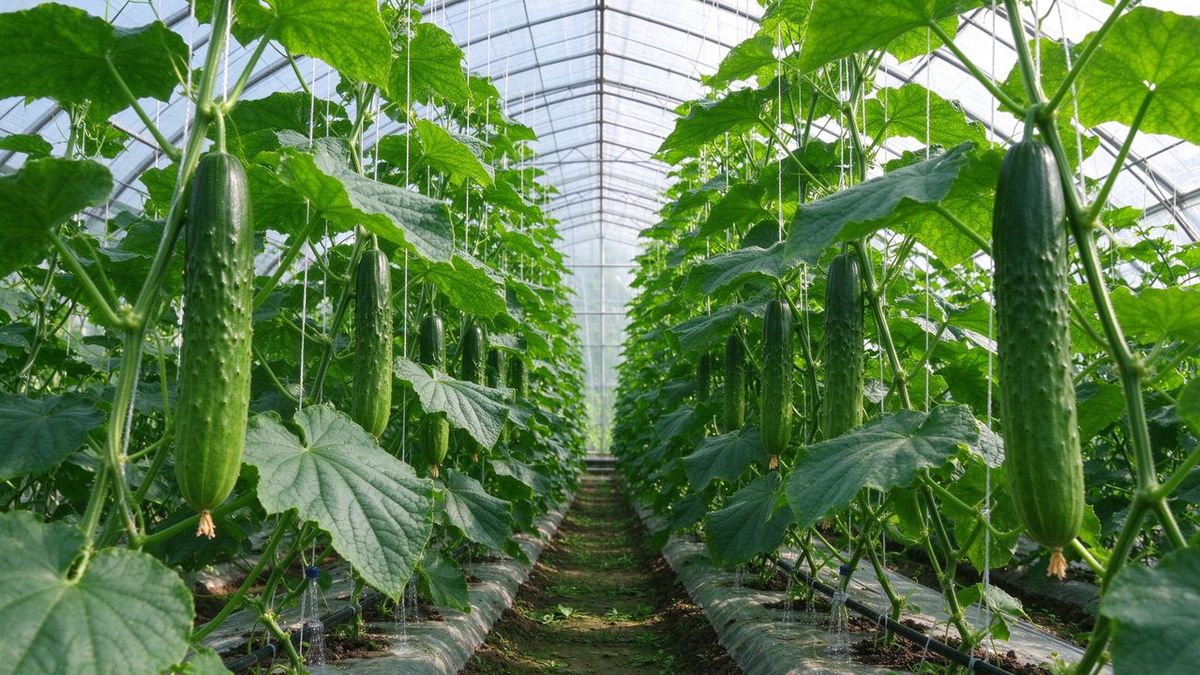
Parthenocarpic Cucumber Variety Selection
Parthenocarpic long cucumbers set fruit without pollination, which is why they dominate greenhouse production and why the bumblebee hives used in tomato houses are removed from cucumber bays. The right parthenocarpic variety decides whether a harvest averages 4 kg per square metre weekly or stalls at 2.5 kg. Selection is a balance of fruit length,…
-
Preventing Powdery Mildew on Greenhouse Cucumbers
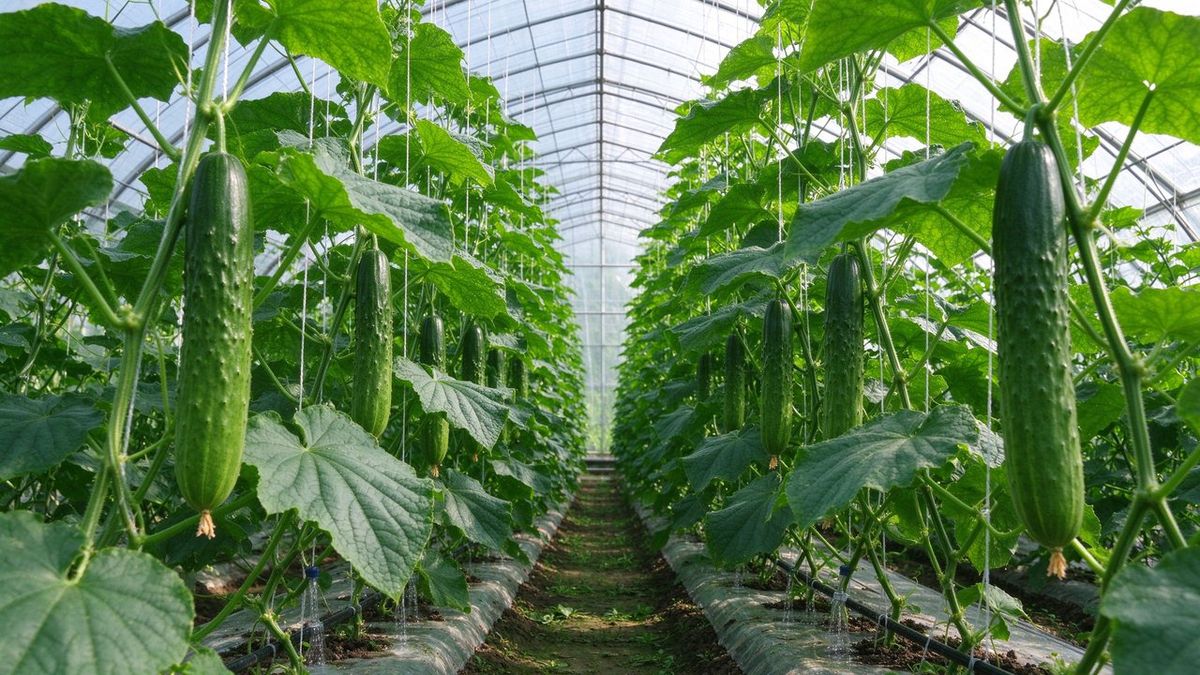
Powdery mildew, caused by Podosphaera xanthii and Golovinomyces orontii, is the most consistent foliar disease of greenhouse cucumber worldwide. It appears as white talcum-like colonies on upper leaf surfaces within 7 to 10 days of infection, reduces net photosynthesis by 30 to 40 percent, and quickly taints fruit with sunscald when canopy cover collapses. Preventing…
-
Pruning Single-Stem Cucumbers in High-Tunnel Systems
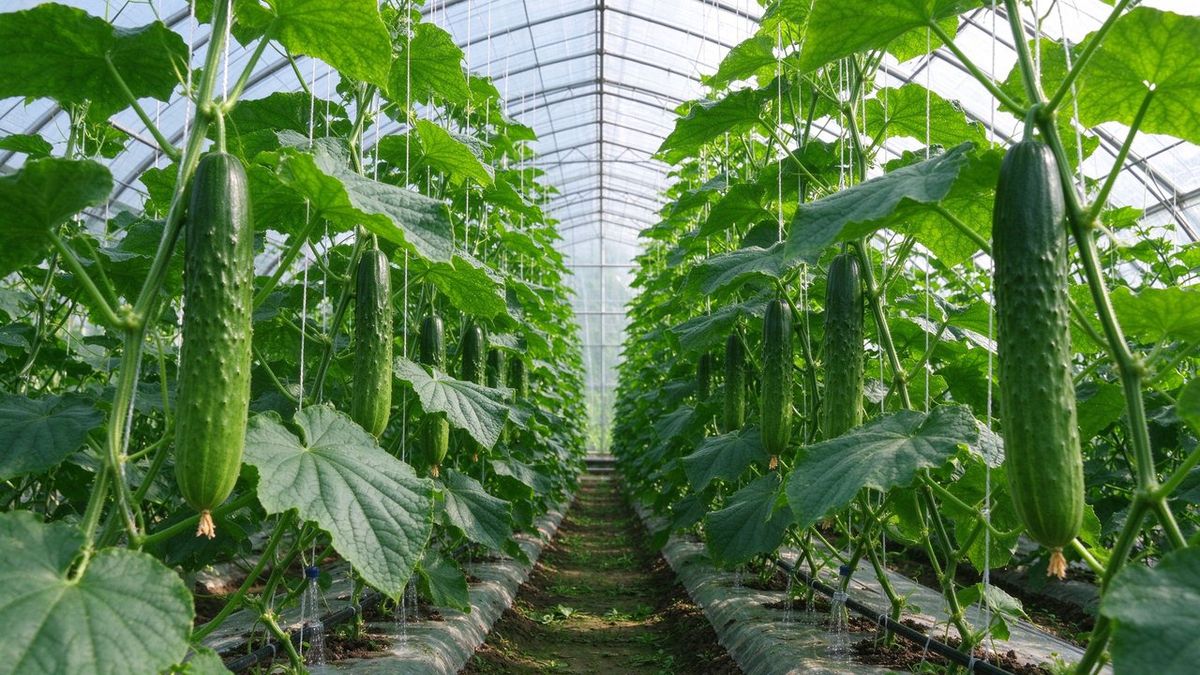
Single-stem cordon pruning is the backbone of high-yield English cucumber production in multi-span high tunnels. By removing lateral shoots and restricting the crop to one vertical leader, growers raise fruit quality, improve light interception, and keep harvest teams working on a uniform plane. The system demands weekly, sometimes twice-weekly, intervention once plants exceed 1.8 m.…
-
Greenhouse Cucumber Production Guide for Growers
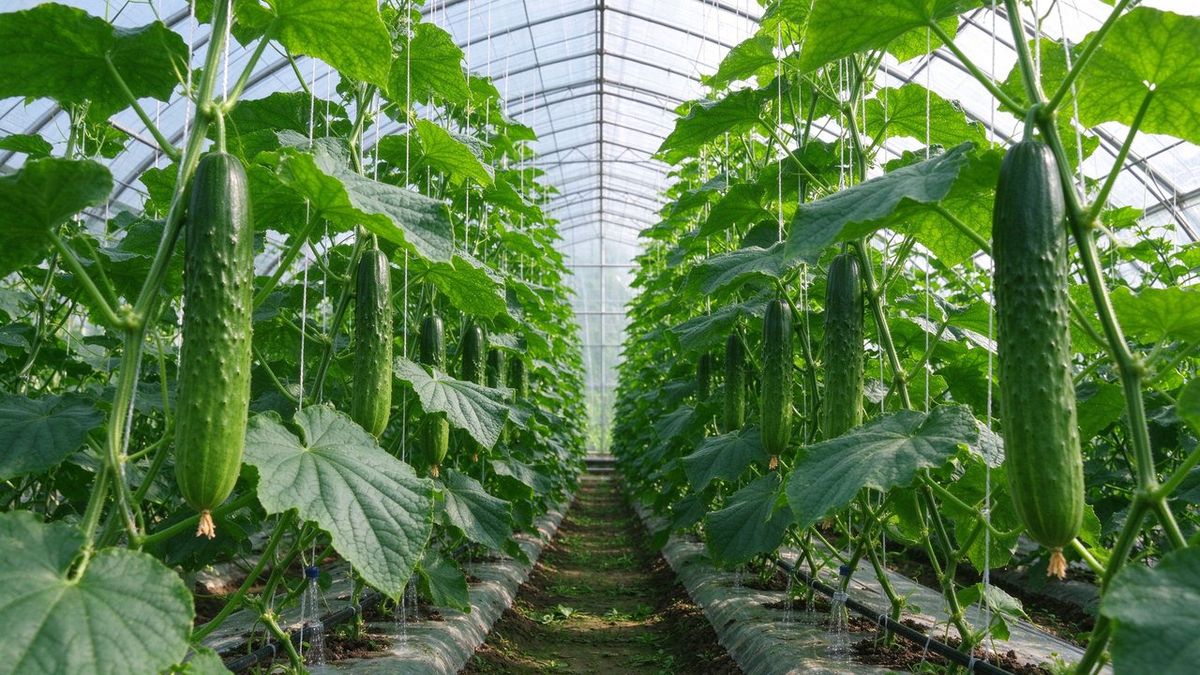
Greenhouse cucumber is the fastest cash crop in protected horticulture: a transplant goes to the first harvest in 30 to 35 days, and a high-wire crop yields 55 to 70 kg per square metre per year. Cucumbers love heat, humidity, and large amounts of water, and they punish sloppy climate management with bitter, curved, or…
-
Greenhouse Tomato Varieties for Cold Climate Production
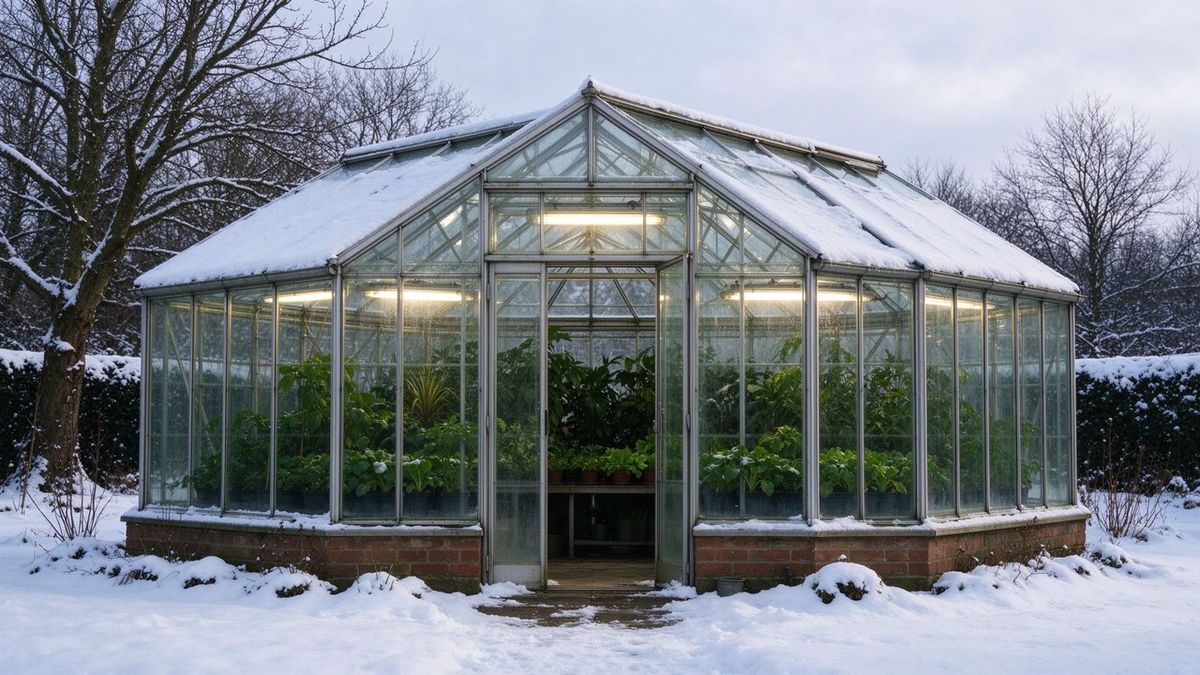
Cold climate greenhouses, where outside temperature drops to minus 20 degrees Celsius and winter light is below 10 mol per square metre per day, demand tomato varieties bred for short days and cool roots. These varieties set fruit at lower temperatures, tolerate 15 degrees Celsius nights, and hold shelf life without heating. The right variety…
-

Managing Gray Mold on Greenhouse Tomato Plants
Gray mold, caused by Botrytis cinerea, attacks every wounded or senescent part of a tomato plant: leaf scars, snapped trusses, spent flowers, and over-ripe fruit. It thrives at 15 to 20 degrees Celsius and 95 percent relative humidity, exactly the cool, damp nights of spring and autumn. A single lesion produces millions of spores that…
-
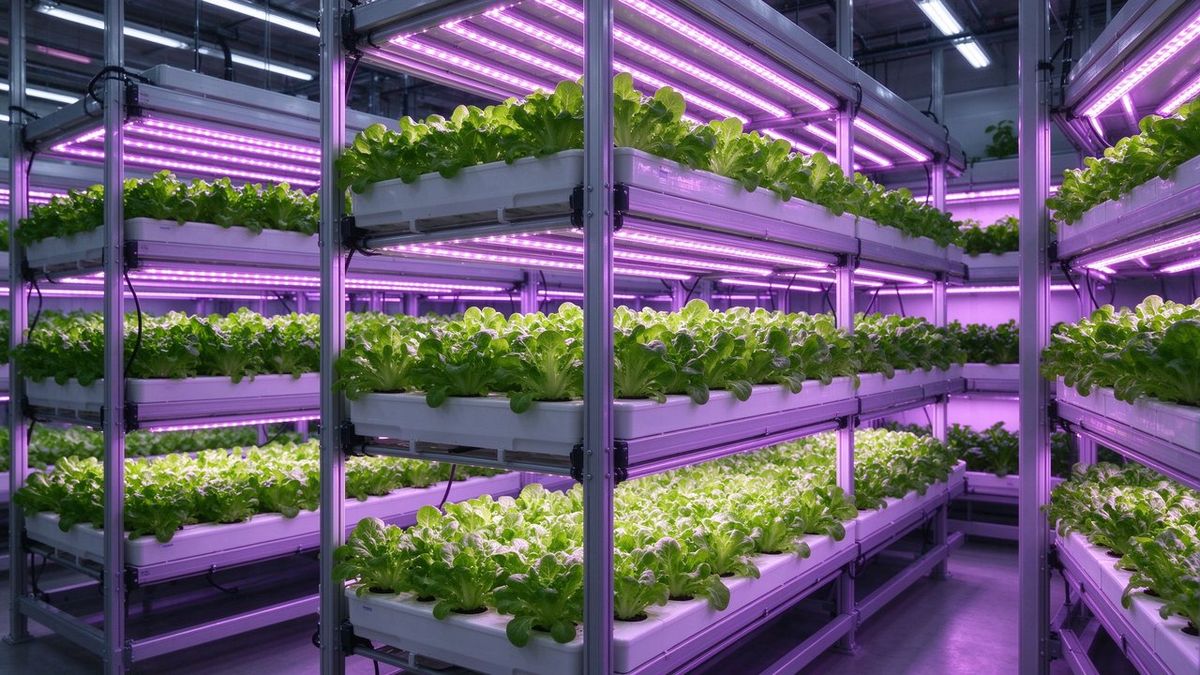
Tomato Fruit Set Under Low Light Conditions
Low light in winter greenhouses drops daily light integral to 8 to 12 mol per square metre per day, well below the 18 to 22 mol that tomatoes prefer. Under these conditions pollen is weak, fruit set falls by 30 to 50 percent, and the fruit that does set is small and slow to colour.…